
Why a Taiwan Layover Might Be Asia’s Best-Kept Travel Secret
The National Palace Museum Holds 700,000 Imperial Chinese Artefacts That Were Removed from Beijing’s Forbidden City in 1948 — and Would Not Have Survived If They Had Stayed
In 1948 and 1949, as Mao Zedong’s forces closed in on Beijing during the Chinese Civil War, Chiang Kai-shek’s Nationalist government loaded the most important contents of the Forbidden City onto ships and planes bound for Taiwan. Over 600,000 artefacts — Song dynasty ceramics, Shang dynasty bronzes, Tang dynasty calligraphy scrolls, jade carvings, imperial paintings, and the complete imperial library — were evacuated to Taipei. Mao declared them stolen. Chiang said he was protecting them. From 1966 to 1976, the Cultural Revolution destroyed enormous quantities of similar objects across mainland China. The artefacts in Taipei were never at risk of destruction — they were on the other side of the Taiwan Strait.
The National Palace Museum opened in Taipei in 1965 and today holds what is widely accepted as the most complete surviving collection of imperial Chinese art anywhere on earth. Beijing’s own Palace Museum, in the actual Forbidden City, holds fewer pieces than the Taipei collection. The most famous objects — the Jadeite Cabbage (a 19th-century jade carving of a Chinese cabbage with two insects on the leaves, carved to match the natural colouring of a single piece of jadeite), the Meat-Shaped Stone (a piece of jasper carved with such precision that it appears to be braised pork belly, fat layers and skin pores visible), and the Mao Gong Ding (a Western Zhou bronze vessel with the longest bronze inscription in existence, 497 characters) — are all in Taipei. The collection existed because of a war, survived because of a sea crossing, and has been in Taipei for over 70 years. You can see all of it in an afternoon on a layover.
Taiwan Taoyuan International Airport (IATA: TPE) is Taiwan’s primary international gateway and one of the busiest airports in Asia, handling 47.8 million passengers in 2025. It sits 40km west of central Taipei in Taoyuan City and is connected to Taipei Main Station by the dedicated Airport MRT — express trains run in 35 minutes from Terminal 1 (38 from Terminal 2) for NT$160. The airport operates as the hub for China Airlines and EVA Air, two of Asia’s most respected long-haul carriers, and as a significant connecting point for flights between North America, Japan, Southeast Asia, and Australasia. The geographical position of Taiwan — directly on the arc connecting North American cities to Southeast Asia and Australasia — makes TPE one of the most logical stopover points in the Pacific.
The airport has two terminals: T1 (gates A and B, China Airlines and most Oneworld/non-alliance carriers) and T2 (gates C and D, EVA Air and Star Alliance partners). Both terminals have dedicated Airport MRT stations beneath them (A12 for T1, A13 for T2), eliminating the need for a shuttle bus connection that plagues many two-terminal airports. The in-town check-in facility at Taipei Main Station (A1) allows passengers on eligible airlines to check bags at the city-centre station and travel to TPE by MRT without managing luggage — one of the few such facilities operating in Asia. Check current airline eligibility at the Taoyuan Metro website before planning your return journey.
Entry to Taiwan for a layover requires landing and clearing immigration — there is no airside transit option that keeps visitors within the sterile zone. Most nationalities receive visa-free entry or visa on arrival. US, UK, EU, Canadian, Australian, Japanese, South Korean, and approximately 60 other nationalities enter visa-free for 30–90 days depending on the specific arrangement. If you need a visa in advance, check our layover visa guide or use iVisa for country-specific guidance. Taiwan uses the New Taiwan Dollar (NT$ or TWD). Wise and Revolut give mid-market exchange rates at no additional fee — considerably better than airport exchange counters.
Take the Airport MRT from the station underneath your terminal — T1 uses station A12, T2 uses A13. Look for the purple Express trains, which run every 15 minutes and take 35 minutes (T1) or 38 minutes (T2) to Taipei Main Station. Cost: NT$160 for adults. Pay with an EasyCard, iPASS, or contactless bank card. The blue Commuter trains run the same route at the same price but take 50–53 minutes and have fewer luggage racks. Express is always the right choice. The Airport MRT operates approximately 06:00–23:00 daily; the Kuo-Kuang 1819 bus runs 24 hours for late-night arrivals (NT$140–150, 60–90 min, stops at Taipei Main).
Most Western nationalities enter Taiwan visa-free for 30–90 days. US, UK, Canada, Australia, Japan, South Korea, and most EU member states are on the visa-free list. Some nationalities receive a 30-day visa on arrival. There is no sterile transit option at TPE — to leave the airport you must clear immigration, so visa-free or visa-on-arrival status is required. Check specific eligibility for your nationality at our layover visa guide or through iVisa before travel.
For a 5–7 hour window: Taipei Main Station MRT to Longshan Temple (blue line, Longshan Temple station), then walk to the Ximending pedestrian area, then back to Taipei Main. For 7–10 hours: add the National Palace Museum (red line to Shilin, 15-min walk) for the Jadeite Cabbage and the imperial Chinese collection. For an evening arrival: Raohe Street Night Market or Shilin Night Market. For 10+ hours: Elephant Mountain at sunset for the Taipei 101 skyline view, then a night market afterwards. The city MRT is clean, English-signed, and safe at all hours — independent navigation is genuinely easy.
Two terminals: T1 (gates A and B — China Airlines, Cathay Pacific, Thai Airways, most Oneworld carriers and non-alliance international airlines including Japan Airlines, American, and British Airways) and T2 (gates C and D — EVA Air and Star Alliance partners including Singapore Airlines, Lufthansa, United, ANA, Thai Star Alliance). Both terminals have direct underground Airport MRT connections — no shuttle required. Free people movers connect the terminals for connecting passengers. In-town check-in at Taipei Main Station A1 allows eligible airline passengers to drop bags in the city centre and travel MRT-light.
Taiwan does not have a transit-only option — all passengers leaving the airport must clear immigration. US, UK, EU, Canada, Australia, Japan, South Korea, and approximately 60 other nationalities enter visa-free; some additional nationalities receive a visa on arrival. Check our layover visa guide for your specific nationality, or use iVisa for assisted applications if a visa is required.
Airlines at Taiwan Taoyuan International Airport (TPE)
TPE is the primary hub for both China Airlines and EVA Air, Taiwan’s two major long-haul carriers, and a significant focus city for Cathay Pacific. The airport’s geographic position on the North America-to-Asia arc makes it one of the most-used connecting airports for transpacific routing. Singapore Airlines, Japan Airlines, ANA, Korean Air, Thai Airways, United, American, Qantas, and most major global carriers serve TPE with multiple weekly or daily frequencies.
China Airlines (CI) operates from T1 as a SkyTeam member, connecting Taipei to North America (Los Angeles, San Francisco, New York, Vancouver), Europe (Amsterdam, Frankfurt, Vienna, Rome), and an extensive Asia network. Dynasty Flyer miles earn on all CI flights and are redeemable across SkyTeam including Delta, Air France, and KLM. EVA Air (BR) operates from T2 as a Star Alliance member — consistently rated among the top 5 airlines in the world by Skytrax — with routes to Los Angeles, San Francisco, Seattle, Chicago, New York, London Heathrow, Amsterdam, Vienna, and a comprehensive Asia-Pacific network. Infinity MileageLands earns on all EVA flights and is redeemable across Star Alliance including Singapore Airlines, Lufthansa, and United.
Starlux Airlines (JX), Taiwan’s newest full-service carrier (launched 2020), operates from T2 with expanding routes to Japan, Southeast Asia, and US destinations. Starlux is independent of global alliances but partnerships are expanding. For passengers connecting through TPE, the availability of two separate Star Alliance and SkyTeam hubs at the same airport gives unusual redemption and connection flexibility.
Other Major Airlines at TPE
Singapore connects TPE to Changi daily — the most-used intermediate stop for Taiwan-to-Europe and Taiwan-to-Australasia routing via Singapore’s global hub. KrisFlyer earns on all routes. SIN-TPE is among the most frequent international corridors in Asia.
JAL and ANA both connect TPE to Tokyo Narita and Haneda, with frequencies equivalent to a shuttle route. Taiwan-Japan is the single highest-volume bilateral air market in Asia. Mileage Bank and ANA Miles both earn on all routes with generous Asia-Pacific redemption options.
Cathay uses TPE as a focus city, connecting to Hong Kong multiple times daily. The HKG hub provides onward Oneworld connections to London, Sydney, and across Asia. Asia Miles earns on all routes. CX premium cabin is among the most redeemable for award travel on transpacific routes.
United connects TPE to San Francisco and Guam via Star Alliance from T2. American connects to Los Angeles and Dallas from T1. Both provide North American hub access for onward domestic US connections from a TPE layover, with MileagePlus and AAdvantage earning on all routes.
Korean Air and Asiana both connect TPE to Seoul Incheon — useful for onward connections to Europe via ICN’s SkyTeam and Star Alliance networks. The ICN hub provides competitive options for Europe connections alongside TPE’s direct European services.
Thai Airways connects to Bangkok Suvarnabhumi from T2 (Star Alliance). Thai Lion Air and Scoot operate budget Bangkok and Singapore connections from T1/T2. Combined, Taipei-Bangkok is served by 15+ daily frequencies across full-service and budget carriers.
Should You Leave the Airport? — Taipei Layover Decision Guide
TPE’s 40km distance from Taipei is the primary constraint. The Airport MRT express is 35–38 minutes each way, meaning any usable city visit requires at least 90 minutes in transit alone. The calculation favours longer windows — 6+ hours opens the full city comfortably. Below 5 hours, the maths get tight but not impossible if the plan is specific.
Under 4 hours, the 35-minute express each way plus immigration processing at TPE leaves you perhaps 90–120 minutes in Taipei. That is enough to get one specific thing done — a bowl of beef noodle soup at a restaurant 5 minutes from Taipei Main Station, or a walk through Ximending. It is not enough for the National Palace Museum (closed on Mondays; allow 2–3 hours minimum), Elephant Mountain (45-minute hike to the top), or any night market. Check our visa guide before deciding whether the immigration processing overhead is worth it for your window. If you decide to stay airside: TPE has a Din Tai Fung outlet in T2 — the best xiao long bao you will eat at any airport in the world, at reasonable prices for the product.
Four to seven hours is enough for the city’s most accessible circuit: Express MRT to Taipei Main, blue line one stop to Longshan Temple Station, walk through Longshan Temple (one of Taiwan’s most active Buddhist temples, incense smoke and prayer throughout the day), then 10 minutes on foot to Ximending — Taipei’s pedestrian youth shopping and food district, open all day. The oyster vermicelli at the Ay-Chung stand on Zhonghua Road has had a queue since 1975. Back to Taipei Main by MRT. Allow 90 minutes from when you leave the city to your departure gate, accounting for the express MRT ride and security at TPE. On this window: skip the National Palace Museum. It requires 35 minutes’ extra MRT travel and minimum 2 hours inside — it fits only on 8+ hour windows. Pre-book your return transfer via Welcome Pickups if you prefer a fixed price over MRT navigation on the return.
Seven or more hours opens everything. For a daytime arrival: National Palace Museum in the morning (red line MRT, Shilin area, 35 min from Taipei Main — the Jadeite Cabbage takes 5 minutes to see; the rest of the collection takes hours), lunch at a beef noodle restaurant near the museum, then Elephant Mountain for the afternoon (Xiangshan MRT station, red line, 30-minute hike to the peak for Taipei 101 in the foreground). For an evening arrival: the Airport MRT to Taipei Main, then city MRT to Raohe Street Night Market (Songshan station, green line — the oldest and most compact night market in Taipei, easier to navigate than Shilin for a first visit) for dinner. Connect with onward travel: Omio covers Taiwan High Speed Rail from Taipei Main to Taichung (35 min, NT$700) or Tainan (90 min) if you have an extended layover and want to see more of the island.
How much time do you actually have?
The Airport MRT runs 35 minutes each way. Immigration at TPE typically adds 20–40 minutes on arrival. Enter your landing and departure times to find your real usable window before committing to the National Palace Museum queue.
Getting from Taoyuan Airport to Taipei — All Transport Options
The Airport MRT is the right answer for almost every layover visitor. The express train is faster, more comfortable, and cheaper than any road option except the late-night bus, and unlike taxis and Uber it is unaffected by traffic on Highway 1 between Taoyuan and Taipei. Activate a Taiwanese eSIM before landing to use Uber, navigation, and Taipei’s MRT app from the moment you clear immigration. Use an Airalo or Roamless eSIM for Taiwan before your flight.
| Option | Journey Time | Cost (NT$) | Notes | Best For |
|---|---|---|---|---|
| Airport MRT Express | 35 min (T1) / 38 min (T2) | NT$160 | Purple trains. Dedicated luggage racks. Runs every 15 minutes approximately 06:00–23:00. Depart from station underneath T1 (A12) or T2 (A13). Pay with EasyCard, iPASS, or contactless bank card. Terminates at Taipei Main Station A1, where you connect to all city MRT lines, the Taiwan High Speed Rail, and national rail. The In-Town Check-In desk at A1 lets eligible airline passengers drop checked bags at Taipei Main and travel back to TPE without managing luggage. | Everyone; always first choice |
| Airport MRT Commuter | 50 min (T1) / 53 min (T2) | NT$160 | Blue trains. Same price, more stops, harder plastic seats, smaller luggage racks. Every other train from the airport is a commuter train. If an express is departing within 10 minutes, wait for it. The commuter train is only preferable if you are getting off at an intermediate stop such as Chang Gung Hospital station. Otherwise the express is strictly better. | Intermediate stops only |
| Kuo-Kuang 1819 Bus | 60–90 min (traffic-dependent) | NT$140–150 | 24-hour service stopping at Taipei Main and Zhongshan. Useful for late-night arrivals when the Airport MRT has stopped (after approximately 23:00). Slower and traffic-dependent; journey can extend to 2+ hours in peak-hour traffic. Cheaper than the MRT but the time cost makes it second choice during operating hours. Buy ticket from vending machine or counter in arrivals. | Late-night arrivals after 23:00 |
| Uber / Taxi | 35–60 min (traffic-dependent) | NT$1,000–1,200 | Significantly more expensive than the MRT. Licensed taxis from the authorised rank outside arrivals — all safe. Uber operates from the designated rideshare pickup area. Highway 1 traffic between Taoyuan and Taipei is heavy during morning and evening rush hours — allow 75+ minutes at peak times. Useful for groups of 3–4 sharing the cost, for late arrivals beyond bus service, or if you have a specific destination in Taipei not on the MRT network. A Wise or Revolut card handles NT$ with no foreign transaction fees. | Groups; off-MRT destinations |
| Pre-booked Transfer | 35–60 min | Fixed online price | Welcome Pickups provides English-speaking drivers, meet-and-greet in arrivals, and fixed pricing confirmed before landing. Best used for the return journey when you need a guaranteed departure time and cannot risk missing a connection due to MRT delays or surge pricing. | Return to airport; guaranteed timing |
An EasyCard (NT$500 including NT$100 deposit) gives a 20% discount on all Taipei city MRT rides. It works across all Taipei Metro lines, buses, some convenience store purchases, and YouBike rentals. Buy one at the blue vending machine in the Airport MRT station or at any 7-Eleven. If you are spending more than 3 hours in Taipei and plan to take more than 2 city MRT journeys, the 20% discount makes the card worth having immediately. You can also use it to pay for the Airport MRT itself.
What to Do on a Taipei Layover
National Palace Museum
The National Palace Museum is the specific reason Taipei’s layover is unique in this series. The collection — 700,000+ objects including 6,000 paintings, 7,000 pieces of calligraphy, 24,000 porcelains, and the imperial archives — was the contents of Beijing’s Forbidden City. It was evacuated to Taiwan in 1948–49 during the Chinese Civil War retreat and has remained here since. The most famous objects are on permanent display: the Jadeite Cabbage (翠玉白菜, a 19th-century Qing dynasty carving of a Chinese cabbage in a single piece of jadeite, the natural colour variations of the stone used to distinguish the white stalk from the green leaves, with a katydid and a locust concealed in the leaves — the piece was a wedding gift and the insects symbolise fertility) and the Meat-Shaped Stone (東坡肉形石, a piece of Qing dynasty jasper with layered colouration carved and dyed with such precision that it appears to be a slice of braised pork belly, down to visible skin pores and fat layers). Allow 2–3 hours minimum. Open daily (note: closed the first Monday of each month — confirm before visiting). MRT: Red Line (Tamsui-Xinyi) to Shilin station, then 15-minute walk or Bus R30/R1 to museum entrance. Admission: NT$350 adult. Book via GetYourGuide to combine with a guided tour that contextualises the Forbidden City evacuation story.
Longshan Temple
Longshan Temple in Wanhua district is one of Taiwan’s oldest and most significant religious sites, built in 1738 and rebuilt multiple times following earthquake and wartime damage — the current structure largely dates to post-World War II reconstruction. It is a working temple, not a museum: incense smoke fills the main hall throughout the day, worshippers bring offerings of food and flowers, temple assistants interpret oracle lots (qian) for petitioners at the side shrines. The temple is simultaneously Buddhist, Taoist, and folk religious — its pantheon includes Guanyin (the Buddhist goddess of mercy), Mazu (the Taoist sea goddess), the Rabbit God of Marriage, Guan Di (the Taoist god of war and business), and dozens of other deities from different traditions. This religious syncretism is specific to Taiwan and specifically evident at Longshan — nowhere in China has this particular mixture of deities in one structure, because the Cultural Revolution ended the folk religion traditions that would have allowed it. MRT: Blue Line (Bannan) to Longshan Temple Station, Exit 1. Free entry. Open daily approximately 06:00–22:00.
Taipei 101 and Elephant Mountain
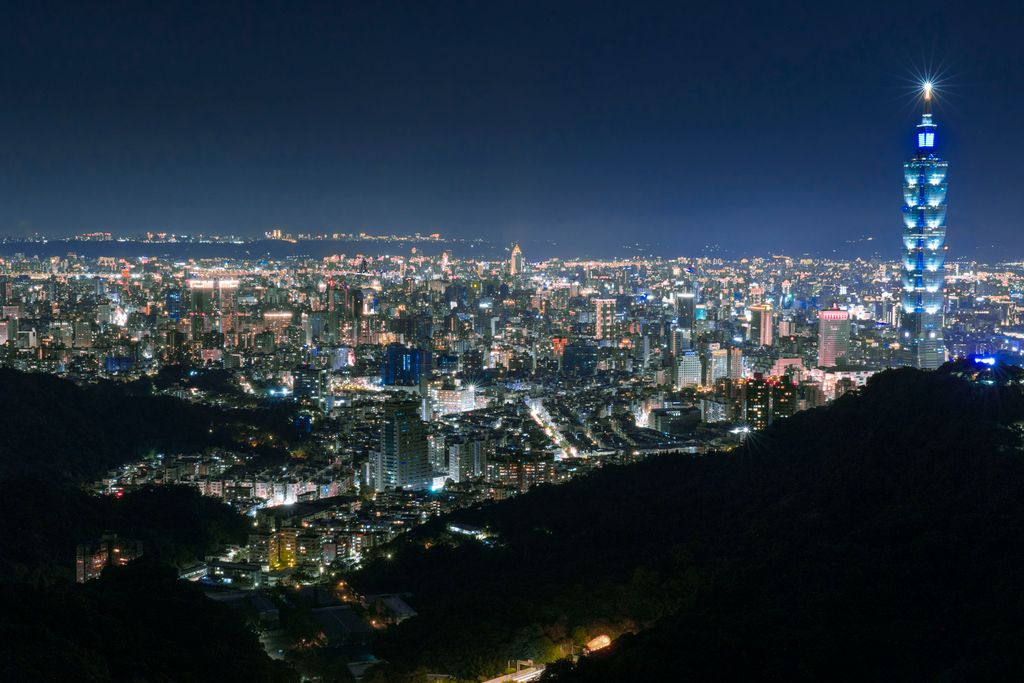
Taipei 101 is a 508-metre, 101-floor skyscraper in the Xinyi district, which was the world’s tallest building from 2004 to 2010 (the year the Burj Khalifa opened). The structure is designed to resemble a bamboo stalk — eight sections of eight floors each, the number 8 representing prosperity in Chinese culture — with a multi-tiered crown that references Chinese pagoda architecture. The observation deck on the 89th floor is accessible via the world’s fastest elevator (60 km/h). On the 87th–92nd floors, the building’s 660-tonne tuned mass damper — a steel sphere suspended by cables in the building’s core, designed to swing against the force of typhoon winds and earthquakes — is visible to the public through a glass viewing area. It is the largest and the only publicly viewable tuned mass damper in the world. MRT: Red Line to Taipei 101/World Trade Center station. Observatory admission: approximately NT$600. For the free alternative: Elephant Mountain (象山) is a 183-metre hill in the same district, accessible via a 20–30 minute steep hike from Xiangshan MRT station (Red Line). The rocky summit platform looks directly at Taipei 101 at the same height as the upper floors. Best visited 90 minutes before sunset — the city lights and the 101 illumination on the return descent are the photograph. No admission charge.
Night Markets
Night markets are the primary reason by visitor count that people come to Taiwan. The “big five” in Taipei are Shilin (largest, most famous, most tourist-facing — at Jiantan station, not Shilin station, Red Line), Raohe Street (oldest, most compact, easiest to navigate — at Songshan station, Green Line), Ningxia (smallest, most locally-oriented, best for traditional Taiwanese dishes — near Zhongshan MRT), Tonghua/Linjiang (restaurant and street food mix in Da’an, good for a less crowded experience), and Huaxi (Snake Alley — the original tourist night market, now somewhat dated). For a layover visitor, Raohe is the correct recommendation: 600 metres long, easy to walk end to end in an hour, good density of Michelin Bib Gourmand-recognised vendors, and 10 minutes from Taipei Main on the Green Line. Opens approximately 17:00–24:00. The Fuzhou pepper pork buns from the stall at the entrance (黑輪伯福州胡椒餅) have had a queue since Raohe opened in 1987 — buns baked in a clay oven, filled with pork, green onion, and black pepper, eaten hot immediately. NT$60 each.
Ximending
Ximending is Taipei’s pedestrian shopping and youth culture district — 16 blocks of covered streets and alleys in Wanhua district, open to pedestrians from late morning. The area has been Taipei’s entertainment and youth retail centre since the Japanese colonial period (it was modelled on Osaka’s Shinsaibashi). It is accessible on the same MRT journey as Longshan Temple (Blue Line to Ximen station, one stop from Longshan Temple) and readable as a 90-minute circuit. Street food here includes stinky tofu (chou doufu — fermented bean curd deep-fried and served with pickled vegetables and chilli sauce, a smell that is aggressive before the taste, which is rich and savoury), scallion pancakes (cong you bing — unleavened dough fried on an iron griddle with scallions and egg, NT$30–50), and wheel cakes (車輪餅 — small filled pancakes in a wheel mould, red bean or custard cream filling, NT$25–35). Open all day but most active from 13:00–22:00.
Elephant Mountain Summit — Taipei 101 Between the Rocks, City Grid Below
The summit of Elephant Mountain (Xiangshan) has a specific rock formation where you stand between two boulders and look directly west at Taipei 101 at roughly the same altitude as the upper observation floors. The composition frames the building between the rocks, with the city grid visible below and the mountain ridgeline behind. This is the photograph that appears in most travel coverage of Taipei because the perspective is unobtainable from anywhere at ground level. The hike takes 20–30 minutes of steep concrete steps from Xiangshan MRT station (Red Line). The summit has multiple flat rock platforms — arrive 90 minutes before sunset for the warm light, stay for the full descent after dark when the Taipei 101 lighting system activates. Bring a charged phone and a powerbank. No tripod required — the rock formations provide natural stabilisation.
“The building between the rocks. It has been there since 2004. The rocks have been there longer.” — #EpicLayover #TaipeiLayover #ElephantMountain
Longshan Temple at Night — Incense Smoke, Dragon Columns, Active Worship
Longshan Temple is photographically richer at night than during the day — the courtyard lanterns illuminate the smoke from the incense burners in the main courtyard at a specific diffuse angle, the gold-lacquered interiors glow through the open doors, and the dragon-wrapped columns are fully lit. The correct position: stand at the main gate facing north into the courtyard, with the incense burner in the foreground and the main hall behind. Arrive after 19:00 when the crowd thins slightly and the temple lighting is at full operation. The temple is open until approximately 22:00. A wide-angle lens captures the full main hall facade from the second courtyard. A telephoto from the entrance gate captures the incense smoke and the worshippers simultaneously. The temple allows photography throughout; be respectful of active prayer areas and do not photograph individuals without consent.
“This temple combines Buddhist, Taoist, and folk deities in one building. It existed before the Cultural Revolution could end that tradition here.” — #EpicLayover #Longshan #TaipeiTemple
Taipei Layover Itineraries — By Time Window
The Din Tai Fung outlet in T2 (airside, past security) serves the same xiao long bao as the original Xinyi district flagship. Order the classic pork xiao long bao (NT$230 for 10 pieces) and the shrimp and pork wontons in chilli oil. The airport outlet does not take reservations — arrive at off-peak times (avoid 11:30–13:00 and 17:30–19:30). No immigration, no MRT, no clock watching.
If you need to leave the airport: express MRT from your terminal station to Taipei Main (35–38 min). Walk to the food court area beneath the station or the surrounding streets — the Zhongzheng district around Taipei Main has beef noodle restaurants, scallion pancake carts, and convenience store food operating from early morning. Order, eat, walk back to the MRT. Allow 90 minutes from leaving the terminal to returning to security — tight but executable with a single food stop and no shopping or sightseeing.
Express MRT from T1 (A12) or T2 (A13) to Taipei Main (35–38 min). At Taipei Main Station, transfer to the Blue Line (Bannan line, follow green/blue signs). One stop west: Longshan Temple station. Exit 1. The temple entrance is 3 minutes on foot. If arriving before 09:00: the temple is quiet and the morning worshippers are the only visitors. If arriving midday: the main courtyard has its full incense smoke and activity. Drop bags if needed at a Bounce partner location near Ximending — leave contact at Bounce.
Enter through the main gate. The front courtyard has the main incense burner. Walk clockwise — the side halls hold different deity shrines. Guanyin is in the main hall. The Rabbit God of Marriage (Tu Di Gong) is in the right rear hall — visitors tie red string to pray for romantic fortune, a practice specific to Taiwan. The architecture is Fujian temple style: layered eaves, coloured ceramic roof ridge decorations (剪黏 chien nien — cut-and-paste ceramic mosaic technique specific to southern Fujian and Taiwan). Allow 45 minutes.
Walk northeast from Longshan Temple 10 minutes to Ximending (or one stop Blue Line to Ximen station). The Ay-Chung Flour-Rice Noodle stand on Zhonghua Road (阿宗麵線) has operated from the same street position since 1975. Order from the counter — there is no seat; eat standing on the street. A bowl of oyster vermicelli (ô-á-mi-suah — thin vermicelli noodles in a thick sweet potato starch broth, with oysters and pig intestine, topped with coriander and chilli sauce) costs NT$65 for a small, NT$80 for a large. The sweet-savoury umami broth is the flavour profile of Taiwan street food. Eat it outside, on the street, from a plastic cup.
Blue Line from Ximen or Longshan Temple to Taipei Main (1–2 stops). Airport MRT express from A1 to your terminal — 35–38 min. Allow 90 minutes from when you leave Ximending to your gate, including the MRT journey and TPE security. If using in-town check-in at A1 (Taipei Main station), drop bags before leaving for the city and reclaim them on your return — you walk back to TPE carrying only a day bag.
Express MRT to Taipei Main (35 min). Red Line (Tamsui-Xinyi) northbound to Shilin station (approximately 25 min from Taipei Main). Exit, take Bus R30 or walk 15 minutes to the museum. Buy admission ticket (NT$350) or book a guided entry via GetYourGuide for the guided version that walks through the Forbidden City evacuation story. Start with the permanent highlight gallery (Jadeite Cabbage and Meat-Shaped Stone are here — join the queue early before tour groups arrive). Then the bronze collection and the Qing imperial paintings. Allow 3 hours. Note: closed the first Monday of each month.
The Shilin area has good lunch options around the museum — a bowl of beef noodle soup (hong shao niu rou mian) at a nearby restaurant costs NT$160–250. The museum’s own café on Level 4 (Sanxitang Space) serves Taiwanese tea-house dishes and is quieter than the street alternatives. Braised pork rice (lu rou fan — fatty pork braised in soy, rice wine, and five-spice over rice, NT$60–80) is available at nearly every local restaurant in the district.
From Shilin: Red Line south to Xiangshan (end of line, approximately 40 min). Exit, follow the hiking trail signs from the station exit — the path begins immediately. Steep concrete steps for 20–30 minutes to the first summit platform. The summit provides a direct westward view of Taipei 101. Arrive 90 minutes before sunset for the warm light. The descent takes 20 minutes and the last section is lit — night descents are common and safe. From Xiangshan station, 3 stops north on Red Line to Songshan station for Raohe Night Market.
Raohe Street Night Market (饒河街觀光夜市) runs 600 metres from Ciyou Temple to Bahde Road. Opens approximately 17:00. The Fuzhou pepper pork bun stall at the temple entrance has a queue of 15–30 minutes every evening — worth it. One bun, NT$60, eaten immediately. Continue east: oyster omelettes, stinky tofu, scallion pancakes, taro balls in sweet soup, grilled squid. Exit at the far end and catch Green Line back to Taipei Main. Airport MRT from A1 — allow 90 minutes to gate.
Travel Scenario Modules — Real Taipei Layover Situations
A transpacific connection with an 11-hour gap. You have cleared immigration, your next flight is past midnight, and spending 11 hours in an airport terminal is not the plan you came to Taipei to execute.
By 22:00 the night markets are winding down, the National Palace Museum closed hours ago, and you are back at TPE with 3 hours to kill and nowhere to go. The Airport MRT stops at approximately 23:00 so your return window is fixed.
Book a Dayuse half-day hotel room in central Taipei — check in at 14:00, use it as a base to drop bags, freshen up, leave for the Museum and Elephant Mountain, and check out by 21:00 before heading to Raohe Night Market and the final MRT to TPE. You get a shower, a base, and a checkout time that aligns with the transport window.
You are on a 6-hour layover. The plan is Longshan Temple and Ximending. You have a 22-inch carry-on and the Airport MRT luggage racks are fine for the 35-minute ride — but navigating the temple courtyard and Ximending’s crowded alleys with a rolling bag is a different problem.
Ximending’s covered pedestrian blocks are narrow and crowded. Longshan Temple’s courtyard has steps and tight turns. Dragging a rolling carry-on through both places reduces a 3-hour city visit to a series of bag-management problems.
Use the Bounce partner location near Ximending — drop your bag before the temple visit, explore both sites with just a day bag, collect on the way back to the MRT. Taipei Main Station also has coin-operated lockers (NT$50–100) if you prefer to drop at the station before the Blue Line hop.
You have landed, cleared immigration, and you are ready for Raohe Night Market. The EasyCard works on the MRT. But the Fuzhou pepper pork bun stall, the oyster vermicelli counter, and most night market vendors are cash only — and the airport exchange counter gave you NT$8.5 to the dollar instead of the mid-market rate of NT$30.5.
Airport exchange bureaux at TPE charge significant spreads. A NT$3,000 cash withdrawal at an airport booth can cost NT$400 in fees and spread versus the mid-market rate — 13% of the amount exchanged. For a night market dinner that costs NT$500 total, this is disproportionate.
Use a Wise card to withdraw NT$ from the Cathay United Bank ATM inside T1 or T2 arrivals. Wise converts at the mid-market rate with a small fixed fee — considerably better than any exchange counter. Take out NT$2,000 (approximately USD 60), which covers two night market meals and transport.
You land at TPE and try to open Google Maps to navigate from Taipei Main Station to the National Palace Museum. Your international roaming shows no signal. The Airport MRT stations have free 4G Wi-Fi, but the Shilin area streets between Shilin station and the museum entrance do not.
Without live data, the 15-minute walk from Shilin station to the museum entrance becomes guesswork. The bus to the museum (R30) requires the bus app to track when the next departure arrives. Without maps, the 30-minute Elephant Mountain hike starts from signage in Chinese only at the Xiangshan exit.
Activate an Airalo Taiwan eSIM on the plane before landing — plans from $4.50 USD, activated in 2 minutes. You will have full 4G from the moment you walk off the jet bridge, before the Airport MRT Wi-Fi matters, before the first navigation prompt, before anything else requires a decision.
You have arrived at the National Palace Museum with 2 hours before you need to start the return MRT journey. The permanent highlight gallery — where the Jadeite Cabbage and Meat-Shaped Stone are displayed — has a timed-entry queue system during peak hours. Midday on a weekend the wait is 30–45 minutes.
45 minutes in the queue plus 30 minutes to see the objects leaves you 45 minutes for the rest of the museum — not enough for the bronze collection, the imperial paintings, or anything else. You came for the Jadeite Cabbage and see nothing else of significance.
Book a guided tour through GetYourGuide that includes priority entry to the highlight gallery. Guided groups are admitted separately from the general queue. The guide also explains why the Meat-Shaped Stone looks exactly like braised pork belly and the Jadeite Cabbage was a Qing dynasty wedding gift — without that context, both objects read as curiosities rather than the extraordinary technical achievements they are.
You are at Taipei Main Station after Raohe Night Market. Your flight departs in 95 minutes and you need to be at TPE security in 60. The Airport MRT board reads: “Service suspended — engineering inspection.” The next departure time is not shown.
The Kuo-Kuang 1819 bus from Taipei Main to TPE takes 60–90 minutes in normal traffic and does not hold for late passengers. A taxi at this hour costs NT$1,000–1,200 and takes 35–50 minutes — but finding a taxi or Uber at 22:00 outside Taipei Main can take 10 minutes itself. This is a flight you can miss.
Pre-book a Welcome Pickups return transfer before leaving TPE in the morning. A confirmed English-speaking driver waiting for you at Taipei Main at 21:30 is NT$100 more than a taxi — and the driver is already there regardless of MRT status, traffic updates, or Uber surge at night departure time.
What to Eat on a Taipei Layover
Xiao Long Bao
Xiao long bao (小籠包, “small basket buns”) are thin-skinned steamed dumplings filled with pork and hot soup. The soup is created by mixing pork aspic (cold gelatinised pork stock) into the filling before wrapping — the aspic melts during steaming, producing liquid inside the sealed dumpling. The correct eating technique: lift the dumpling by the twisted knot at the top using chopsticks, place it in a soupspoon, bite a small hole in the side to release the steam, add a few shreds of ginger from the dish, then eat the dumpling and drink the soup from the spoon. The skin should be thin enough to see the filling but strong enough not to break when lifted. Din Tai Fung (鼎泰豐) originated in Taipei’s Xinyi district in 1972 — it is now a Michelin-starred chain, but the Taipei flagship at Xinyi Road Section 2 is the original. The T2 airport outlet serves the same product. Cost at Din Tai Fung: NT$230 for 10 pieces of classic pork xiao long bao. Street versions from smaller shops: NT$60–100 for 8.
Beef Noodle Soup
Taiwanese beef noodle soup (紅燒牛肉麵, hong shao niu rou mian) is the national dish — chunks of beef (typically shank or brisket) braised for hours in a broth of soy sauce, bean paste, chilli, and spices over broad wheat noodles, topped with pickled mustard greens and scallions. The broth is the point: deep red from the braising liquid, spicy and savoury in a proportion that varies dramatically by restaurant. A bowl costs NT$160–320 at a quality restaurant. The best in Taipei are contested and the subject of serious local debate — Lin Dong Fang (林東芳牛肉麵) on Bade Road Section 2 has been cooking the same recipe since 1963 and keeps a midnight-to-3 a.m. service for night shift workers. The Taipei beef noodle soup tradition derives from the 1949 wave of mainland Chinese immigrants who brought Sichuan and Hunan braising techniques and applied them to local Taiwan ingredients. The result is specific to Taipei — not quite Sichuan, not quite anything else.
Scallion Pancake
Cong you bing (葱油餅, scallion pancake) is an unleavened wheat dough pancake with green onions folded into layers, fried on an iron griddle in oil until the exterior is crisp and the interior is soft and layered. It is Taiwan’s most ubiquitous street breakfast — made fresh on a griddle by vendors from before 7 a.m., costs NT$25–50, and is often served with an egg cracked and cooked directly on the pancake surface. The correct version is eaten immediately off the griddle — it loses its texture within minutes. Find it at any morning market or night market food cart, from street carts near Taipei Main Station from 07:00, or from the Ximending street vendors near Ximen station from 10:00 onward.
Bubble Tea
Bubble tea (珍珠奶茶, pearl milk tea) was invented in Taiwan in the 1980s — the exact origin is disputed between Chun Shui Tang in Taichung (which claims to have added tapioca pearls to cold tea around 1986) and Hanlin Tea Room in Tainan (which claims a similar date). The result of both experiments is the same: tapioca pearls (boba, or “pearls”) made from cassava starch, boiled until soft and chewy, added to milk tea over ice. The drink that has since spread globally. In Taipei, the correct order is to customise: specify sugar level (0%, 25%, 50%, 75%, 100%) and ice level (no ice, less ice, normal, more ice). The default order for visitors who want to understand the drink properly: 50% sugar, less ice, original milk tea with pearls. Cost: NT$50–90 at a street shop. Tiger Sugar (老虎堂, brown sugar boba milk) on Yongkang Street is the reference address for the brown sugar variation. 50 Lan (五十嵐), with dozens of Taipei locations, is the reference for the traditional version at standard prices. The drink at its best tastes of the tea, not the sugar. Most international versions are set too sweet for the original taste profile.
Inside TPE — If You Are Not Leaving
TPE is consistently rated among Asia’s best airports and is a very good place to spend 3–5 hours if the layover window does not support a city visit. Both terminals have free 4G Wi-Fi, shower facilities (free in some lounges, paid at the shower room service desks), and notable food options beyond standard airport fare.
T1 dining highlights: Chun Shui Tang for bubble tea at the source, Tasa Meng for Taiwanese beef noodle soup made to a consistent standard. T2: the Din Tai Fung outlet (paid, quality Michelin-level xiao long bao), Chia Te Bakery for pineapple cakes (鳳梨酥 — buttery shortcrust pastry filled with pineapple jam, the standard Taiwan souvenir, NT$30–40 each). Both terminals have EVA Air and China Airlines lounges accessible to their respective premium cabin and frequent flyer members. Priority Pass holders have access to multiple lounges in both terminals. Free luggage storage in T1 and T2 for international transit passengers — inquire at the transit service counters. The airport runs three free guided layover tours (morning, afternoon, and evening) for international transit passengers with valid boarding passes. Register at the Transit Tour Desk in T1 or T2 — free MRT return tickets included for the city-based tours. This is a genuinely useful and underused service specific to TPE.
In December 1948, with Mao Zedong’s People’s Liberation Army 200 kilometres from Beijing, curators at the Palace Museum began loading the most important objects in the Forbidden City’s collection onto crates. 2,972 crates in total, over three months, on ships across the Taiwan Strait. The curators chose — under time pressure, with incomplete records, while a war moved south — which 600,000 objects from a collection of over 1 million would make the crossing. The Jadeite Cabbage made the list. The Meat-Shaped Stone made the list. The Mao Gong Ding bronze vessel with its 497-character inscription made the list. The Song dynasty ceramics that the Qing emperors had collected for three centuries made the list. The curatorial records of the Forbidden City’s contents — the inventory of what had been collected by emperors from the Tang dynasty forward — made the list. Everything that did not make the list remained in Beijing. From 1966 to 1976 the Cultural Revolution destroyed or damaged significant quantities of what remained. In 1965 the National Palace Museum opened in a building on a hill in northern Taipei, and what the curators had chosen was put on display. It has been there ever since. The Jadeite Cabbage is in a room you can walk to in 35 minutes on a public train.
Connectivity, Security, and Gear
Taiwan has full 4G and 5G coverage throughout Taipei and all tourist areas. Free Wi-Fi at TPE airport. An active Taiwanese eSIM is required for Uber navigation and Google Maps from the moment you leave arrivals — activate before landing.
Taiwan plans from $4.50 USD. Activate on the plane before landing. Required for Uber from TPE, real-time navigation on the Elephant Mountain trail, and the Taipei Transit app for Bus R30 to the National Palace Museum. No eSIM = cash taxis only at NT$1,000+ from TPE.
Get an eSIM →Pay only for data used. For a 4-hour Longshan Temple and Ximending circuit where you need Maps and one Uber but no streaming, pay-per-use keeps cost proportionate to the visit.
Get an eSIM →Covers Taiwan, Japan, South Korea, Singapore, and Southeast Asia. For travellers routing through TPE on a multi-country Asia itinerary where managing country-by-country eSIMs across the China Airlines or EVA network becomes impractical.
Get an eSIM →One SIM for transpacific itineraries routing US-Taipei-Southeast Asia or US-Taipei-Australasia, covering all three regions without managing separate country activations for each leg.
Get an eSIM →TPE’s free terminal Wi-Fi is a shared network. For banking logins, work access, or any sensitive data during your layover at the airport or on café networks in Shilin and Da’an, a VPN protects your connection throughout.
Get NordVPN →Partner locations near Ximending and Taipei Main Station. The Longshan Temple courtyard and Ximending pedestrian alleys are significantly better without a rolling carry-on. Drop before the temple, collect before the MRT home. From ~$6 per bag.
Find Storage →Hotels for an Overnight Taipei Layover
The Grand Hyatt in the Xinyi district is 5 minutes’ walk from Taipei 101 and the city’s best upscale dining corridor along Songshou Road. World of Hyatt points earn and redeem. The Club lounge provides buffet breakfast and evening cocktail service. Taipei 101 is visible from upper floors. Return to TPE: 50 minutes by Airport MRT from Taipei City Hall station (Blue Line to Taipei Main, then Airport Express).
Check availability on Booking.com →The Palais de Chine is 5 minutes’ walk from Taipei Main Station and the Airport MRT terminal — the closest luxury hotel to the direct airport connection. For a layover traveller who needs to be back at TPE early, this eliminates the secondary MRT transit required from Xinyi or Da’an hotels. French-influenced design, excellent restaurant on-site. Return to TPE: 5 minutes’ walk to Taipei Main, then 35-minute express.
Check availability on Agoda →The Mandarin Oriental is in the Zhongshan district — quieter than Xinyi, with good independent restaurant and café density in the surrounding blocks. The spa is among the best hotel spa facilities in Taipei, useful for a post-long-haul recovery layover. Mandarin Oriental Fans points earn. Return to TPE: 35 minutes by MRT from Zhongshan station to Taipei Main, then Airport Express.
Check availability on Booking.com →The Park Hotel Taipei is 3 minutes from Taipei Main Station on foot — the most accessible airport-to-hotel transit in the city. Well-regarded for room quality relative to price. For a layover traveller who wants a central, easy-return hotel without the luxury hotel pricing of Mandarin or Grand Hyatt. Return to TPE: 3-minute walk to Taipei Main Station Airport MRT entrance, 35-minute express.
Check availability on Agoda →Tours and Guided Experiences
Private guided tour of the National Palace Museum’s permanent collection, led by an English-speaking guide with an art history background. The guide explains the 1948–49 evacuation from Beijing in context — which objects were chosen, how the choices were made, what remained behind, and what happened to what remained. The Jadeite Cabbage, Meat-Shaped Stone, and Mao Gong Ding are the centrepieces of the tour, with the bronzes and imperial painting collection as supporting context. Priority entry included. For a layover visitor with 7+ hours, this is the most intellectually substantial 2-hour investment in the Taipei visit.
Book on GetYourGuide →3-hour guided evening food walk through Raohe Street Night Market and the surrounding Songshan area. The guide identifies the Michelin Bib Gourmand vendors, explains why the Fuzhou pepper pork bun stall uses a clay oven rather than a gas griddle (the clay oven produces a specific crust that no other equipment replicates), and provides the correct eating order for a night market circuit — savoury before sweet, heavier dishes before lighter ones, oyster omelette before the taro balls in sweet soup. All food included in the tour price.
Book on GetYourGuide →8-hour private layover tour with airport pickup and return, covering Jiufen Old Street (the hillside mining town above Keelung that is the reference visual for the Miyazaki film Spirited Away, though Miyazaki has not confirmed this), Taipei 101, and a night market. The private vehicle makes the Jiufen trip feasible within a layover window — Jiufen is 70km from TPE and requires 2.5 hours of driving on a public tour. The private version eliminates the waiting time at group tour stops and adjusts the schedule to your specific departure time. Suitable for 10+ hour layovers with a flexible return window.
Book on GetYourGuide →3-hour small-group walking tour of the Wanhua district covering Longshan Temple (the guide explains the specific deities and what each oracle lot system involves), the Bopiliao historic block (an arcade street of Fujian-style shophouses preserved from the Japanese colonial period — one of the few intact pre-20th-century streets in Taipei), and the Ximending pedestrian area with its Japanese-era architecture and contemporary youth culture overlay. The tour is the most historically layered 90-minute walk in Taipei and represents the city’s pre-1949 identity, which is distinct from the mainland Chinese traditions that arrived with the Nationalist government.
Book on Klook →Luggage, Transfers, and Insurance
Travel Insurance
More From EpicLayover
Taipei Layover Calculator
The Airport MRT is 35–38 minutes each way. Immigration at TPE adds 20–40 minutes on arrival. The National Palace Museum closes the first Monday of each month. Enter your landing and departure to find the real window before committing to the Jadeite Cabbage queue.
Calculate My Time →Stay Connected at TPE
No eSIM means no Uber from TPE, no Google Maps on the Elephant Mountain trail, and no navigation to the 15-minute walk from Shilin station to the museum entrance. Activate before the plane lands.
Get Connected →Layover Packing Guide
Taipei’s weather is subtropical — hot and humid in summer, mild winters, rain year-round. The Elephant Mountain hike in humidity requires different preparation than a Belém waterfront walk. The packing guide covers the variables.
Read the Guide →More Layover Guides
Frequently Asked Questions
The Express train (purple markings) runs directly between the airport terminals and Taipei Main Station with only two intermediate stops — New Taipei Industrial Park and Chang Gung Memorial Hospital. Journey time: 35 minutes from T1 (A12), 38 minutes from T2 (A13). Every other train from the airport is an express. The Commuter train (blue markings) makes all stops along the line and takes approximately 50 minutes from T1 or 53 from T2. Both trains cost the same (NT$160 to Taipei Main). Both have luggage racks, but the express has 122 dedicated 28-inch luggage compartments versus fewer on the commuter. If an express departs within 10 minutes, always wait for it. Check the departure board on the platform — express trains show a purple indicator and a direct-route diagram. The first express from T1 departs at approximately 05:55; the last at approximately 22:58.
Yes, for layovers of 7+ hours. The museum requires 35 minutes on the Airport MRT to Taipei Main, then 25 minutes on the Red Line to Shilin, then 15 minutes by bus or on foot to the museum entrance. Return is the same. That is 150 minutes in transit alone. Add 2–3 hours minimum at the museum (1 hour for the permanent highlights if you skip everything else; 2–3 hours to see the bronze collection, imperial paintings, and permanent highlights properly). Total: 5–6 hours round trip from the airport. The museum is closed the first Monday of each month — confirm the date before building your itinerary around it. For layovers under 7 hours: stay in the Taipei Main and Ximending area (40 minutes from TPE) rather than adding the additional MRT transfer to Shilin.
Raohe Street Night Market is the correct recommendation for a first-time layover visitor. It is 600 metres long — easy to walk end to end in 60–90 minutes — compact enough to navigate without a map, and has the best density of high-quality Taiwanese street food relative to tourist-facing souvenir stalls. Accessible from Songshan station on the Green MRT line (transfer at Taipei Main). The Fuzhou pepper pork bun stall at the entrance queues 15–30 minutes every evening and is worth it. Shilin is larger and more famous but more sprawling and tourist-facing — harder to navigate efficiently on a time-limited layover. Ningxia is excellent for traditional Taiwanese dishes (oyster vermicelli, raw oyster soup, braised pork rice) and is closest to Taipei Main, but has fewer stalls than Raohe. For an evening arrival with 4+ hours before departure: Raohe. For a same-night short visit near the MRT network: Ningxia.
Bubble tea (珍珠奶茶) is cold tea served with tapioca pearls — spheres made from cassava starch, boiled until soft and chewy. The drink was invented in Taiwan in the 1980s. Ordering the correct version requires specifying: (1) tea type — original milk tea is the reference; matcha, taro, and fruit teas are variations; (2) sweetness level — most shops offer 0%, 25%, 50%, 75%, 100% — 50% is a good starting point, 100% is considerably sweeter than most non-Taiwanese drinkers expect; (3) ice level — normal, less ice, no ice, or extra ice; (4) topping — traditional tapioca pearls (boba), grass jelly (herbal, slightly bitter, good counterpoint to sweetness), or pudding. The drink at 50% sugar, less ice, with original black pearls allows the tea flavour to be tasted alongside the sweetness. Most international bubble tea versions serve at 100% sugar — try the Taiwanese original before assuming you know the drink. Cost: NT$50–90 at a reputable local chain (50 Lan, Gong Cha, Tiger Sugar). Available at shops across the entire city and at the airport in T1 (Chun Shui Tang).
Most street food vendors at night markets are cash only — the per-transaction amount is too small for card processing and many vendors use non-POS setups. Larger sit-down restaurants and the Din Tai Fung airport outlet accept credit cards. Convenience stores (7-Eleven, FamilyMart — there are approximately one per 800 metres in Taipei) accept Visa, Mastercard, and EasyCard for purchases. For the night markets: withdraw NT$1,500–2,000 in cash before leaving the MRT area. Use a Wise or Revolut card at any Cathay United Bank or ATM near the market — both convert at the mid-market rate. The airport exchange counters give rates 8–15% worse than mid-market. The EasyCard loaded with NT$ works on the city MRT, Taipei buses, and some convenience store purchases but not at most night market stalls.
Taiwan Taoyuan International Airport operates an In-Town Check-In facility at the Airport MRT Taipei Main Station (A1) — in the basement level of Taipei Main Station. Eligible airline passengers can check their luggage at this desk, receive their boarding pass, and then travel to the airport by MRT carrying only their hand luggage. This is particularly useful for layover travellers who want to explore Taipei without managing a checked bag through museums and night markets — drop the bag at A1 in the morning, walk the city hands-free, and arrive at TPE light. Operating hours: approximately 06:00–21:30, but varies by airline. Check which airlines participate at the current list on the Taoyuan Metro website (tymetro.com.tw) before relying on this service. China Airlines and EVA Air are among the participating carriers.
Jiufen is accessible but requires a 10+ hour window to do properly. Jiufen Old Street is a hillside gold-mining town above Keelung, 70km east of Taipei, famous for its narrow tea-house alleys, red lanterns, and harbour views — frequently cited as a visual reference for the Miyazaki film Spirited Away (Miyazaki has denied this was intentional but the visual resemblance is real). By public transport: Train from Taipei Main to Ruifang station (40–60 minutes, NT$43–65), then Bus 788 or 825 from Ruifang to Jiufen (15 minutes). Or Bus 1062 from Taipei Main or Zhongxiao Fuxing directly to Jiufen (about 70 minutes). Total transit each way: 60–80 minutes. Allow 2–3 hours at Jiufen Old Street itself — the main alley (Jishan Street) and the tea houses above the harbour. Combined transit and visit: 4–6 hours. Only feasible on a 10+ hour layover where you can arrive at Jiufen by early afternoon and return to Taipei for the evening. The private tour option (see Tours section) includes round-trip airport transfer and adjusts the schedule to your departure time.
Taipei consistently ranks among the safest major cities in Asia and internationally for visitors. Violent crime against tourists is extremely rare. The city MRT is clean, well-lit, and safe at all hours including late night. Night markets are crowded and lively but not dangerous — the main precaution is watching your belongings in dense crowds, as with any crowded tourist area anywhere in the world. Taxis and Uber operate safely. The primary visitor risk in Taipei is practical rather than safety-related: getting lost without phone data, missing the last Airport MRT (approximately 23:00), or underestimating the time required for immigration and transport. Check the government advisory for Taiwan at our advisory guide before travel. The US, UK, Canadian, and Australian governments all maintain a “normal precautions” advisory for Taiwan.
Official Resources and Citations
Taiwan Taoyuan International Airport (TPE) — Official Website
taoyuan-airport.com — live flight status, terminal maps, MRT transport guide, transit tour registration, and airport services.
tymetro.com.tw — official Airport MRT schedule, express vs commuter train times, NT$160 fare confirmation, EasyCard and contactless payment information, and the in-town check-in service details at Taipei Main Station A1.
tymetro.com.tw →npm.gov.tw — official National Palace Museum admission (NT$350), hours, and closure schedule (first Monday of each month). The permanent highlight collection page shows current Jadeite Cabbage and Meat-Shaped Stone display status. Online ticket purchase available.
npm.gov.tw →metro.taipei — official Taipei Metro map, fares, EasyCard information (NT$500 card, 20% discount on city MRT rides), and station connections to night markets, Elephant Mountain (Xiangshan), and Longshan Temple.
metro.taipei →travel.taipei — official Taipei tourism information, neighbourhood guides, night market schedules, and seasonal events calendar. English-language resources for all major attractions including Longshan Temple, Beitou hot springs, and Dadaocheng historic district.
travel.taipei →nia.gov.tw — National Immigration Agency of Taiwan. Current visa-free country list, visa on arrival eligibility, and 30/90-day stay limits by nationality. Confirm visa-free status for your specific passport before relying on airport entry.
nia.gov.tw →cwa.gov.tw — official Taiwan weather forecasts. Relevant for typhoon season (June–October) when TPE has experienced flight cancellations and the Elephant Mountain trail closes temporarily. Check before a summer layover.
cwa.gov.tw →- Taoyuan International Airport Corporation. 2025 Annual Passenger Statistics — 47,795,969 passengers, 262,217 aircraft movements, 10.08% air freight growth. Retrieved June 2026. wikipedia.org (CAA source)
- Taoyuan Metro Corporation. Airport MRT Guide — Express service 35 min T1 to Taipei Main, NT$160 adult fare, EasyCard and contactless payment, In-Town Check-In at A1 Taipei Main Station. Retrieved June 2026. tymetro.com.tw
- Taiwan Obsessed. Getting from Taoyuan Airport to Taipei — Express 35 min NT$160, Commuter 50 min same price, every second train express, EasyCard tap works at validators. February 2026. taiwanobsessed.com
- Taiwan Travel Geek. Taoyuan Airport MRT Guide — Express every 15 minutes from 05:55 to 22:58, Commuter trains, EasyCard 20% discount on city MRT, last train approximately 23:00. Retrieved June 2026. taipeitravelgeek.com
- National Palace Museum. Collection History — 700,000+ artefacts evacuated from Beijing Forbidden City 1948–49; Jadeite Cabbage; Meat-Shaped Stone; Mao Gong Ding bronze inscription (497 characters, longest in existence). Retrieved June 2026. npm.gov.tw
- Taipei Tourism Guide. Things to Do in Taipei — National Palace Museum, Longshan Temple, Elephant Mountain, Raohe Night Market, bubble tea origin (Taiwan 1980s), Taipei 101 tuned mass damper. April 2026. taipeitourism.org
- Wikipedia / Civil Aeronautics Administration. Taoyuan International Airport — IATA TPE, T1 (A/B gates) and T2 (C/D gates), Hub carriers China Airlines and EVA Air, Starlux Airlines, people mover connections between terminals. Retrieved June 2026.
- National Immigration Agency Taiwan. Visa-free and visa on arrival entry policy — US, UK, EU, Canada, Australia, Japan, South Korea and 60+ nationalities visa-free; no transit-only airside option at TPE. Retrieved June 2026. nia.gov.tw
Safety, Help, and Emergency Resources
Taipei is among the safest major cities in Asia for visitors. Standard urban precautions apply — watch belongings in crowded markets, use authorised taxis or Uber rather than kerb-side offers. Our government advisories guide links to current Taiwan advisories. Our embassy and consulate guide lists all national representative offices in Taipei (note: most countries maintain representative offices rather than embassies due to Taiwan’s diplomatic status).
Police: 110. Fire and Ambulance: 119. Both work from any phone. The Tourist Hotline (0800-011-765, free, English-speaking operators) handles non-emergency visitor assistance including transport disputes, lost property, and general guidance. Available daily 08:00–20:00.
Chang Gung Memorial Hospital in Taoyuan (near TPE) and the Taipei branch are the largest hospital systems in Taiwan and the recommended facilities for international visitors. English-speaking staff available. International patients department for insurance processing. Chang Gung Taoyuan is directly on the Airport MRT line (A8 station).
Taoyuan International Airport Corporation passenger services — lost property in the terminal, accessibility assistance, terminal information, and transit tour registration desk. Transit tours (morning 08:30, afternoon 14:00, evening 18:00) require advance registration at the Transit Tour Desk in T1 or T2 with a valid boarding pass.
The American Institute in Taiwan (AIT) in Neihu district is the de facto US Embassy in Taipei. Emergency American citizen services: 02-2162-2000 (press 1 for American citizen services after hours). Most other nationalities have representative trade or commercial offices in Taipei — see our embassy guide for specific contacts.
Taoyuan Metro Corporation lost and found for items left on Airport MRT trains or in airport stations. For items lost at TPE terminal: 03-398-3728 (airport passenger services). For items lost on Taipei city MRT: 02-218-12345 (Taipei Metro Corporation).
Taiwan’s typhoon season runs June–October. Direct typhoon hits cause TPE flight cancellations and closure for 12–36 hours. Monitor cwa.gov.tw for typhoon tracks and intensity if your layover falls within the typhoon season months. Airlines issue automatic rebooking for cancelled typhoon-period flights.
Disclaimer: This guide is for informational purposes only. Airport MRT fares, museum hours and admission prices, night market hours, and visa-free entry policies change regularly — always verify with official sources before travel. The National Palace Museum is closed the first Monday of each month. Affiliate links may earn EpicLayover a commission at no additional cost to you. See our full disclosure at epiclayover.com.
