
Layover Hong Kong 2026: Make Every Hour Count
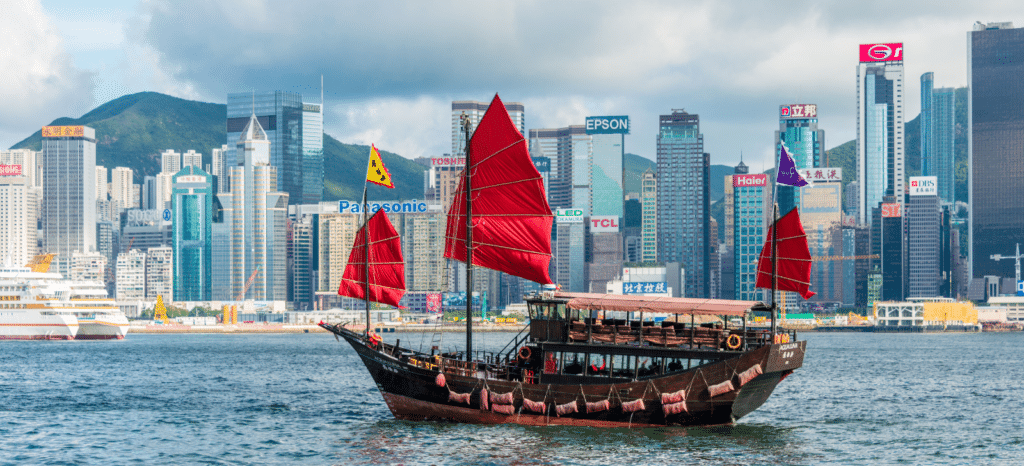
Most people with a Hong Kong layover sit in the terminal and scroll their phones for six hours. That’s a mistake — and one of the most avoidable ones in travel.
Hong Kong is one of those rare cities where even a few hours is enough to feel like you’ve actually been somewhere. The Airport Express drops you in the heart of the city in 24 minutes. Dim sum costs next to nothing. The Star Ferry across Victoria Harbour is one of the great short rides in the world, and it runs every few minutes. You don’t need a hotel, a tour guide, or a full day. You just need a plan — which is exactly what this guide is.
We’ll tell you whether you have enough time to leave, what to do with the hours you have, how to get there and back without sweating the clock, and everything else that sits between you and a genuinely good layover in one of Asia’s most exciting cities.
Quick Answers: Hong Kong Layover FAQs
Yes — and you probably should. Most passport holders enter Hong Kong visa-free. You need a minimum of 5 hours, though 7+ is the sweet spot. The Airport Express connects HKG to Central in 24 minutes flat.
US, UK, EU, Canadian, and Australian passport holders can enter visa-free for up to 90 days. Check your specific passport at iVisa.com before travelling — requirements vary by nationality.
The Airport Express, without question — 24 minutes to Hong Kong Station in Central. It runs every 10 minutes, 24 hours a day. Cost: HK$115 (approximately US$15) one way.
If you genuinely can’t leave — yes, HKG is one of the world’s best airports to be stuck in. Excellent dining, free Wi-Fi, the Plaza Premium Lounge, and the airside Regal Airport Hotel all make the wait genuinely comfortable.
The Layover Decision Gauge
This is the most important section in the guide. Before you do anything else, check your available time against the reality of HKG’s transport and re-entry window. We see travellers get this wrong constantly — they assume a 5-hour layover means 5 hours in the city, when in reality it means about 90 minutes after you factor in the train, security re-entry, and gate time.
Use the gauge below to make the right call before you walk out of those arrivals doors.
We know — it’s tempting. But the Airport Express is 24 minutes each way, HKG security re-entry takes 60–90 minutes at peak times, and that leaves you almost no real city time with a dangerous margin. Don’t risk your onward flight for a rushed walk down Nathan Road. Use the Plaza Premium Lounge in Terminal 1, grab a proper meal at SkyCity, or rest at the Regal Airport Hotel — which is accessible airside without clearing customs.
You have enough time to leave — but only just, and only if you stay disciplined. Head straight to Tsim Sha Tsui (TST) in Kowloon, walk the harbour promenade, eat dim sum, and come straight back. Do not attempt Victoria Peak, do not wander to Hong Kong Island, and do not tell yourself you have “a few extra minutes.” Store your luggage at the airport, set a phone alarm for your return time, and stick to it.
This is the layover Hong Kong was made for. You have time for the Star Ferry, a proper meal, a wander through a neighbourhood or two, and if you’ve got 10+ hours, Victoria Peak — arguably the greatest urban viewpoint in Asia. The city is fast, the transport is excellent, and you will not regret getting off that plane. Just begin your return no later than 2.5 hours before departure and you’ll be fine.
Visa Requirements for a Hong Kong Layover
Here’s the good news: Hong Kong is one of the most accessible cities in the world for layover travellers. Its immigration system operates entirely independently from mainland China — so even if you’d need a visa to visit Beijing, that has no bearing whatsoever on a stopover at HKG.
- Visa-free up to 90 days: US, UK, EU member states, Canada, Australia, New Zealand, Japan, South Korea, and most Western passport holders.
- Visa-free up to 30 days: Many Southeast Asian and Latin American passport holders.
- Visa required: Nationals of certain countries, including Afghanistan, Cuba, Nepal, and others. If you’re unsure, assume you need one and check.
Always verify your specific passport at iVisa.com or Sherpa before departure. Visa rules do change, and finding out at the immigration desk is not a situation you want to be in.
Getting from Hong Kong Airport to the City
HKG sits on Lantau Island, which sounds inconvenient — until you realise the Airport Express makes it one of the most connected airports on earth. For layover travellers with limited time, the train is almost always the right answer. Here’s the full picture so you can decide for yourself:
| Option | Journey Time | Cost (one way) | Best For |
|---|---|---|---|
| Airport Express Recommended | 24 min to Central | HK$115 (~US$15) | All layover travellers. Runs every 10 minutes, 24/7, direct to Kowloon and Central stations. Air-conditioned and reliable. |
| Taxi (red cab) | 40–60 min (traffic dependent) | HK$300–420 (~US$38–55) | Groups of 3–4 splitting the cost. Be aware of Cross-Harbour Tunnel delays during peak hours — a 40-minute estimate can easily become 75. |
| Bus (A11 / A21) | 55–75 min | HK$33–45 (~US$4–6) | Budget travellers with plenty of time. Multiple stops across Hong Kong Island and Kowloon, but not suitable for tight layovers. |
| Ferry (SkyPier) | 30–60 min | HK$160–240 | Travellers connecting directly to Macau or the Pearl River Delta cities only. Not relevant for city layovers. |
Hong Kong Itineraries by Layover Length
Stop trying to improvise a layover in a city you’ve never been to. Each plan below is built around the Airport Express transit time and a firm 2.5-hour return buffer to HKG. Stick to your start-back time and you’ll be at your gate with room to breathe.
Here’s the thing nobody tells you about a Hong Kong layover: the city has a way of making you feel like a real traveller, not just someone passing through. You step off the Airport Express at Kowloon Station and the city hits you immediately — the humidity, the noise, the smell of something frying somewhere nearby, the sheer density of it all. You walk the promenade with the skyline ahead of you and the harbour light bouncing off the water, and for a moment you forget there’s a flight in a few hours. The Star Ferry rocks gently as it pulls away from the dock. Somewhere behind you someone is ordering in Cantonese. Your dim sum arrives in bamboo steamers and it costs almost nothing. And then your phone alarm goes off, and you walk back to the train, and by the time you’re back through security you’re already wondering when you can come back properly. That’s what a good layover does. Hong Kong does it better than almost anywhere.
Luggage Storage During a Hong Kong Layover
If there’s one thing we’d urge every layover traveller to do before leaving the airport, it’s this: store your bags. Hauling a carry-on through the narrow stalls of Mong Kok market, up the queue for the Peak Tram, or along the promenade in the midday heat is miserable. Bag storage costs a few dollars and turns a stressful excursion into a genuinely enjoyable one.
At Hong Kong Airport
Left luggage counters are available in Terminal 1 (Level 5, near arrivals) and in the transfer area before you clear immigration — useful if you want to store bags before even entering Hong Kong. Prices run approximately HK$80–130 per bag per day depending on size. Operating hours: 6am–1am. If you have an overnight layover, confirm 24-hour availability directly with airport staff on arrival.
In the City
eSIMs, VPNs, and Staying Connected in Hong Kong
The moment you walk out of HKG, you lose access to the airport Wi-Fi — and that’s when you discover you need Google Maps, a rideshare app, a translation tool, and your boarding pass all at once. Don’t leave connectivity to chance. Set it up before you land.
Hong Kong has outstanding mobile infrastructure — 5G coverage is city-wide, and free Wi-Fi is available across the entire MTR network, most shopping malls, and many restaurants. An eSIM is the simplest solution for a layover: buy and download it before you travel, and you’ll have data the second you step off the plane.
One thing worth knowing: unlike mainland China, Hong Kong operates under its own internet framework. VPNs are entirely unrestricted. That said, using a VPN on any public airport Wi-Fi — regardless of which country you’re in — is basic security practice. Airport networks are well-known targets for data interception, and a VPN subscription is far cheaper than recovering from a compromised account.
Currency and Payments in Hong Kong
The good news: Hong Kong is about as easy to navigate financially as a city gets. The Hong Kong Dollar (HKD) is pegged to the US Dollar at approximately 7.8:1, which makes mental arithmetic simple. Visa and Mastercard are accepted almost everywhere, and the city’s Octopus Card — a rechargeable transit card — works on every MTR train, bus, tram, taxi, and most convenience stores. If you have one from a previous visit, it’s almost certainly still valid and still loaded.
- Best travel money card: Wise or Revolut for fee-free HKD withdrawals at real mid-market exchange rates.
- Avoid: Airport currency exchange counters. Their rates are significantly worse than ATM rates, and there’s no reason to use them.
- Cash: Still useful at street stalls, wet markets, and smaller local restaurants. HK$300–500 is plenty for a one-day layover.
Travel Insurance for Hong Kong Layovers
A lot of travellers skip travel insurance for layovers because they assume “nothing will go wrong.” The problem is that Hong Kong sits at the junction of flight routes serving Southeast Asia, Japan, Korea, and Australia — and when something goes wrong at HKG, it tends to cascade. A typhoon, a mechanical delay, or a missed connection here can mean rebooking a long-haul flight at short notice, which is a brutal experience without coverage.
- If both flights are on the same booking: The airline is legally obligated to rebook you at no extra cost if the delay is their fault.
- If your flights are booked separately: You are entirely on your own. A replacement long-haul ticket booked at the last minute can cost more than your entire original trip. This is the scenario insurance exists for.
Essential Layover Gear
A long layover in a great city is one thing. A long layover on a hard plastic seat with a dead phone and a crick in your neck is another. These are the items that make a genuine difference — whether you’re out exploring Hong Kong or riding out a delay in the terminal.
Frequently Asked Questions
Yes — and for most travellers with 5+ hours, we’d actively encourage it. Most nationality holders can enter Hong Kong visa-free, with no advance application required for US, UK, EU, Canadian, and Australian passport holders. The Airport Express connects HKG to Central in 24 minutes, running every 10 minutes around the clock. The one rule that matters: always allow at least 2.5 hours to return to the airport, clear security, and reach your gate. Don’t cut that margin. Everything else is flexible.
If you genuinely don’t have enough time to leave safely, then yes — HKG is one of the best airports in the world to be stuck in. Terminal 1 has extensive dining including proper sit-down Cantonese restaurants, a large retail area, free high-speed Wi-Fi throughout, and shower facilities available through the Plaza Premium Lounge day pass. The standout option for rest is the Regal Airport Hotel, which is connected to the terminal airside — you can book a day room without clearing customs, making it an excellent choice for a few hours of sleep on a very short or overnight layover.
Most Western passport holders can enter Hong Kong visa-free for up to 90 days — including the US, UK, EU member states, Canada, Australia, New Zealand, Japan, and South Korea. Some nationalities do require a pre-arranged visa. Check your specific passport at iVisa.com before you travel.
One thing that trips people up: Hong Kong immigration is entirely separate from mainland China. Even if you would need a Chinese visa to visit Shanghai or Beijing, that has absolutely no bearing on a layover at HKG — unless you are physically crossing the border into the mainland.
Go straight to Tsim Sha Tsui in Kowloon via the Airport Express. Walk the waterfront promenade — the view of the Hong Kong Island skyline across the harbour is genuinely one of the best in Asia and takes about 20 minutes to walk end to end. Then eat dim sum at Tim Ho Wan, the world’s most affordable Michelin-starred restaurant. Take the Airport Express back with your buffer intact. That’s a real Hong Kong experience compressed into a tight window, and most people don’t attempt it. They should.
Very much so. Hong Kong has consistently low violent crime rates and is considered one of the safest major cities in Asia for solo travellers, including solo women travellers. The areas most relevant for a layover visit — Tsim Sha Tsui, Central, and Sheung Wan — are busy, well-lit, and well-served by public transport at all hours of the day and night. The usual urban awareness applies — keep an eye on your belongings in crowded markets and on the MTR during rush hour — but you should have no concerns about exploring independently.
If both flights are on the same booking, the airline is obligated to rebook you at no extra cost if the delay was their fault. If your flights are booked separately — which is very common with budget airline combinations or when booking around a long layover — you bear the entire cost of a replacement ticket. On a long-haul route booked at the last minute, that can mean thousands of dollars. Travel insurance covering missed connections is genuinely not optional for this scenario. Insure My Trip lets you compare multiple plans side by side, while World Nomads and EKTA Traveling are both solid per-trip options — either costs a fraction of what a surprise rebooking will.
Airalo is our top pick for a single-country Hong Kong layover — plans start around US$4 for 1GB, which is more than enough for a day of navigation, messaging, and maps. Download the app, purchase your plan, and install the eSIM profile before you travel so it activates automatically when you land. If Hong Kong is one leg of a longer Asia trip, Nomad eSIM offers more cost-effective regional packages covering multiple countries. Both require an unlocked, eSIM-compatible device — iPhone XS or later, or most Android flagships from 2020 onwards.
Yes — Hong Kong is one of the most card-friendly cities in the world. Visa and Mastercard are accepted almost universally: restaurants, shops, taxis, hotels, and most street-level retail. For smaller purchases at wet markets, street stalls, or older local restaurants, carry some HKD cash — HK$200–300 should cover you for a day. Use a Wise or Revolut card to withdraw cash at real exchange rates with no fees. Avoid the currency exchange counters at the airport entirely — their rates are poor and there’s no reason to use them when an ATM is a two-minute walk away.
