
Tokyo Disney Resort: The Complete Stopover Guide (2026)
Why Tokyo Disney Should Be Your Next Trip
Picture this: you’re standing in Mediterranean Harbor at Tokyo DisneySea, watching the sunset paint Mount Prometheus in shades of gold and amber. A full-size replica of an Italian harbor surrounds you, complete with gondolas gliding through actual waterways. The air smells like fresh popcorn and the sea breeze. In the distance, you hear the rumble of Journey to the Center of the Earth launching into the volcano. And you realize something startling: this doesn’t exist anywhere else in the world.
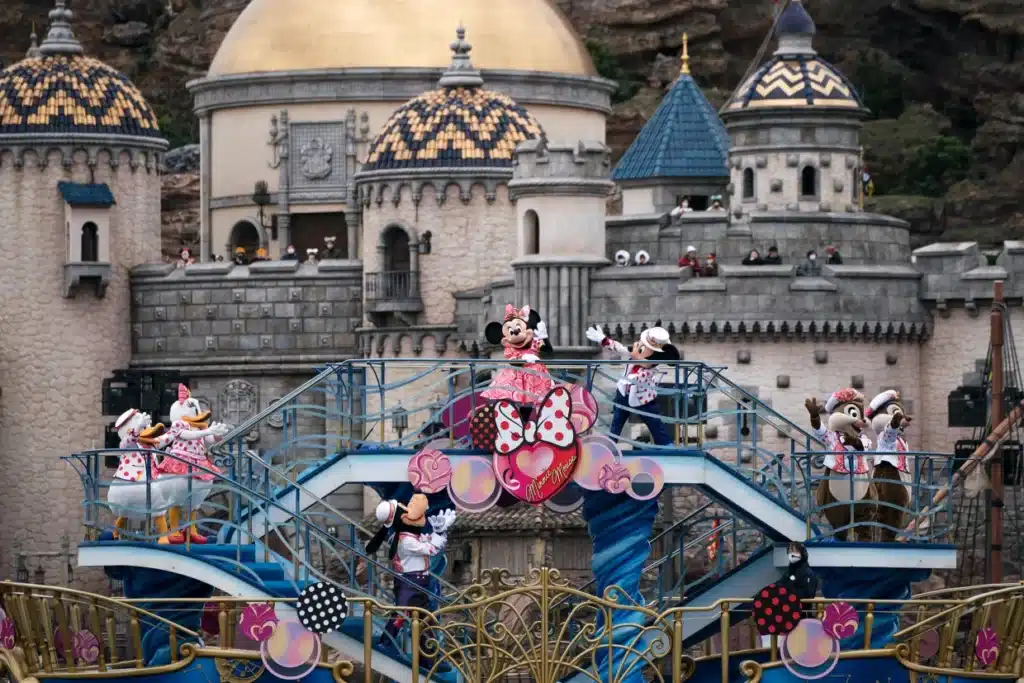
Tokyo Disney Resort isn’t just another Disney park. It’s what happens when Japanese precision and hospitality meet Disney’s creative vision, resulting in what is widely considered the finest theme park experience on Earth. But here’s the part that surprises most Americans: visiting Tokyo Disney can actually cost less than a trip to Walt Disney World or Disneyland.
The Currency Advantage You Can’t Ignore
💴 CURRENCY ALERT: The Perfect Time to Visit Japan
Current Exchange Rate: 1 USD = ¥157 (as of December 2025)
Historical Context:
- 2019 Pre-Pandemic: 1 USD = ¥109
- 2025 Current: 1 USD = ¥157
- Your Dollar Buys 44% More in Japan Than It Did in 2019
What This Means for Your Trip:
- A ¥2,900 park ticket that cost $27 in 2019 now costs just $18
- A ¥1,500 meal that cost $14 in 2019 now costs just $9.50
- Hotel rooms, transportation, and souvenirs all effectively 44% cheaper
Why the Yen is Weak: The Bank of Japan maintained ultra-low interest rates while the US Federal Reserve raised rates aggressively, creating this historic valuation gap. While economists debate how long this will last, right now represents a generational opportunity for American travelers to experience Japan at unprecedented value.
Bottom Line: If you’ve been dreaming of visiting Tokyo Disney, 2025 and 2026 offer the best exchange rates Americans have seen in decades. This window may not last forever.
The Real Cost Comparison
Let’s put actual numbers to this. A family of four visiting for a week will find striking differences:
| Category | Tokyo Disney Resort | US Disney Parks |
|---|---|---|
| 1-Day Ticket | $55 to $72 | $110 to $160 |
| Hotel (Mid-Range) | $150 to $250/night | $300 to $500/night |
| Quick Service Meal | $8 to $15 | $20 to $30 |
| Snacks | $3 to $5 | $8 to $12 |
| Total Daily Cost (Family of 4) | ~$400 to $600 | ~$800 to $1,200 |
That same family spending $5,000 to $7,000 on a Disney World vacation could visit Tokyo Disney, stay at a superior hotel, eat remarkable food, and still have budget remaining for several days exploring Kyoto’s temples, soaking in hot springs, or wandering through Tokyo’s electric neighborhoods.
But the real value transcends money. Tokyo Disney offers experiences that don’t exist in America. DisneySea, the second park, has no equivalent anywhere. Journey to the Center of the Earth is a thrilling indoor coaster through an active volcano. The entire Mediterranean Harbor port looks airlifted from Italy. Tower of Terror has a completely different ride system and story. 20,000 Leagues Under the Sea in actual submarines. These aren’t variations on American rides. They’re unique attractions that American Disney fans can only experience here.
And then there’s Japan itself. After two or three days at the parks, you can take the bullet train to Kyoto in two hours. Walk through thousands of vermilion torii gates at Fushimi Inari. Stay at a traditional ryokan with kaiseki dining. Visit Hiroshima’s Peace Memorial or hike to mountain temples. Disney becomes part of a larger adventure rather than the entire trip, enriching both experiences.
Making the Decision: Is This Trip Right for You?
Tokyo Disney makes sense if you want a theme park experience that feels simultaneously familiar and completely foreign. Suppose you appreciate attention to detail, immaculate cleanliness, and operational efficiency that borders on art. If the idea of exploring an entire country while hitting world-class theme parks appeals to you. If you’re willing to do more planning in exchange for better value and unique experiences.
It requires more preparation than driving to Anaheim or flying to Orlando. You’ll navigate language barriers, advance ticket systems, and international logistics. But thousands of American families make this trip every year, and the overwhelming consensus is the same: the effort is absolutely worth it.
If you’re intrigued and ready to move from curiosity to concrete planning, here’s exactly how to make it happen.
Part 1: Getting There
Understanding Your Airport Options
Tokyo operates two major international airports. Which airport you fly into significantly affects your journJourneyhe resort.
Narita International Airport is located about 60 kilometers east of Tokyo and serves most long-haul flights from North America and Europe. The airport experience is remarkably smooth, with 30- to 45-minute immigration waits, clear English signage, and numerous ATMs that accept foreign cards. From Narita to Tokyo Disney Resort in Maihama, you’re looking at 60 to 70 kilometers and 60 to 90 minutes of travel time.
Haneda Airport, only 17 kilometers from central Tokyo, increasingly handles international flights, particularly from Asia and select North American routes. It’s more compact, easier to navigate, and gets you to Disney in 45 to 60 minutes, covering about 30 to 35 kilometers. If you have a choice, Haneda offers significant time and hassle savings.
Transportation: The Limousine Bus Wins
For families or anyone with luggage, the Airport Limousine Bus is the correct answer. These comfortable coaches with reclining seats and bathrooms drop you directly at hotel entrances.
From Narita: ¥2,900 per adult ($18), 60 to 80 minutes
From Haneda: ¥1,300 per adult ($9), 45 to 60 minutes
Book online at https://www.limousinebus.co.jp/en/ two to three weeks ahead for guaranteed seats, or buy tickets at the orange counters in arrivals halls. Each passenger can check two large suitcases into the cargo holds at no extra charge. The bus stops at your hotel’s front door.
The Train Alternative: If you’re comfortable with public transit or have a JR Pass, trains are an option but require patience. From Narita, take the Narita Express to Tokyo Station, then transfer to the JR Keiyo or Musashino Line to Maihama Station. Total time is 90 to 110 minutes and costs about ¥3,290 ($21).
The challenge is Tokyo Station itself, requiring 15 to 20 minutes of walking through underground passages, often without elevators. With heavy luggage while jet-lagged, this becomes genuinely difficult.
From Haneda, take the Tokyo Monorail to Hamamatsucho, transfer to the Yamanote Line to Tokyo Station, then the Keiyo Line to Maihama. Total time is 55 to 75 minutes for about ¥880 ($6).
The train absolutely works, but be realistic about the physical demands.
The Luggage Solution That Changes Everything
Japanese travelers rarely drag suitcases through stations or theme parks. They use Yamato Transport, recognizable by its black cat logo. At either airport, find the Yamato counter in arrivals, hand over your large bags, pay ¥2,700 ($18) per bag, and they deliver them directly to your hotel room.
Drop off before 11:00 AM, and bags arrive the same day by evening. Afternoon drop-offs arrive the next morning by 10:00 AM.
Pack a daypack with one change of clothes and essentials. Ship the big stuff. Head straight to the parks. Your luggage appears in your room later. This single service transforms the arrival experience from stressful to effortless.
Part 2: Where to Stay
Your hotel choice directly impacts your park experience, especially regarding tickets and early entry privileges.
The 2025 Ticket Reality
You cannot arrive at Tokyo Disney and purchase tickets at the gate. The parks operate on a first-come, first-served basis and frequently sell out on weekends and holidays. The old system, where official hotels could sell you tickets even when parks were sold out, no longer exists.
If you book a room-only rate through any booking platform, the hotel cannot sell you park tickets. Buy tickets online before leaving home through the official Tokyo Disney Resort website at https://reserve.tokyodisneyresort.jp/en/ or through Klook at https://www.klook.com/activity/695-tokyo-disney-resort-1-day-pass-tokyo/ if US credit cards fail due to authentication issues. Klook is an official Disney partner with 86,000+ verified reviews.
Hotel Tier Breakdown
| Feature | Disney Hotels | Official Hotels | Partner Hotels |
|---|---|---|---|
| Happy Entry (15 min early) | ✓ Yes | ✗ No | ✗ No |
| Guaranteed Tickets | ✓ Limited | ✗ No | ✗ No |
| Distance to Parks | Walk/5 min monorail | 5 min monorail | 1 train stop/shuttle |
| Average Nightly Cost | $300 to $600 | $150 to $300 | $80 to $150 |
| Room Size | Large | Very Large | Standard |
| Best For | Maximum experience | Value + convenience | Budget travelers |
Disney Hotels (Disneyland Hotel, Ambassador Hotel, MiraCosta, Celebration Hotel, Toy Story Hotel) offer Happy Entry, allowing you to enter the parks 15 minutes before the official opening every day except on check-in day. During Happy Entry, perhaps 500 to 1,000 guests are inside. At the official opening, 20,000 to 30,000 flood through. That first ride you complete with no wait would require 90 to 120 minutes by 10:00 AM. Use Happy Entry for Beauty and the Beast at Disneyland, or Soaring and Frozen Journey at DisneySea. For many visitors, this alone justifies the premium cost.
Official Hotels (Hilton Tokyo Bay, Sheraton Grande Tokyo Bay, Hotel Okura, Grand Nikko) sit on the monorail loop five minutes from both parks. They feature spacious rooms (300 to 400 square feet), a lobby convenience store selling breakfast and snacks at standardr prices, and English-speaking staff. You sacrifice Happy Entry but pay $150 to $300 per night, roughly half the cost of a Disney hotel. This is the sweet spot for most families.
Partner Hotels sit one train stop away or rely on shuttle buses running every 20 to 30 minutes. These make sense for tight budgets or when you plan shorter park days to explore Tokyo extensively. Expect $80 to $150 per night.
Part 3: Securing Your Tickets and Connectivity
The Ticket Purchase Process
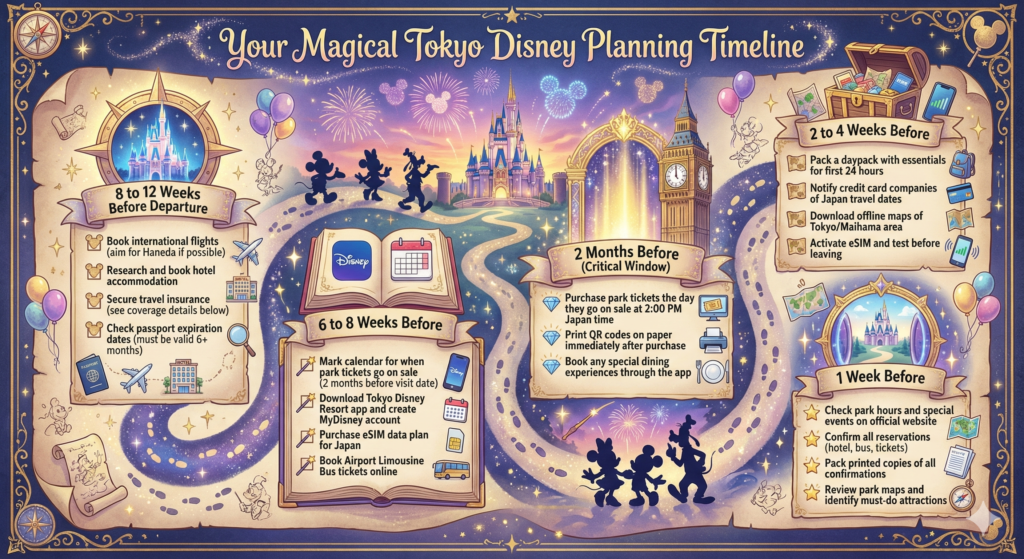
Tickets go on sale two months in advance. Popular days (weekends, Japanese holidays, cherry blossom season, Golden Week) can sell out within hours. Dynamic pricing runs from about $55 on weekdays in slower months to $67 to $72 on peak days.
Critical printing instruction: When you receive your QR codes, print them on paper. Gate scanning is faster with paper than glare-prone phone screens. More importantly, once inside, you must scan your ticket into the Tokyo Disney Resort app to book ride reservations. You cannot scan a QR code on your phone screen with that same phone’s camera. With paper, you scan it with your phone.
Mobile Connectivity is Mandatory
Tokyo Disney in 2025 runs on the app. You need data to book ride reservations, place mobile food orders, and check wait times. Park WiFi is spotty beyond the entrance gates.
Install an eSIM before leaving home using Airalo (https://www.airalo.com/), Ubigi (https://www.ubigi.com/), or Holafly (https://holafly.com/). These cost $5 to $15 for 5 to 10GB, valid for 7 to 15 days. Installation takes two minutes, and you’ll have reliable data throughout Japan.
🇯🇵 Japan & Tokyo Disney Resort Connectivity Rankings
Staying connected is crucial at Tokyo Disney Resort. You need reliable data for the Tokyo Disney Resort App (wait times, Premier Access, Mobile Order) and Google Maps for navigating trains.
Here is the ranked list of the best tools for your trip.
🏆 The “Must-Have” Connectivity Leaderboard
| Rank | Product | Type | Rating | Best Network / Feature | Best For… | 🏰 The Disney/Japan Verdict |
| #1 | Ubigi | eSIM | ⭐⭐⭐⭐⭐ | Docomo (5G) | Reliability | The “Bunker Buster.” Runs on NTT Docomo (Japan’s Verizon). It penetrates thick walls best, meaning you still get signal in deep indoor queues like Journey to the Center of the Earth or Soaring. |
| #2 | NordVPN | VPN | ⭐⭐⭐⭐⭐ | Speed | Performance | Speed Demon. Essential for securing public Wi-Fi at hotels/airports without slowing down your connection when you’re trying to refresh the app for a canceled Fantasy Springs slot. |
| #3 | Holafly | eSIM | ⭐⭐⭐⭐½ | Unlimited Data | Heavy Users | The “Anxiety Killer.” You will be on your phone for 12+ hours straight at Disney. Unlimited data means you never have to panic about running out while uploading 4K video of the parade. |
| #4 | Surfshark | VPN | ⭐⭐⭐⭐½ | Unlimited Devices | Families | The Family Hero. One subscription covers every iPad, iPhone, and laptop in your family. Perfect for downtime at the hotel when everyone is streaming different shows on hotel Wi-Fi. |
| #5 | [suspicious link removed] | eSIM | ⭐⭐⭐⭐ | Softbank / KDDI | Budget / Value | The City Slicker. Excellent signal in open areas and central Tokyo. The app is the easiest to use for beginners, though signal can struggle slightly in concrete basements compared to Ubigi. |
| #6 | ExpressVPN | VPN | ⭐⭐⭐⭐ | Simplicity | Non-Techies | The “Easy Button.” If you don’t want to mess with settings, this is the premium choice. Just press one button to secure your connection. |
💡 Quick Summary: Which should you pick?
1. For the Solo Traveler or Couple:
- Combo: Ubigi + NordVPN
- Why: You get the strongest possible signal (Docomo) for grabbing Disney passes, and the fastest VPN for protecting your data.
2. For the Power User / Influencer:
- Combo: Holafly + NordVPN
- Why: You cannot afford to run out of data while livestreaming or posting stories. Holafly’s unlimited plan is safer than buying a fixed gigabyte plan.
3. For the Family (3+ People):
- Combo: Ubigi (for parents) + Surfshark (for devices)
- Why: Parents need reliable data for the Disney App (Ubigi). The kids need to watch Netflix on their iPads at the hotel safely (Surfshark allows unlimited device connections).
(Note: These recommendations are based on network performance in the Maihama/Tokyo area. I do not earn commissions from these links; they are provided for your convenience.)
Part 4: Park Strategy and What Makes Tokyo Disney Different
The Operational Differences
Tokyo Disney operates with Japanese efficiency and courtesy. People wait in orderly lines. Cast members bow when greeting guests. Cleanliness borders on obsessive. The parks feel genuinely safer and more relaxed than their American counterparts.
At 9:00 AM, enter. Place a mobile order for lunch pickup between 12:00 and 12:30 PM through the app. Popular restaurants sell out of time slots by 10:30 AM on busy days. This guarantees you eat when you want without wasting an hour in line.
Unlike US Disney parks, you can bring your own water bottles and snacks. Vending machines every 100 meters sell cold drinks for ¥200 to ¥250 ($1.30 to $1.70). Bring a refillable bottle and use the drinking fountains throughout the parks.
What’s Different in 2025 and 2026
Space Mountain permanently closed in July 2024 and was demolished. A new version opens in 2027. Buzz Lightyear’s Astro Blasters closed in October 2024 and will be converted into a Wreck-It Ralph Sugar Rush attraction, opening late 2026 or early 2027.
Starting December 27, 2025, it’s a small world receives a temporary Marvel overlay featuring Groot, rwhich will runthrough at least spring 2026.
Fantasy Springs, DisneySea’s massive expansion,, opened in June 2024 an andd features Froze-n, Rapunze-l, and PeterPan-themedd areas. The land is open access,s, but Journeyequire either a Standby Pass (free, limited availability) or Disney Premier Access (paid, ¥2,000 to ¥2,500 per person per ride). For Frozen Journey on busy days, arrive 60 to 90 minutes before park opening and immediately grab a Standby Pass when gates open.
The Food Experience
Tokyo Disney achieved viral fame for its food, and the hype is deserved. Green Alien Mochi at Pan Galactic Pizza Port features three dumplings filled with chocolate, strawberry, and custard for ¥500. The Gyoza Dog at Refreshment Station is essentially a potsticker in a steamed bun, priced at ¥600. Sea Salt Ice Cream Monaka at Mermaid Lagoon is a shell-shaped ice cream sandwich priced at ¥450.
For sit-down meals, Queen of Hearts Banquet Hall at Disneyland delivers Alice in Wonderland theming with a buffet setup. Vulcania Restaurant at DisneySea serves Chinese food inside the volcano with dramatic dark theming. Casbah Food Court at Arabian Coast offers curry and naan with ample seating capacity.
Popcorn flavors unique to Tokyo include curry, soy sauce and butter, black pepper, and honey. Buy a collectible bucket for $20 to $30, then get refills for $4 to $5.
Essential Resources and Bookings
Park Tickets
- Official Website: https://reserve.tokyodisneyresort.jp/en/
- Klook (for international cards): https://www.klook.com/activity/695-tokyo-disney-resort-1-day-pass-tokyo/
Transportation
- Airport Limousine Bus: https://www.limousinebus.co.jp/en/
- Yamato Transport: Available at airport arrival halls (look for black cat logo)
Hotels
- Disney Hotels: https://www.tokyodisneyresort.jp/en/hotel/
- Hilton Tokyo Bay: https://www.hiltontokyobay.jp/
Mobile Connectivity
- Airalo: https://www.airalo.com/
- Ubigi: https://www.ubigi.com/
- Holafly: https://holafly.com/
Travel Insurance
A Tokyo Disney trip involves unique risks that make insurance essential:
Flight-Related Issues: Cancellations, missed connections, or airline route changes leave you stranded and losing prepaid tickets.
Health Emergencies: Medical evacuation from Japan costs $50,000 to $150,000. Hospital stays in Tokyo run $1,000 to $3,000 per day without insurance.
Trip Interruption: Family emergencies requiring immediate return, testing positive for COVID before departure, natural disasters affecting Tokyo, or sudden illness preventing travel.
Lost or Delayed Baggage: Airlines losing luggage containing park outfits and essentials, or delaying bags, resulting in a first park day without proper clothing.
What to Look For:
- Trip cancellation coverage for 100% of prepaid costs
- Emergency medical coverage minimum $100,000
- Emergency evacuation coverage
- Baggage loss and delay coverage
- 24/7 English-speaking travel assistance
- COVID-related cancellation coverage
- “Cancel for any reason” upgrade option
Expect to pay-o 8% othe f the total trip cost. For a $6,000 family trip, that’s $240 to $480 in premiums.
Frequently Asked Questions
Q: Can I really visit Tokyo Disney for less than a US Disney park trip?
A: Absolutely. Lower ticket prices ($55 to $72 vs $110 to $160), lower hotel rates, and significantly cheaper food mean daily costs are 40 to 50 percent lower. Flights from the West Coast often cost about the same as cross-country flights to Orlando. The weak yen makes this the best value window in decades.
Q: Do I need to speak Japanese?
A: Not at all. All signage includes English, staff at major touchpoints speak English, and the app operates entirely in English. Learning a few basic phrases enhances the experience, but isn’t required.
Q: Is Happy Entry worth the extra hotel cost?
A: For many visitors, yes. Those 15 minutes translate to riding the most popular attraction with virtually no wait, saving 90 to 120 minutes. If visiting during peak season or having only one or two days, the time savings can justify an additional $150 to $300 in hotel costs.
Q: Can I visit both parks in one day?
A: Technically, four-day passes allow park hopping after 2:00 PM, but each park deserves a complete day minimum. DisneySea is massive and completely different from any Disney park you’ve visited. Don’t shortchange yourself.
Q: What’s the best time of year to visit?
A: January (after New Year’s), February, and early December offer lower crowds and lower prices. Avoid Golden Week (late April/early May), summer holidays (late July/August), and cherry blossom season (late March/early April). Weekdays beat weekends always.
Q: Should I bring my own food and water?
A: Unlike US Disney parks, Tokyo Disney allows outside food and non-alcoholic drinks. Bringing water bottles and snacks saves money and time. However, the park food is genuinely good and reasonably priced, so don’t skip unique offerings entirely.
Q: How early should I arrive at the parks?
A: Plan to be at the entrance gates 60 to 90 minutes before official opening, especially if targeting Fantasy Springs at DisneySea. Gates typically open 15 to 30 minutes early for security screening. With Happy Entry, arrive even earlier.
Q: Do I need Disney Premier Access (paid FastPass)?
A: Not necessarily. If you arrive early, use Happy Entry if available, and strategically book free Standby Passes, you can have a great day without paying extra. However, on peak days or with small children who can’t handle long waits, Premier Access ($15 to $20 per person per ride) can be worth it for one or two key attractions.
Q: What about rain or bad weather?
A: Tokyo Disney operates in most weather. Bring a rain jacket or poncho. Many attractions are indoors or covered. Parks actually become less crowded during rain, making it a strategic time to ride outdoor attractions if you don’t mind getting wet.
Q: Should I buy souvenirs at the parks or wait?
A: If you see something you love, buy it immediately. Popular items sell out and may not restock. Unlike US parks, where “I’ll get it later” works, Tokyo Disney items are often limited runs. Don’t risk regret over $20.
Take Action: Your Tokyo Disney Adventure Awaits
Tokyo Disney Resort offers an experience you cannot replicate at any other Disney destination. The unparalleled quality of DisneySea. The incredible food. The cultural experience of visiting Japan itself. The value that transcends the ticket price.
The weak yen creates a rare window where this trip makes financial sense in ways it hasn’t for decades. Park tickets that cost $27 in 2019 now cost $18. Hotels, meals, and souvenirs all benefit from the same exchange rate advantage. Add the fact that Tokyo Disney offers better experiences at lower base costs than US parks, and you’re looking at a trip that delivers extraordinary value.
Your Next Steps:
- Secure your flights during fare sales or by using points
- Book accommodation at your chosen hotel tier
- Purchase travel insurance to protect your investment
- Mark your calendar for when park tickets go on sale
- Download the apps and install your eSIM
Stop researching. Start booking. The magic of Tokyo Disney, combined with the adventure of exploring Japan, creates memories that last a lifetime. The parks will exceed your expectations. The food will surprise you. The efficiency and cleanliness will leave you impressed with other theme parks.
Your Tokyo Disney adventure awaits. Make it happen.

