
Icelandair Stopover See Iceland Without Paying for Another Flight
The Original Travel Hack — Two Destinations for the Price of One Transatlantic Ticket
The Icelandair Stopover is the oldest and simplest airline stopover programme in the world. When flying transatlantic between North America and Europe, you can add a stop in Iceland for up to seven nights at no additional airfare cost. Flex fare passengers can extend to 21 nights. No hotel included, no tours arranged, no eligibility checklist to work through — just one flight ticket that contains two complete destinations. The entire value proposition is that Iceland is now part of your trip instead of something you book separately. You are not getting a package. You are getting the freedom to use Iceland however you choose, from a Blue Lagoon afternoon on a 24-hour connection to a full Ring Road circumnavigation on a 7-day Flex booking, all on the same transatlantic fare you would have paid anyway.
Icelandair has been offering Iceland stopovers since the 1960s, when the airline was still called Loftleiðir and Iceland was a little-known mid-Atlantic refuelling stop. Arthur Frommer mentioned the deal in the first edition of Europe on 5 Dollars a Day in 1961. In 2026, the programme is structurally identical to what it was then — Icelandair’s geography is the product. Keflavík Airport sits almost exactly halfway between the eastern seaboard of North America and the major cities of Europe, which means Icelandair can run a genuinely competitive transatlantic operation by making Iceland the layover. The stopover programme converts that layover into a destination.
What makes the Icelandair Stopover meaningfully different from Turkish Airlines’ free hotel or Etihad’s Abu Dhabi package is that it offers no extras whatsoever — no accommodation, no transfers, no tours. What it offers instead is time and flexibility. Seven nights is enough to drive the entire Ring Road. It is enough to see the Northern Lights, hike a glacier, swim in geothermal pools on the south coast, and still have days left in Reykjavík. The programme is entirely self-directed, which is exactly why experienced travellers rate it so highly. You are not confined to a partner hotel in a specific part of the city. You are in Iceland, with your transatlantic fare already paid.
How the Icelandair Stopover Works — The Core Mechanics
The programme is structurally simpler than any other airline stopover. There is no separate application, no voucher to request, no minimum hours to calculate. You choose the stopover when you book your transatlantic ticket, and the system prices it as a single fare.
The flights only — your transatlantic airfare with Iceland as an included stop rather than a brief layover. No hotel, no meals, no transfers, no tours are included. You arrange and pay for everything on the ground. The value is that you are visiting Iceland without paying for a separate return flight from your origin city to Reykjavík.
Economy Light fares: 1–3 nights. Economy Standard / Saga Premium fares: up to 7 nights. Economy Flex or Saga Premium Flex fares: up to 21 nights (8–21 nights must be booked via the Icelandair service centre, not online). You can also stopover on both outbound and return legs on the same ticket — two Iceland stays on a single round-trip booking.
The airfare should be essentially the same as a standard transatlantic connection through Keflavík. You may see a slight fare difference of $10–30 based on the day your onward flight operates, but you are not paying a stopover fee. By comparison, booking a separate return flight from your US city to Reykjavík and back before your Europe ticket would typically cost $400–800 extra. The stopover gives you Iceland for the price of the fare difference only.
Iceland is a Schengen Area member. US, Canadian, UK, Australian, and most other major passport holders do not need a visa for stays under 90 days. Schengen visa holders from countries that require one should note that their Schengen visa covers Iceland. Icelandair has a visa check tool at icelandair.com to confirm for your specific nationality. The stopover does require you to clear immigration and exit the airport.
Fare Class Matrix — Which Ticket Unlocks Which Stopover Length
The maximum stopover duration varies by fare class — this is the detail the old Icelandair stopover guides consistently get wrong by quoting “up to 7 nights” as the universal rule. Economy Light passengers are restricted to 3 nights maximum. Flex passengers can stay up to 3 weeks.
| Fare Class | Max Stopover | Book Online? | Baggage Included | Change/Cancel | Best For |
|---|---|---|---|---|---|
| Economy Light Cheapest fare |
1–3 nights max | Yes — online | Carry-on + personal item only (no checked bags) | No changes or refunds | Quick 1–2 night Blue Lagoon/Reykjavík break on a tight budget. Pack light. |
| Economy Standard Most popular fare |
Up to 7 nights | Yes — online | 1 checked bag included | Changes for a fee; no refund | 3–7 night stopovers — Golden Circle, south coast, Snæfellsnes. Best value for most travellers. |
| Economy Flex | Up to 21 nights | 7 nights online; 8–21 nights via service centre | 1 checked bag included | Free changes; refundable | Long Ring Road trips, remote Iceland exploration, maximum flexibility. For 8–21 nights, call the service centre. |
| Saga Premium Business class |
Up to 7 nights | Yes — online | 2 checked bags (32kg each) | Changes for a fee; no refund | Premium cabin stopover. Recliner seat, lounge at KEF, complimentary meals. Stopover rules same as Economy Standard. |
| Saga Premium Flex | Up to 21 nights | 7 nights online; 8–21 via service centre | 2 checked bags (32kg each) + 2 carry-ons | Free changes; refundable | Premium long-stay stopover. Lounge access at KEF plus full flexibility. Best product for 2+ week Iceland exploration. |
Unlike Singapore Airlines (which allows one stopover per round trip on Saver awards) or Turkish Airlines (one stopover per journey), Icelandair allows a stopover on both the outbound and the return leg of a round-trip ticket. This means you can spend time in Iceland both on the way to Europe and on the way back to North America — two separate Iceland stays on one round-trip ticket. Each stopover counts against its fare class limit (3 nights for Economy Light, 7 nights for Standard/Saga Premium, 21 nights for Flex). Combined, an Economy Standard ticket could give you up to 14 nights in Iceland across two separate stays.
Icelandair’s cheapest fare, Economy Light, is increasingly how the airline competes on price — and it has a stopover restriction that catches travellers out. Economy Light only permits a 1–3 night stopover (not 7 nights like all other fares). It also includes no checked bags — only a carry-on and personal item. For a 3-night Iceland stopover with checked luggage, Economy Light does not work: you would need to either buy a bag add-on or upgrade to Economy Standard. Always check the fare class before assuming the 7-night maximum applies to your ticket.
How to Book the Icelandair Stopover — Step by Step
Booking is genuinely simple compared to other airline stopover programmes — no post-booking applications, no 72-hour email deadlines, no voucher requests. The entire booking happens in one transaction on icelandair.com.
Go directly to icelandair.com — not Google Flights, Expedia, or Kayak. Stopover programme benefits only apply when booked directly through Icelandair. Third-party booking sites will show the flights but cannot process the stopover component correctly or give you Saga Points on the booking.
On the search interface, look for the “Stopover in Iceland” toggle or option at the top of the flight search page. Select it. Then enter your true origin city and your true final European destination — not Keflavík. The system builds the stopover routing automatically.
Select how many nights you want to spend in Iceland (1–7 nights online; 8–21 nights requires a service centre call). The system will display your inbound Iceland arrival and your onward flight options. Prices update in real time — try different durations to see the fare difference.
You can add the stopover to the outbound leg (North America → Iceland → Europe), the return leg (Europe → Iceland → North America), or both. Stopovers on the return leg are often slightly cheaper as fewer passengers book them, and fares for the Iceland-to-North-America segment tend to be lower. Try both options and compare.
Book directly. Your ticket contains all segments including the Iceland stay. You will need to collect your bags at Keflavík on arrival and re-check them when you depart for your European destination. Book your Iceland accommodation, tours, and Flybus transfer to Reykjavík separately. Pre-book Blue Lagoon entry and Golden Circle tours — both sell out weeks ahead in summer.
The Stopover in Iceland programme is only available when booking directly through icelandair.com. Third-party travel sites (Expedia, Kayak, Google Flights, etc.) can display Icelandair fares but cannot apply the stopover routing or qualify the ticket for the programme. If you book through a third party and then try to add a stopover, change fees apply and Icelandair may not be able to accommodate the request. Additionally, Saga Club points are only earned on Icelandair direct bookings.
Ready to add Iceland to your transatlantic ticket?
Visit icelandair.com, select “Stopover in Iceland,” enter your origin and final European destination, and choose your duration. Book direct — no voucher or application required.
The 2026 Icelandair Network — Which Routes Are Eligible
The Icelandair Stopover is available on any transatlantic flight between North America and Europe routed through Keflavík (KEF). As of spring 2026, Icelandair serves 17 US cities, 3 Canadian cities, and over 30 European destinations. Nashville, Pittsburgh, and Miami are among the newest US additions, with Edinburgh, Malaga, and Gdańsk added on the European side. The network is the widest it has ever been — meaning more origin and destination combinations qualify for the stopover than at any previous point.
All eligible for the Iceland Stopover Programme
17 US cities + 3 Canadian cities as of spring 2026. New additions in 2025–26 shown in teal.
30+ cities across 15+ countries
Year-round and seasonal European routes. New 2025–26 additions in teal.
The 2026 network additions meaningfully expand the stopover opportunity in both directions. On the US side, Nashville and Pittsburgh give the programme its first meaningful presence in the American South and Mid-Atlantic, markets previously underserved by direct transatlantic options. Miami adds a major winter market. On the European side, Edinburgh (launched September 2025, 80 years after Icelandair’s first Scotland flight) connects Scotland directly to Iceland for the first time, while Malaga and Gdańsk add Southern Spain and Poland. The coming Tromsø winter service (October 2026) is particularly interesting: passengers can now combine an Iceland stopover with Northern Norway on a single booking, potentially creating a dual-Arctic stopover itinerary.
What to Do in Iceland — Experiences by Stopover Length
Iceland’s geography is simultaneously compact and enormous. The entire country is smaller than the state of Kentucky, but it contains active volcanoes, moving glaciers, geysers, black sand beaches, midnight sun, and the Northern Lights — often within a few hours’ drive of each other. The key constraint for stopover planning is the 40–45 minute drive from Keflavík Airport to central Reykjavík, which means your usable time starts from arrival at the hotel, not from touchdown. Here is what each duration realistically delivers.
Blue Lagoon directly from the airport
The Blue Lagoon is 20 minutes from Keflavík Airport — almost exactly between the airport and Reykjavík. Pre-book entry (essential — it sells out weeks ahead). Arrive at the lagoon before heading to the city: the geothermal pools open from 07:00 and early morning arrivals from North America can be at the lagoon by 07:30 after clearing immigration. Use the lagoon’s lockers to store your bags while you soak.
Tip: The Comfort ticket (includes silica mud mask, towel, one drink) costs ~€75–90. Pre-book at bluelagoon.com — walk-up entry rarely available in summer.
Check into Reykjavík hotel, Laugavegur walk
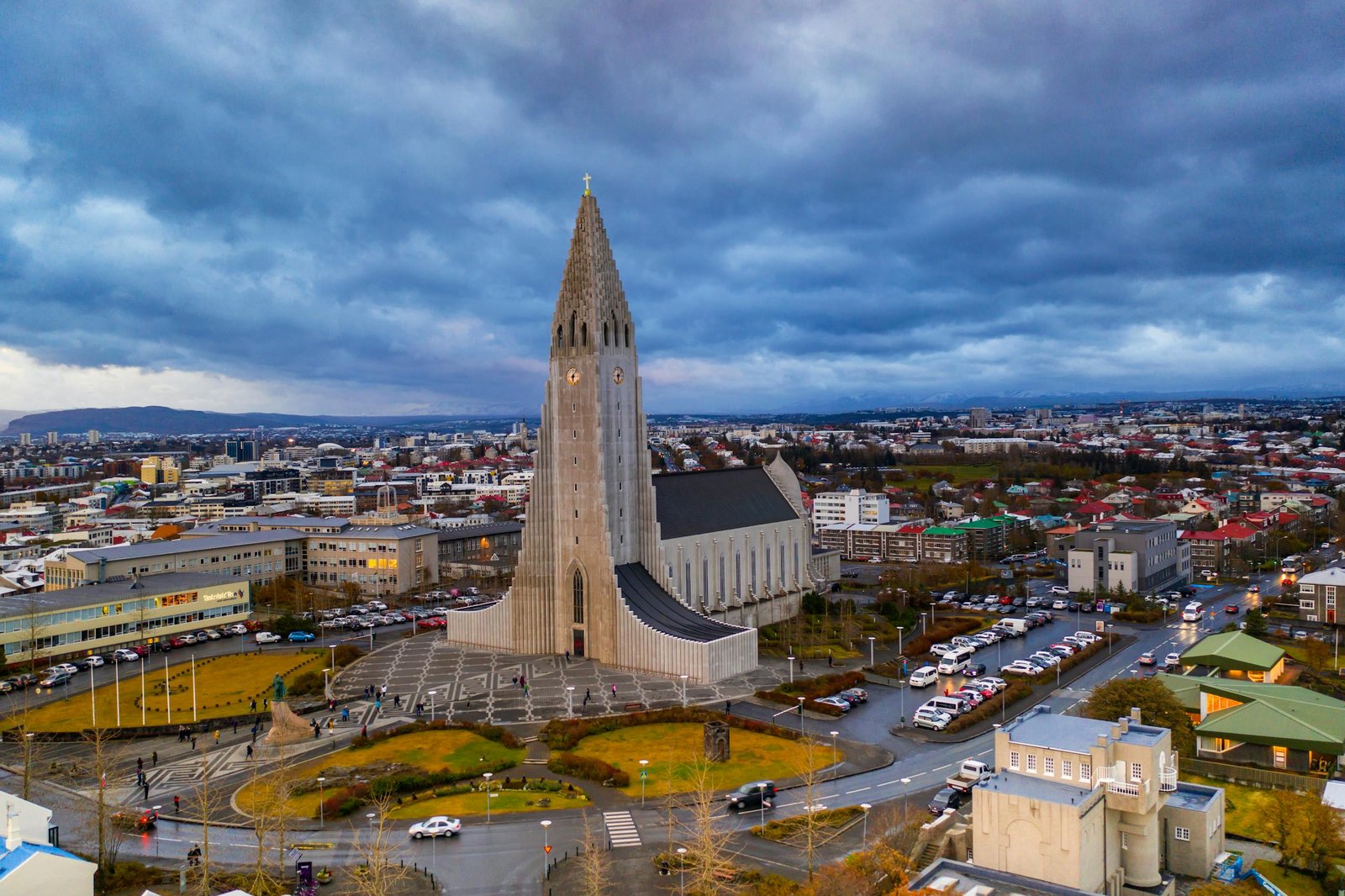
Check in at your hotel near the city centre (~45 min from the Blue Lagoon by Flybus or rental car). Walk Laugavegur, Reykjavík’s main commercial street — independent boutiques, restaurants, and coffee bars. Walk up to Hallgrímskirkja, the dramatic modernist church with a free-standing tower and panoramic city view (€10 lift).
Harpa Concert Hall + Old Harbour
Walk the Old Harbour for whale watching departure points and the distinctive Harpa Concert Hall (geometric glass facade, free to enter). The harbour area has some of Reykjavík’s best fish restaurants for a late lunch.
Reykjavík dining and return to airport
Dinner on Laugavegur. If travelling Sept–March, consider a Northern Lights bus tour departing the city after dark (~€45–60, 2–3 hours). Return to airport 3 hours before departure. Flybus (Reykjavík to KEF, 45 min, ~€25) runs on a schedule aligned with departures.
Tip: Book the Flybus in advance at re.is — it departs from the BSÍ bus terminal and also offers hotel pick-ups.
Þingvellir National Park
UNESCO World Heritage Site — the rift valley where the North American and Eurasian tectonic plates are pulling apart at 2cm per year. Also the site of the world’s first parliament (Althing, 930 CE). Walk the canyon floor along the Almannagjá rift. Snorkelling in the Silfra fissure (crystal-clear glacial meltwater between the plates) can be booked as an add-on — dry suit required, ~€120 guided.
Geysir Geothermal Area + Strokkur
The source of the English word “geyser.” The original Geysir is dormant, but Strokkur erupts every 4–8 minutes, shooting water 15–40 metres into the air. Free to walk around; use the car park facilities for lunch.
Gullfoss Waterfall + Kerið Crater
Gullfoss (“Golden Falls”) drops 32 metres into a canyon — one of Iceland’s most photographed waterfalls, particularly dramatic in winter with ice formations. Kerið is a 3,000-year-old volcanic crater lake with vivid red and green rock walls and a turquoise lake at the bottom. €7 entry.
Return to Reykjavík — Sky Lagoon
The Sky Lagoon (opened 2021) is Reykjavík’s premium geothermal experience — a cliff-edge infinity pool with unobstructed sea views. Less touristy than the Blue Lagoon, more architectural, closer to the city (15 min). The Sér package (€65–85) includes the 7-step ritual: lagoon, cold plunge, sauna, steam, scrub, body mist, shower. Pre-book at skylagoon.com.
Alternative: The Secret Lagoon at Flúðir (€25) is Iceland’s oldest public pool (1891) and is quieter than both major lagoons. On the Golden Circle route.
Hallgrímskirkja + Tjörnin Lake + National Museum
Morning walk through central Reykjavík: the iconic Hallgrímskirkja church designed to evoke basalt lava columns (free entry; lift €10), the Tjörnin city pond, and the colourful corrugated-iron-clad buildings of the old town. The National Museum of Iceland (€18) has the best overview of Icelandic history from settlement to modern times.
Reykjavík lunch — Icelandic hot dog
Bæjarins Beztu Pylsur (the best hot dog stand in Reykjavík, established 1937, served to Bill Clinton in 2004) on the Old Harbour waterfront. The classic order: einn með öllu (“one with everything” — brown mustard, sweet mustard, remoulade, raw onion, crispy fried onion). ~€3.
Flybus to airport — allow 3 hours before departure
Return to KEF via Flybus (departs BSÍ terminal, 45 min). Allow 3 hours before departure time, particularly for US-bound flights which have additional immigration pre-clearance at Keflavík for US-citizen passengers.
Tip: US citizens pre-clear US Customs and Border Protection at KEF before departure — factor an extra 30–45 minutes into your airport arrival time.
Reykjavík arrival + Blue Lagoon
Blue Lagoon from the airport on arrival, then check in to Reykjavík. Evening city exploration and the Sky Lagoon if time allows.
South Coast — Waterfalls, Glacier, Black Beach
Drive (or tour) the south coast: Seljalandsfoss waterfall (you can walk behind it), Skógafoss waterfall (60m drop, 82-step cliffside stairway for the top view), the Eyjafjallajökull volcano site, Sólheimajökull glacier walk, Reynisfjara black sand beach (dramatic basalt column formations — watch for rogue waves), and the Jökulsárlón glacier lagoon (icebergs calved from Europe’s largest glacier float in a lagoon before drifting to the sea). Day tour from Reykjavík or self-drive (350km round trip). Allow 10–12 hours.
Golden Circle
Þingvellir → Geysir/Strokkur → Gullfoss → Kerið as outlined in the 48-hour itinerary. Self-drive takes about 6–7 hours with stops. Guided tours from Reykjavík are ~€60–90 per person.
Snæfellsnes Peninsula or Reykjavík + departure
The Snæfellsnes Peninsula (150km from Reykjavík) is “Iceland in miniature” — the Snæfellsjökull glacier volcano that inspired Jules Verne’s Journey to the Centre of the Earth, the photogenic Kirkjufell mountain, sea cliffs, lava fields, and seal-watching beaches. A full day by car. If departing this day, stick to a Reykjavík morning and allow 3 hours for airport.
West Iceland — Reykjavík + Snæfellsnes Peninsula
Day 1: Blue Lagoon on arrival, Reykjavík city. Day 2: Snæfellsnes Peninsula full day — Kirkjufell, Snæfellsjökull glacier, Arnarstapi cliffs, seal beach at Ytri Tunga. Stay overnight in Stykkishólmur or Grundarfjörður.
North Iceland — Waterfalls, Lava Fields, Lake Mývatn
Drive Route 1 north: Hraunfossar lava field waterfalls (water filtering up through lava), Barnafoss, the Westfjords if time allows, up to Akureyri (Iceland’s second city, 300km north of Reykjavík). Lake Mývatn — volcanic crater landscape, hot mud pools (Námaskarð), pseudo-craters, Dimmuborgir lava formations. Goðafoss waterfall (“Waterfall of the Gods”).
East Iceland — Fjords + Glacier Lagoon
Continue east on Route 1: the East Fjords (remote, spectacular coastal road, almost no tourists), Jökulsárlón glacier lagoon (the crown jewel — icebergs, seals, black diamond beach just across the road where translucent ice blocks wash ashore).
South Coast + Return to Reykjavík
Skaftafell nature reserve (glacier hike), Reynisfjara black beach, Seljalandsfoss, Skógafoss, Eyjafjallajökull. Return to Reykjavík via the Golden Circle on the final day. Final night in Reykjavík, departure from KEF on Day 7.
Ring Road logistics: Rent a car on arrival (Hertz/Budget/Avis all at KEF). A 4WD/AWD is recommended outside June–August. The full Ring Road is 1,322km — allow 7–10 days at a relaxed pace. Summer 2026 peak rental rates: €70–120/day for a 4WD. Book 3–4 months ahead.
Iceland’s Essential Attractions — What Every Stopover Visitor Should Know
Iceland’s most famous attraction — milky-blue geothermal seawater at 37–39°C in a lava field on the Reykjanes Peninsula, 20 minutes from KEF. Over 1 million visitors per year. Designated a National Geographic Wonder of the World. In-water bar, silica mud mask, algae mask, and massage waterfall included at various ticket levels. Water renews every 48 hours naturally. Book online weeks ahead in summer — walk-up rarely available. Volcanic activity on the Reykjanes Peninsula (ongoing through 2024–2025) has required using alternate road routes; check bluelagoon.com for current access information before visiting.
The 300km circuit from Reykjavík to Iceland’s three most famous landmarks: Þingvellir National Park (tectonic rift, Viking parliament site, UNESCO), Geysir geothermal area (Strokkur erupts every 4–8 minutes), and Gullfoss waterfall (32m drop into a canyon). Most tours also include Kerið crater lake. Doable in a full day by car or guided bus. The most efficient way to see classic Iceland on a 2–3 day stopover. Guided tours from Reykjavík: €60–90. Self-drive: free (Þingvellir entry free, Kerið ~€7).
Iceland is one of the world’s best Northern Lights destinations — directly under the auroral oval, with dark skies just minutes from Reykjavík. Season is September–March (requires darkness). Best conditions: clear sky, solar activity KP-3 or above (check veðurstofa.is/aurora for 3-day forecasts). Bus tours from Reykjavík (~€45–60) take you away from city light pollution and guarantee a re-tour on a later night if the sky is overcast. For self-drive, drive 20–30 minutes out of the city in any direction with low cloud cover. Seeing the lights is not guaranteed — it is weather and solar activity dependent.
Icebergs calved from Breiðamerkurjökull glacier float across a lagoon before drifting to the sea — a surreal, constantly changing landscape. Europe’s fastest-retreating glacier; the lagoon has grown significantly since the 1970s. Zodiac boat tours through the icebergs (€55) or amphibious boat tours (€55). Just across the road is the Diamond Beach — translucent ice blocks of all sizes washed onto a black sand beach. One of Iceland’s most photographed locations. About 375km from Reykjavík — a full day’s drive or an overnight stop.
“Iceland in miniature” — a 90km peninsula with a glacier-capped volcano (Snæfellsjökull, the setting for Jules Verne’s Journey to the Centre of the Earth), black lava beaches, sea cliffs, sea arches (Gatklettur), the photogenic Kirkjufell mountain (one of Iceland’s most photographed), seals, puffins, and the charming fishing village of Stykkishólmur. About 175km from Reykjavík. Best done as a full-day circular drive or with an overnight stay in Grundarfjörður or Stykkishólmur.
The world’s northernmost capital — 120,000 people, one of the safest cities on earth, and an unexpectedly vibrant food and bar scene considering its size. Key stops: Hallgrímskirkja church (free; lift €10), Harpa Concert Hall, the Old Harbour (whale watching, puffin tours, sea angling), Laugavegur shopping street, Tjörnin lake, the National Museum (€18). The Old Reykjavík neighbourhood around Aðalstræti and Hafnarstræti has the best traditional restaurants. Bæjarins Beztu hot dog stand is a mandatory stop.
Iceland’s summer Midnight Sun is one of the most disorienting and beautiful natural phenomena a stopover visitor can experience. Around the summer solstice (21 June), the sun never fully sets — golden hour lasts for hours, the sky glows amber and pink at midnight, and the landscape is bathed in a warm, flat light that photographers specifically travel to Iceland for. This is when Iceland is at its most accessible: all roads open, all attractions running, maximum daylight. The trade-off is peak crowds and peak prices — pre-book everything.
Opened 2021 and rapidly established itself as the premium Reykjavík geothermal experience — a cliff-edge infinity pool at Kársnes Harbour, 15 minutes from the city centre, with unobstructed views of the North Atlantic. Architecturally striking (designed by Basalt Architects). The 7-step Ritual takes 1.5–2 hours: geothermal lagoon, cold plunge, sauna, steam room, fog mist, body scrub, and shower. Smaller and more intimate than Blue Lagoon. Sér package ~€65–85. Pre-book at skylagoon.com, though shorter queues than Blue Lagoon.
Reykjavík’s Old Harbour offers some of the most accessible whale watching in the world — minke whales, humpbacks, white-beaked dolphins, and harbour porpoises commonly spotted. 2.5–3 hour tours depart multiple times daily from the harbour (5 minutes from the city centre). Success rate is high — around 80–90% of tours see cetaceans. Multiple operators: Elding, Special Tours, Whale Safari. Adults ~€75–90. Evening tours in summer give the best light. Puffin tours run June–August (the colony returns to nest on Akurey island).
Jökulsárlón Glacier Lagoon at Blue Hour — Icebergs and Silence
Stay at Jökulsárlón until after sunset. As blue hour arrives (15–45 minutes after the sun drops below the horizon), the lagoon enters its most photogenic window: the sky transitions through deep purple and navy, the glacier icebergs — some the size of houses, ranging from brilliant white to deep blue — catch the last light and glow against the dark water. The reflection doubles every iceberg on the still surface of the lagoon. On the eastern shore, the icebergs that have drifted out to the beach (the “Diamond Beach”) are translucent, backlit by the sky. If there are seals present (common) they sit motionless on the ice floes and ignore you completely. This is the most otherworldly landscape in Iceland — schedule an overnight nearby rather than attempting it as a day trip from Reykjavík.
“The lagoon doesn’t care whether you have a camera. It is simply one of the most extraordinary places on earth.” — #EpicLayover #IcelandStopover #Jokulsarlon
Kirkjufell Mountain — Iceland’s Most Photographed Peak
Kirkjufell is the most photographed mountain in Iceland — an isolated, symmetrical peak on the north coast of the Snæfellsnes Peninsula, rising 463 metres directly from a flat plain with the town of Grundarfjörður visible in the background. The classic composition pairs the mountain with the Kirkjufellfoss waterfall in the foreground — three tiers of water falling over a rocky face with Kirkjufell rising directly behind. In summer the mountain glows green; in autumn it turns rust and gold; in winter it can be dusted in snow with the Northern Lights visible above it (it was used as a filming location in Game of Thrones). The waterfall is a 3-minute walk from the car park on Route 54. Come at golden hour — 45 minutes before sunset — for the best light on the mountain face. The waterfall faces east, so morning light is better for illuminating the falls themselves.
“Game of Thrones fans: yes, you recognise this. Everyone else: you will.” — #EpicLayover #Kirkjufell #Snaefellsnes
Blue Lagoon at Dawn — Before the Crowds
Book the earliest available entry slot (07:00–08:00) at the Blue Lagoon. Arriving on a Flybus from a North American overnight flight, you can be in the lagoon before 08:00 with almost no other visitors present. The steam rising from the 38°C water at dawn creates an opaque mist across the surface — visibility drops to a few metres. In winter, the contrast between the warm white steam and a dark sky is extraordinary. In summer, the dawn light turns the milky blue water a shade of turquoise that simply does not exist in other parts of the world. The silica mud mask (included in all tickets) photographs exceptionally well: white mask, steam, vivid water, dramatic lava rock. Use the on-site photographer service (complimentary email delivery) rather than risking dropping your phone in water you will never find it in.
“The Blue Lagoon before 8am is a completely different place. Book the early slot.” — #EpicLayover #BlueLagoon #IcelandairStopover
When to Stop — Iceland by Season
Iceland is genuinely a year-round destination, but what you experience changes dramatically by season. The Icelandair Stopover is available throughout the year on all qualifying routes.
The flight from New York to Copenhagen was a standard transatlantic booking, except it was not. The route went through Keflavík. The extra three days in Iceland cost precisely the difference between a Tuesday and a Thursday fare — forty-something dollars. The Blue Lagoon was booked at the same time as the flights. A rental car waited at the airport. By the time the rest of the passengers from the New York flight had connecting gates to catch, the car was already turning south on Route 41 toward the Reykjanes Peninsula. By evening it was parked outside a guesthouse on the south coast. By the second morning it was pointing at Jökulsárlón. The Copenhagen leg happened eventually, as planned. Nobody in Copenhagen needed to know it had been Iceland first.
Getting Around Iceland — Transport Options from KEF
Keflavík Airport is on the Reykjanes Peninsula, about 50km southwest of Reykjavík. The Flybus is the standard airport transfer; a rental car is what unlocks the full Iceland experience for stopovers of 3 nights or more.
The standard airport transfer — departs from outside arrivals, drops at the BSÍ bus terminal in central Reykjavík (then smaller shuttles to hotels for an add-on fee). Journey: 45–50 minutes. Cost: ~€25 one-way (€35 return). Timed to flight arrivals. Book at re.is. Available 24 hours. Also runs directly to/from the Blue Lagoon — useful for a Blue Lagoon stop before the city on arrival. No need for a return booking if departing on a rental car.
Find accommodation near KEF/Reykjavík →The only way to fully access Iceland on a stopover of 3+ nights. All major operators (Hertz, Budget, Avis, Europcar, and Icelandic specialists like Geysir Car Rental and Lotus Car Rental) have desks at KEF. For summer travel, book 3–4 months ahead — peak season cars sell out. A standard 4WD/AWD crossover costs €70–120/day in summer. Essential for south coast, Snæfellsnes, or Ring Road travel. Winter driving requires specific skills and insurance; check road conditions at road.is before driving.
Book tours and activities →Iceland has excellent 4G/5G coverage across most of the Ring Road and populated areas. An Airalo Iceland or Nordic regional eSIM activated before landing gives you data from the moment you clear immigration. Essential for Google Maps navigation outside of Reykjavík, aurora forecast apps (vedur.is), and road conditions. Iceland’s SIM cards are available at the airport but Airalo is quicker to activate and usually better value for shorter stays.
Get an Iceland eSIM →Iceland’s outdoor activities — glacier hikes, ice cave tours, snowmobiling, snorkelling in Silfra — require specialist activity coverage. Standard travel insurance often excludes glacier and volcanic terrain activities. InsureMyTrip and World Nomads both offer policies with adventure sports coverage appropriate for Iceland. Medical repatriation is also worth checking — the nearest major trauma facility is in Reykjavík and emergency helicopter flights are used for serious incidents in remote areas.
Compare Iceland-appropriate policies →Where to Stay During Your Iceland Stopover
Unlike Turkish Airlines or Etihad, Icelandair provides no accommodation as part of the stopover. You book your own. Reykjavík has a wide range of options from budget guesthouses to design hotels. For longer stopovers involving road trips, accommodation outside the capital (guesthouses, farm stays, and glacier-adjacent hotels) is typically booked 2–4 months ahead for summer and 1–2 months ahead for winter.
Short Iceland Layover? Here Is What You Can Do in 3, 6, and 8 Hours.
Not every Icelandair connection qualifies for a stopover — some are just a few hours. Our Iceland layover guide covers what is realistically possible in a short connection: Keflavík Airport itself, the Blue Lagoon if timing works, and what you should actually do with a 6-hour transit before continuing to Europe or North America.
More From EpicLayover
Icelandair vs Turkish vs TAP vs Singapore Airlines
Icelandair gives you the most time (up to 21 nights Flex) with no hotel included. Turkish Airlines gives you a free hotel with no extra time. TAP gives 10 days in Portugal with hotel discounts. Full comparison guide.
Read the Comparison →TAP Air Portugal Stopover — Lisbon and Porto
TAP’s stopover gives up to 10 days in Portugal at no extra airfare cost — the closest equivalent to the Icelandair model on the Europe-Brazil and Europe-US route. Hotel partner discounts included.
TAP Stopover Guide →Iceland Stopover Packing Checklist
Iceland’s weather is extremely variable — even in summer you need waterproof layers. Our packing checklist covers gear for a 1-night Blue Lagoon trip through to a 7-day Ring Road drive.
Get the Checklist →Frequently Asked Questions — Icelandair Stopover
No — the Icelandair Stopover includes only the flights. You are responsible for booking and paying for your own accommodation in Iceland. This is a fundamental difference from Turkish Airlines (which includes a free hotel) or Qatar Airways (which offers heavily subsidised hotel rates). What Icelandair provides is free airfare routing: you visit Iceland without paying for a separate round-trip flight to Reykjavík. The financial saving is the cost of what that separate Reykjavík trip would have cost — typically €400–800 from a US east coast city.
Fare class determines your maximum stay: Economy Light (the cheapest fare) permits 1–3 nights. Economy Standard and Saga Premium permit up to 7 nights. Economy Flex and Saga Premium Flex permit up to 21 nights — though stays of 8–21 nights cannot be booked online and require contacting the Icelandair service centre. This is the most commonly misunderstood rule in the programme. Many guides state “up to 7 nights” as a universal rule, which is incorrect — it applies only to Standard and Premium fares, not Economy Light (maximum 3 nights) or Flex fares (maximum 21 nights).
Yes — you can add a stopover to an existing Icelandair booking by contacting the service centre. Note that a change fee applies when modifying an existing booking, and there may be a fare difference depending on when you made the original booking versus when you are modifying it. Adding a stopover during the original booking is always the simplest and most cost-effective approach. If you are considering adding a stopover after booking, check the applicable change fees for your fare class before calling.
Yes — unlike many other airline stopover programmes, Icelandair allows a stopover on both the outbound and return legs of a round-trip ticket. You could stop in Iceland for 3 nights on the way to Europe and 3 nights on the way back — two separate Iceland stays on a single round-trip booking. Each individual stopover counts against your fare class limit (up to 3 nights for Economy Light, up to 7 for Standard/Saga Premium, up to 21 for Flex). This “both directions” option is a notable advantage over Singapore Airlines (one stopover per round trip on Saver) or Turkish Airlines (one per journey).
The stopover gives you Iceland at the cost of the fare difference only. Using a specific example from publicly available 2025 fare data: a one-way Boston to Paris with a 3-night Iceland stopover was $569. Booking two separate one-ways (Boston to Reykjavík + Reykjavík to Paris) totalled $752 — a $183 saving for the same routing with 3 nights in Iceland. The savings vary depending on dates and route, but are consistently significant. Additionally, booking as a stopover keeps all segments on a single ticket, which provides better passenger protections in the event of delays or cancellations.
Yes — because your Iceland stay is a deliberate stop rather than a transit connection, you collect your checked bags at Keflavík on arrival, take them with you during your Iceland stay, and re-check them when you depart for your European destination. This is standard practice for all Icelandair stopovers. Keflavík Airport does have left-luggage facilities if you want to store bags for a Blue Lagoon visit before heading to the city on arrival — useful for same-day arrivals when hotel check-in is not yet available.
The Stopover Buddy is an occasional Icelandair initiative that connects visiting stopover passengers with Icelandair employees who volunteer to show them their favourite local spots — essentially a free personal guide for a few hours. Availability varies significantly and is not a guaranteed programme feature. It has run in various forms over the years but is not consistently available or prominently marketed. If it is running during your visit, Icelandair will mention it during booking or in their stopover planning materials. Do not rely on it as a core part of your stopover plan, but it is a genuinely memorable experience when it is available.
It depends on what you want to see. September–October (autumn) is the best overall balance — Northern Lights possible from mid-September, roads still largely accessible, fewer crowds than summer, reasonable prices. June–July (summer) gives the Midnight Sun, all roads open including Highlands F-roads, and maximum accessibility — but also maximum crowds and prices. Pre-book everything weeks ahead for summer. November–February (winter) offers the best Northern Lights chances, the lowest prices, ice cave tours, and a dramatically atmospheric landscape — but with only 4–6 hours of daylight daily and variable road conditions. March–May (spring) is a solid shoulder option with improving daylight and good pricing before the summer peak.
