
TAP Air Portugal Stopover The Hidden Way to See Portugal for Free in 2026
TAP Air Portugal Will Add Up to 10 Free Days in Lisbon or Porto to Your Ticket. Here Is How It Works.
The TAP Air Portugal Portugal Stopover Programme — voted the world’s best stopover programme by Global Traveler readers for seven consecutive years — lets any passenger on a qualifying TAP flight add a free stop in Lisbon or Porto for up to 10 days. There is no extra airfare. The programme also includes a 25% discount on any internal TAP flight within Portugal during your stopover, and access to over 150 partner discounts at hotels, restaurants, tours, and attractions across the country. In 2025, 193,000 travellers used it in the first six months alone — a 74% increase year on year. It is the most generous free stopover offer in European aviation.
Portugal’s position at the western edge of Europe has always made it a natural crossroads. For centuries, ships left Lisbon carrying explorers who would return with spices, gold, and stories from the other side of the world. Today, the same geography makes Lisbon and Porto natural refuelling stops between North America, South America, Africa, and the rest of Europe — and TAP Air Portugal, the country’s flag carrier, has built the best airline stopover programme in the world around that fact.
The programme is structurally simple: book any qualifying TAP return, one-way, or multi-city ticket, add a stopover in Lisbon or Porto, and fly on to your final destination for no additional airfare charge. The stop can be on your outbound or return journey — your choice. Duration is between one night and ten days. You pay for your own accommodation and food, but the programme unlocks partner discounts that reduce both, and the 25% discount on an internal TAP flight within Portugal (Faro, Funchal/Madeira, the Azores, and others) means a second Portuguese city is within reach for a modest additional cost.
This guide covers the programme in full, then goes deep into both cities: Lisbon’s seven hills, trams, Fado, and the Age of Discovery monuments at Belém; and Porto’s Ribeira waterfront, the Dom Luís I bridge, port wine cellars across the Douro, and the tile-covered façades that make it unlike anywhere else in Europe. Both cities are navigable without a car, exceptionally good for food, genuinely affordable by Western European standards, and within half an hour of the Atlantic Ocean. The decision between them — or the choice to visit both — is the most pleasant travel dilemma in Europe.
When booking any qualifying TAP flight at flytap.com, you will see an “Add a free Stopover” window appear. Select Lisbon or Porto, choose your dates and duration (up to 10 days), and choose whether you want the stop on your outbound or return journey. There is no additional airfare charge. You pay for your own accommodation, food, and activities — but over 150 partner discounts apply automatically with your TAP booking reference.
Lisbon is the larger, more cosmopolitan choice — grand plazas, Belém’s Age of Discovery monuments, Fado, the Alfama, and a restaurant scene that has become one of Europe’s finest. Porto is the more intimate city — all hill-climbing streets, azulejo-tiled churches, the Ribeira waterfront, port wine cellars across the Douro, and a grittier, more working-class soul. Both are world-class. For a first visit, Lisbon. For a more distinctive experience, Porto edges ahead.
Yes — TAP’s programme also gives you a 25% discount on internal TAP flights within Portugal during your stopover (Lisbon to Porto is about 55 minutes). The train between the two cities is also excellent — the Alfa Pendular high-speed service covers the 300 km in about 2 hours 45 minutes for as little as €15–30 booked in advance. With 10 days available, a split stopover — say 4 nights in one city, 4 in the other — is very achievable.
The airfare cost is zero — TAP adds the stopover at no extra charge to your base fare. You pay for accommodation, food, and activities yourself, but Portugal is one of Western Europe’s most affordable destinations. A good hotel in Lisbon or Porto ranges from €80–150/night; a restaurant meal with wine costs €15–35 per person; and public transport — metro, tram, bus — is €1.50–2.50 per journey. The Lisboa Card (24h: €31, 48h: €44) covers all transport and free museum entry for up to 52 attractions.
The TAP Air Portugal Stopover Programme — Full Details
The Portugal Stopover Programme is the most flexible free airline stopover offer currently operating in commercial aviation. Unlike the Gulf carrier programmes (Emirates Dubai Connect, Etihad Abu Dhabi), which require specific connection windows or return bookings, TAP’s programme works on one-way, return, and multi-city tickets alike. The 10-day maximum duration is the longest in the industry. The 74% growth in bookings in the first half of 2025 — and 193,000 passengers in six months — reflects that travellers have found it and are using it.
Book any qualifying TAP flight and add a free stopover in Lisbon or Porto on your outbound or return journey. Duration ranges from one night to ten full days. TAP does not charge additional airfare for the stop — the connection is essentially held open until your chosen departure date. The programme is available at flytap.com during the booking process (look for “Add a free Stopover” when selecting flights), or can be added after booking at flytap.com/stopover. Travel agents can also book the stopover, and TAP will issue the 25% internal flight discount code by email once the booking is confirmed. The programme covers TAP’s entire network: passengers flying from the US, Canada, Brazil, Africa, or anywhere in Europe via Lisbon or Porto can all participate.
- Free stopover in Lisbon or Porto — no additional airfare
- Up to 10 days stopover duration
- Available on outbound or return leg — your choice
- Works on one-way, return, and multi-city tickets
- 25% discount on any TAP internal flight within Portugal (Faro, Funchal, Azores, Porto, etc.) during the stopover
- 150+ partner discounts — hotels up to 20%, restaurants up to 50%, tours, museums, and activities
- Free Porto Card (48-hour pedestrian card) for Porto stopover passengers
- 4% instant discount at Booking.com for stopover passengers
- Both flights must be operated by TAP Air Portugal (codeshare partners may not qualify — confirm at booking)
- Eligible fare classes vary — check at flytap.com during booking; the “Add a free Stopover” window only appears on qualifying fares
- Stopover on outbound OR return leg — not both on the same booking
- You pay for your own accommodation, meals, and activities
- 25% internal flight discount is issued by email after booking and valid for travel within the stopover period
- Partner discounts require your TAP booking reference to activate — keep it to hand
- No hotel or meal vouchers included — this is purely a free airfare extension
Go to flytap.com and search for your usual origin-to-destination route. During the flight selection step, a window will appear asking if you want to “Add a free Stopover” in Lisbon or Porto. Select your city, choose your dates and duration, and proceed. The stopover is built into the ticket at no additional airfare cost. If no window appears, your fare class or route may not be eligible — try adjusting your origin, destination, or dates. Once booked, visit flytap.com/stopover to access the full partner discount portal and receive your 25% internal flight code by email.
How to Book — Step by Step
Go to flytap.com and search for your flight as normal. The stopover programme works on one-way, return, and multi-city bookings. During the flight selection process, if your fare is eligible, a pop-up window will offer you the free stopover option.
Select your stopover city (Lisbon or Porto), choose whether you want the stop on your outbound or return journey, and set your preferred dates and duration (up to 10 nights). The additional airfare cost is zero — TAP builds it into your ticket.
After booking, visit flytap.com/stopover with your booking reference to access the full partner discount portal — 150+ offers covering hotels, restaurants, tours, and attractions. Your 25% discount code for a TAP internal flight will arrive by email to use if you want to visit a second Portuguese city.
If your stopover is on your outbound journey, your checked bags may travel ahead to your final destination depending on the routing. Confirm this when booking. Pack everything you need for the Portugal stay in your carry-on, including comfortable walking shoes — both Lisbon and Porto are hill cities.
Unlike the Gulf carrier stopover programmes — where checked bags always travel ahead — TAP’s baggage handling depends on your specific ticket configuration. In some cases your bags will be available to collect in Lisbon or Porto during your stopover; in others they travel ahead to your final destination. Confirm the baggage routing with TAP at the time of booking. If bags travel ahead, pack your stopover essentials in your carry-on. Both Lisbon and Porto are hill cities — pack light, comfortable shoes. Cobblestones are the defining terrain of both city centres.
Add a free Portugal stopover to your TAP flight
The “Add a free Stopover” option appears at flytap.com during the booking process. Access partner discounts at flytap.com/stopover.
Lisbon or Porto — Choosing Your Stopover City
TAP offers the choice of two of the most distinctive cities in Europe, and neither is a compromise. They are different enough in character to suit different travellers, and similar enough in quality that either decision is right. The programme also actively facilitates visiting both.
Miradouro de Santa Luzia — Alfama Rooftops at Golden Hour
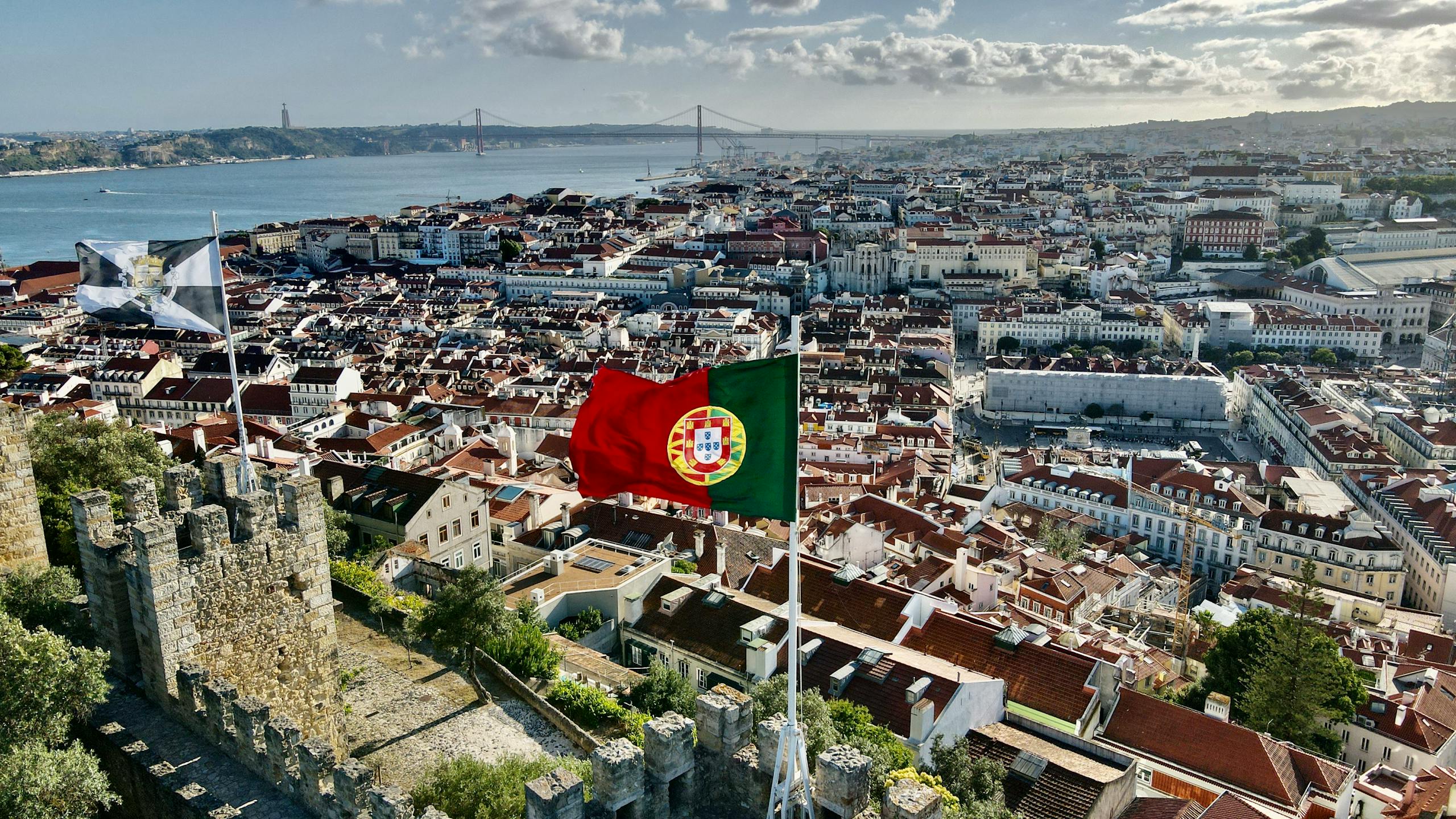
From the Alfama district, make your way to the Miradouro de Santa Luzia — a small garden terrace beside the Igreja de Santa Luzia, framed by bougainvillea and traditional azulejo tile panels. From here the view sweeps across the terracotta rooftops of Alfama, the Tagus River glittering below, and on clear days the far bank of the Alentejo. Arrive one hour before sunset. The western light turns the tilework gold and the river takes on colour. The 28 tram stops directly outside — step off and walk five metres to the viewpoint. Less crowded than the adjacent Portas do Sol miradouro, with a pergola for shade and benches for waiting out the light.
“Lisbon turns the light from the Atlantic into architecture.” — #EpicLayover #LisbonStopover #Alfama
Dom Luís I Bridge — Upper Level at Sunset Looking West
Cross to the upper level of the Dom Luís I Bridge on foot from the Sé Cathedral side of Porto. Walk to the midpoint and look west down the Douro toward Foz, where the river meets the Atlantic. At sunset, the sky behind you lights up the bridge’s ironwork in amber, the Ribeira buildings on the Porto side glow orange, and the Gaia wine cellar lodges — with their white-painted walls and painted port house names — are directly below. Shoot at 6 p.m. in summer (late), or 4 p.m. in winter (equally spectacular). The tram line runs along the bridge’s lower deck — wait for it to cross and shoot with the tram in frame for the definitive Porto layered composition.
“Iron, wine, and the Douro. In that order.” — #EpicLayover #PortoStopover #DomLuisI
Pastéis de Belém — The Original, Warm from the Oven
At Pastéis de Belém bakery on Rua de Belém (open since 1837, the original recipe still secret), order two pastel de nata at the counter and eat them immediately. The correct photograph is taken with the tart in hand — the custard still steaming, the crust still crackling, the cinnamon shaker on the marble counter in soft focus behind it. This is not a food photograph. It is a document of a temperature that exists for approximately four minutes after leaving the oven. The bakery is enormous inside — walk past the tourist queue at the entrance toward the tiled interior rooms where seating is available and the wait is shorter. Take Tram 15 from Cais do Sodré, alighting at the Belém stop.
“1837 and they still haven’t shared the recipe.” — #EpicLayover #LisbonFood #PastelDeNata
Getting Around — Lisbon Airport to City
Lisbon’s Humberto Delgado Airport (LIS) is one of the most conveniently positioned airports in Europe — the Red Line metro runs directly from the Aeroporto station to the city centre in 20–30 minutes. The airport is only 7 kilometres from Baixa-Chiado, the central neighbourhood. No bus transfers, no dedicated express lines needed — the regular metro is the right answer for almost everyone.
The Red Line (Linha Vermelha) runs directly from Aeroporto station to Oriente, then to Alameda (transfer to Green Line for Baixa-Chiado and Rossio). Metro runs daily approximately 06:30–01:00. Buy a navegante occasional card (€0.50 card fee) or use your contactless bank card. The Lisboa Card includes unlimited metro use from the airport — collect it at the Ask Me Lisboa desk inside the arrivals hall before boarding.
RecommendedTaxis queue outside the arrivals terminal — always use metered taxis; flat-rate offers from touts inside the terminal are typically inflated. Bolt and Uber are both active at Lisbon airport and are usually €8–15 to the city centre — pick up from the Departures floor, not Arrivals. Traffic peaks 07:30–09:30 and 17:30–19:30 on weekdays. Ensure the meter is running from the start.
The Lisboa Card covers unlimited metro, bus, tram, funicular, and suburban train travel (including Sintra and Cascais), plus free entry to 52 museums and monuments. Pick it up at the Ask Me Lisboa desk inside arrivals — it covers the airport metro journey immediately. If you plan to visit more than 2–3 paid attractions and use transport regularly, the 48-hour card is typically better value than individual tickets.
Porto’s Francisco Sá Carneiro Airport (OPO) is 13 km from the city centre. The Metro Purple Line (E) runs from the airport to the city centre in about 35 minutes — buy an Andante card (€0.60) at the airport metro station and load it with credit (fare to Trindade: approximately €1.85). In the city, Porto’s historic centre is largely walkable, though it is intensely hilly. The Porto Card (free for TAP stopover passengers — 48-hour pedestrian version) covers the historic tram line to Foz, some museum admissions, and discounts at attractions. The Rabelo boat across the Douro is the most scenic way to reach the Gaia wine cellar district from the Ribeira waterfront.
Top Attractions — Lisbon
Lisbon organises itself naturally into three sightseeing clusters: the medieval Alfama district and castle above the city; Baixa and Chiado in the centre; and the riverside suburb of Belém 6 kilometres to the west. A well-planned TAP stopover in Lisbon covers all three. The Lisboa Card makes the logistics — and the cost — significantly easier.
Lisbon’s oldest neighbourhood — a Moorish-era labyrinth of whitewashed houses, azulejo tiles, miradouros, and the 11th-century São Jorge Castle at the summit. The castle (€15, free with Lisboa Card) offers the city’s most commanding 360° view. Start at the top (Largo da Graça or the castle) and walk downhill through progressively narrower streets toward the Tejo. Allow a full morning. Avoid weekday afternoons when day-trip coach groups arrive.
A UNESCO World Heritage Site built in the 16th century to celebrate Portugal’s Age of Discovery — funded by the profits of Vasco da Gama’s route to India. The Manueline Gothic architecture (a distinctly Portuguese style blending Gothic structure with maritime ornamentation) is extraordinary. The double-storey cloister, in particular, is among the most beautiful architectural spaces in Portugal. €12, free with Lisboa Card. Closed Mondays. Allow 1.5 hours.
The 16th-century fortified tower that guarded Lisbon’s harbour at the mouth of the Tagus — the last landmark that Portuguese explorers saw before setting out for Africa, India, and Brazil. The exterior and its river setting are the real experience; the interior is narrow and steep. €6, free with Lisboa Card. Note: as of early 2026, check current closure status — it has undergone periodic restoration works. The waterfront gardens and Monument to the Discoveries nearby are both free.
Lisbon’s most famous tram route — vintage yellow carriages from the 1930s threading through the impossibly narrow streets of Alfama, Graça, Baixa, and Estrela. A €3.10 fare (covered by Lisboa Card and the navegante day ticket) is the cheapest moving sightseeing experience in Europe. Board at the Sé Cathedral stop mid-route to skip the worst queues at the Martim Moniz and Campo de Ourique terminuses. Hold your belongings — pickpocketing on crowded trams is the most common tourist nuisance in Lisbon.
Portugal’s UNESCO-listed music genre — melancholic, intense, and entirely its own. Alfama and Bairro Alto have concentrated Fado venues ranging from tourist restaurants with dinner packages (€35–60 per person) to tiny adegas with handwritten signs and €5 entry. For authenticity over production, seek out the latter. The best Fado performances begin after 21:00. A Severa in Alfama (est. 1955) and Clube de Fado on Rua São João da Praça are respected starting points.
The hilltop town of Sintra — a UNESCO World Heritage Site — is 40 minutes from Rossio station by regular commuter train (€2.40, included in Lisboa Card). Fairy-tale palaces — the colourful Pena Palace, the mysterious Quinta da Regaleira with its initiation well, and the ruined walls of the Moorish Castle — rise out of forested hills. Arrive before 10 a.m. to beat the crowds. Book Pena Palace tickets online in advance — it fills early throughout the year.
Top Attractions — Porto
Porto organises naturally around two axes: the historic Ribeira waterfront and the hill above it, and the Douro River crossing to the wine cellar district of Vila Nova de Gaia. A well-planned TAP stopover in Porto moves between these two areas and adds a day in the Douro Valley for the defining wine country experience.
The historic port wine lodges of Vila Nova de Gaia — across the Douro from Porto’s Ribeira — are the definitive Porto experience. 18+ wine houses are open for cellar tours and tastings, including Taylor’s (panoramic city views, excellent premium tasting), Graham’s (historic cellar, sweeping terrace), and Calem (combines tour with Fado performance). Tours cost €10–30 including tastings. Walk across the Dom Luís I Bridge’s lower level to reach the waterfront lodge strip.
The 19th-century two-tiered iron bridge is Porto’s defining landmark. Walk the upper level for city views (Metro line D crosses here), the lower level for the wine cellar access route. The Ribeira district below the bridge — UNESCO World Heritage since 1996 — is the medieval heart of Porto, packed with café terraces, azulejo-tiled buildings, and the most concentrated expression of Porto’s atmospheric “faded grandeur”. Walk the Cais da Ribeira waterfront promenade before dinner.
One of the world’s most beautiful bookshops — a 1906 Neo-Gothic interior with a dramatically sweeping double staircase, stained glass ceiling, and carved wooden shelves. Entry is €5 (redeemable against book purchase). Often cited as an inspiration for Hogwarts Library. Buy a timed entry ticket online — the on-the-day queue is typically 30–45 minutes long. Located in central Porto near Rua das Carmelitas, five minutes from São Bento station. Allow 30–45 minutes inside.
Porto’s central railway station is, in itself, one of the city’s most visited attractions. The vast entrance hall is covered in 20,000 blue-and-white azulejo tiles — a 1930 commission depicting scenes from Portuguese history in painstaking detail: the Battle of Valdevez in 1140, the arrival of João I in 1387, rural landscapes, royal court processions. Entry is free. Allow 20 minutes to simply stand and absorb the scale of the tiling. A platform ticket (€0.85) gets you onto the train platforms for an additional perspective.
A 50-minute cruise by traditional Rabelo boat — the wooden flat-bottomed vessels used to transport port wine barrels down the Douro — under Porto’s six distinctive bridges, from the mouth of the river to the furthest downstream bridge and back. Operators depart from the Ribeira waterfront throughout the day (approximately €15–18 per person). Combo tickets including the Gaia wine cellar tour and city walking tour are available for better value. Best at late afternoon with the sun on the Ribeira façades.
The Douro Valley — a UNESCO World Heritage Site — is the steeply terraced river gorge where port wine grapes are grown, 90 minutes east of Porto. Small-group full-day tours from Porto include a winery visit, a 1-hour Douro river cruise, a 3-course lunch, and tastings (from €50–75 per person). The Alfa Pendular train to Pinhão takes 3 hours and serves the valley independently, though a guided tour handles logistics more smoothly. The landscape is among the most beautiful in Europe — best from March to November.
TAP Stopover Itineraries — Day by Day
Both cities reward unhurried exploration. Portugal operates on its own schedule — lunch begins at 12:30, dinner rarely before 20:00, and the best experiences (Fado, market mornings, miradouro sunsets) have a timing logic that rewards planning. The itineraries below are for a standard stopover of 2–3 nights in one city.
A half-day in the riverside district that launched the modern world — monuments, the world’s best custard tart, and a return along the Tagus.
Take Tram 15 from Praça da Figueira or Cais do Sodré to the Belém stop (35–45 minutes). The very first stop is Pastéis de Belém bakery on Rua de Belém — eat two warm custard tarts at the counter before the morning queue builds. Then cross to the Jerónimos Monastery. Arrive before 10 a.m. for thinner crowds. The monastery took 100 years to build and was funded almost entirely by the spice trade — Vasco da Gama is buried in the church. Allow 90 minutes for the church and cloister.
Walk west along the Tagus waterfront from the monastery. The Monument to the Discoveries (1960) is a 52-metre blade-shaped structure with 33 figures of Portuguese explorers — Vasco da Gama, Magellan, Bartolomeu Dias — looking out toward the sea. The interior viewing platform (€7) gives a broader view but the external map mosaic on the plaza floor (the world as 15th-century Portuguese cartographers mapped it) is worth the stop. Continue west to Belém Tower, which sits at the water’s edge — the exterior and riverbank setting are the real experience. Lunch in the Belém waterfront restaurants nearby.
Take Tram 15 back toward the city and alight at Praça do Comércio — the enormous waterfront square that was the centre of Lisbon’s commercial empire for centuries. The Arco da Rua Augusta at the square’s northern end leads into the grid-planned Baixa neighbourhood (rebuilt after the 1755 earthquake). Walk north through the Baixa pedestrian streets toward Chiado — Rua do Carmo and Rua Garrett are the most architecturally varied. Stop in Chiado for a coffee at A Brasileira (Est. 1905, famous for the bronze Fernando Pessoa sculpture outside).
If visiting on a Sunday, LX Factory hosts its weekly market (12:00–20:00) — crafts, food stalls, vintage goods, and live music in a converted 19th-century textile mill. On other evenings, the bar terraces of Chiado and Bairro Alto come alive after sunset — these hillside neighbourhoods are Lisbon’s best for an early evening drink before dinner. Dinner in Chiado or Bairro Alto, where the density of quality restaurants (tascas, seafood, contemporary Portuguese) is highest.
The old city from top to bottom — the castle, Tram 28, sunset from a miradouro, and Fado after dark in a small adega.
Take the 737 bus from Praça da Figueira directly to the castle. Arrive before 09:30 for the quietest visit. São Jorge Castle’s battlements offer the highest city panorama — the Tagus, the Ponte 25 de Abril bridge, and the full tiled roofscape of Alfama below. Explore the castle grounds (peacocks included), then begin the downhill walk through Alfama’s alleys toward Portas do Sol and the miradouros. The walk from the castle to the waterfront takes 40–60 minutes depending on how often you stop to look.
From Alfama, make your way to the Miradouro de Santa Luzia — a garden viewpoint framed by azulejo tile panels and bougainvillea, with a view across the rooftops to the Tagus. If visiting on a Tuesday or Saturday, the Feira da Ladra flea market fills the Campo de Santa Clara nearby — one of Lisbon’s oldest and most atmospheric markets, with antiques, second-hand books, and locally made goods. Lunch at one of the small tascas in the streets between Alfama and the waterfront — a prato do dia (dish of the day) with wine is typically €10–14.
Board Tram 28 at the Sé Cathedral stop (mid-route, avoiding the longest queues) and ride west through Alfama, Baixa, and toward Bairro Alto. The ride itself is the experience — 20 minutes of squealing turns through medieval street widths that seem impossible for any vehicle larger than a bicycle. Alight at Largo do Chiado for the Ascensor da Glória funicular — take it up to the Miradouro de São Pedro de Alcântara, which has a panoramic view northward over Lisbon. Spend the late afternoon in Bairro Alto’s streets.
Return to Alfama after dinner for a Fado performance. The best smaller venues include Clube de Fado (Rua São João da Praça — respected, slightly formal), Sr. Vinho (Rua do Meio à Lapa — excellent house musicians), and various smaller adegas with handwritten signs that change nightly. Most performances start at 21:00 or 21:30. A minimum consumption is usual at venue-based Fado. Booking ahead is wise for the better-known places, particularly at weekends. The combination of melancholic vocals and Portuguese guitar in a stone-walled room below Alfama is a distinctly Lisbon experience.
Porto’s greatest hits in a single logical day — cross the bridge to the wine lodges, return for the Ribeira at sunset, and Francesinha for dinner.
Start the morning at São Bento station — allow 20 minutes to absorb the 20,000-tile azulejo interior. Then walk south through central Porto’s characterful streets: Livraria Lello (€5, book a time slot online) is two minutes from the station. Continue down Rua das Flores — one of Porto’s most photogenic commercial streets — toward the Ribeira waterfront. The walk from São Bento to the waterfront takes 15–20 minutes downhill. Sit for a coffee at the Cais da Ribeira with the Douro in front of you and the Gaia wine lodge hillside directly opposite.
Cross the Dom Luís I Bridge on the lower level to reach the Vila Nova de Gaia wine lodge waterfront. Book a cellar tour at Taylor’s (elevated location, city views, premium tasting €25), Graham’s (historic 1890 cellar, sweeping terrace, excellent from €14), or Calem (includes a live Fado performance with the tasting, from €22). Tours last 45–60 minutes. Book ahead online for weekend visits — the riverside lodges fill up. Lunch in the Gaia waterfront restaurants after the tasting; the views of Porto across the river from here are the city’s best.
Return to the Ribeira waterfront and join a Six Bridges cruise (approximately €15, 50 minutes, departs throughout the afternoon). The Rabelo boats — traditional low-hulled wooden vessels that carried wine barrels downstream from the Douro Valley — cruise under each of Porto’s six bridges. The western bridges at Foz give a view of where the Douro meets the Atlantic. The late afternoon departure gives the best light on the Ribeira façades. Return to shore as the sun gets low.
Climb to the Dom Luís I Bridge’s upper level for the sunset view looking west down the Douro — the river catches the light and the Ribeira glows. Then dinner: the Francesinha — Porto’s defining dish — at Café Santiago on Rua Passos Manuel (book ahead, or arrive early and queue). The Francesinha is a layered sandwich of bread, cured ham, smoked sausage, steak, and melted cheese, smothered in a spiced tomato-and-beer sauce and usually served with chips. It is extraordinary and impractical to eat politely. This is the right occasion.
What to Eat on a Portugal Stopover
Portuguese food is honest, seasonal, and Atlantic-facing. The country’s great obsession is bacalhau (salt cod), but the daily rhythm is built around simple, excellent ingredients — good olive oil, fresh bread, whatever came in from the sea that morning, and wine that costs less than water in most European capitals. These are the dishes worth seeking out specifically in Lisbon and Porto.
An egg custard tart with a shatteringly crisp puff pastry shell and a silky, still-slightly-wobbly custard that is blistered and caramelised on top. Invented by monks at Jerónimos Monastery in the 1830s. The canonical experience is at Pastéis de Belém (Rua de Belém 84-92, open since 1837); Manteigaria in Chiado is an excellent alternative with shorter queues. Eat warm, with cinnamon. AED 1.50–2.50 each.
Thin slices of pork marinated in garlic, white wine, and paprika, simmered slowly and stuffed into a crusty papo seco roll. Portugal’s great equaliser — eaten at counters by construction workers, bankers, and tourists equally. Add yellow mustard. Price: €2.50–4. Best in Lisbon at As Bifanas do Afonso near the Sé Cathedral. In Porto, any neighbourhood café near the Bolhão Market will have an excellent version.
Shredded salt cod sautéed with onions, creamy slow-scrambled eggs, and finely matchstick-cut fried potatoes, finished with black olives and parsley. One of the most famous of the alleged 365 ways to cook bacalhau. Rich, slightly salty, comforting — the texture should be unctuous, never greasy. Available in any traditional tasca. Price: €12–18 at most tascas. A reliable litmus test for any traditional Portuguese restaurant’s quality.
Porto’s definitive dish and one of the most extraordinary sandwiches on earth: layered bread, ham, smoked sausage, and steak, covered in melted cheese and a rich, spiced tomato-and-beer sauce, served with chips and usually an egg on top. It was designed to not be manageable. Café Santiago on Rua de Passos Manuel is the consensus best. Price: €14–18. Not for the faint-hearted or the lightly hungry.
Portugal’s seasonal obsession — fresh Atlantic sardines grilled over charcoal, eaten with coarse salt, good olive oil, and bread to soak up the juices. Best from June to August (the Feast of Saint Anthony in June is the peak sardine moment). The smell of grilling sardines in Alfama’s alleyways is one of the defining Lisbon summer experiences. Order them only in season — out of season sardines in Lisbon are frozen. Price: €8–14 per portion.
A sweet sour-cherry liqueur served in tiny shot glasses at hole-in-the-wall bars across Lisbon — notably Ginjinha do Carmo on Largo do Carmo. Price: €1.50 per shot, with or without the cherry. The ritual is to drink it standing at the bar, quickly, as the locals do. One of the cheapest and most Lisbon-specific food experiences available on a TAP stopover — impossible to replicate outside the city.
At virtually every traditional tasca and neighbourhood restaurant in both Lisbon and Porto, the prato do dia (dish of the day) is a set lunch of soup, a main course, bread, and a glass of wine or water for €9–14. It is the single best value meal in Portugal — often better quality than the full à la carte menu because it uses whatever is freshest that day. Ask for it at the counter. If there is no blackboard or sign, ask “tem prato do dia?” — there almost always is.
When to Visit — Portugal’s Climate by Month
Portugal has one of the best climates in Western Europe. Unlike the Gulf stopover destinations, there is no extreme heat to plan around — even summer in Lisbon and Porto is manageable. The main consideration is rainfall (October–February) versus the dry, increasingly hot summers (July–August). The sweet spots are spring (March–May) and early autumn (September–October) when the weather is warm, crowds are thinner, and outdoor Portugal is at its most beautiful.
Winter (December–February) in Lisbon and Porto is mild by Northern European standards — rarely below 10°C — but rain is frequent and the days are short. The cities are less crowded and accommodation is cheaper. Summer (July–August) sees Lisbon reach 35°C+ during heat waves and Porto in the high 20s — both remain very manageable by the standards of summer elsewhere in Southern Europe. The Douro Valley in summer is hot and spectacular. Sardine season (June–August) is the best time for a Lisbon stopover specifically for the food. The Douro Valley harvest (September–October) is the most beautiful time to visit Porto and the vineyards.
The Ribeira in Porto at the moment the streetlamps come on is one of those places where the gap between the photograph and the experience is large enough to matter. The medieval buildings are stacked so tightly on the hillside that the windows of the upper floors are level with the heads of people on the street above, and when the lights in those windows go on in sequence as evening falls — kitchens first, then living rooms, then bedrooms — the whole cliff of the old city begins to glow from within. The Douro is dark below it. The wine cellar lodges on the Gaia side are lit in white from outside. A tram crosses the lower level of the Dom Luís I bridge. If you have timed things right you have a glass of Tawny port from the bar behind you and the city is showing you everything it has.
Connectivity and Gear for a Portugal Stopover
Portugal has excellent 4G/5G coverage in both Lisbon and Porto — even in the hillier, older districts of Alfama and Porto’s Ribeira. Free Wi-Fi is available at both airports, most cafés, and all accommodation. Google Maps works perfectly for both cities, including live tram and metro tracking. An EU eSIM or data plan is the most convenient option for non-EU travellers.
An EU regional eSIM covers Portugal for the TAP stopover and any onward destination in Europe without changing SIM cards. Activate before boarding — it connects immediately on arrival in Lisbon or Porto. Particularly useful for US and Canadian travellers whose home plans charge high European roaming rates. Airalo’s Portugal-specific plan is the most cost-effective for a single-country stopover.
Get an eSIM →Pay only for the data you use — useful if your TAP stopover is part of a longer European itinerary crossing multiple countries. Covers 150+ countries including Portugal, and activates instantly without a physical SIM swap. Good for travellers whose data usage is unpredictable across a multi-city itinerary.
Get an eSIM →Both Lisbon and Porto are hill cities — you will be walking constantly, navigating on Google Maps, photographing miradouros, and scanning QR codes for museum entry. Compact power banks are essential for a full day of exploration. Portugal uses EU Type F sockets (standard European plug) — bring an adapter if arriving from the UK or North America.
View on Amazon →For a Lisbon TAP stopover, the Lisboa Card (€31/24h, €44/48h, €54/72h) is one of the best city passes in Europe: unlimited transport including the airport metro, free entry to 52 museums and monuments (including the Jerónimos Monastery, São Jorge Castle, and Belém Tower), and free trains to Sintra and Cascais. Collect at the Ask Me Lisboa desk inside arrivals. Buy online for a 5% discount.
Buy Lisboa Card →Travel Insurance for a Portugal Stopover
Portugal is an EU country with an excellent public healthcare system — EU and EEA travellers with a European Health Insurance Card (EHIC or GHIC) receive free or reduced-cost emergency treatment. Non-EU travellers should carry travel insurance covering medical costs, as private clinic treatment is charged at full rate. Portugal is one of the safest countries in the world for travellers, so the main insurance considerations are medical and trip cancellation rather than security-related risks.
Book Your Portugal Stopover Hotel
TAP stopover passengers receive a 4% instant discount at Booking.com and up to 20% off at selected partner hotels — access these through the TAP partner portal at flytap.com/stopover with your booking reference. For independent bookings, Booking.com and Agoda both have excellent Lisbon and Porto inventory. In Lisbon, Chiado and Bairro Alto are the best bases for atmosphere and restaurant access; Alfama for immersion; Belém for monument proximity. In Porto, the Ribeira and Boavista neighbourhoods are the most characterful central options.
Book Tours and Activities for Your Portugal Stopover
Both Lisbon and Porto have excellent tour options for first-time visitors — walking tours, food tours, Fado experiences, Douro Valley wine tours, and day trips to Sintra. The TAP stopover partner portal includes discounts of up to 50% at selected tours and experiences — check it with your booking reference before booking independently. Klook and GetYourGuide are the most reliable third-party platforms for both cities.
Got a Short TAP Layover in Lisbon or Porto Instead of a Stopover?
A TAP stopover means you have deliberately added Lisbon or Porto to your ticket at no extra airfare cost — you have time and a plan. A layover is a different situation: a short, often unplanned connection window where the decisions are more constrained. Both Lisbon and Porto’s airports are close to their respective city centres (Lisbon: 7 km, Porto: 13 km), which makes a short excursion genuinely viable — but the decisions about what to attempt in 3, 4, or 6 hours are different from a planned stopover, and the planning logic shifts significantly when your gate close time becomes the governing constraint.
Short TAP Layover in Lisbon or Porto? Here’s What You Can Actually Do.
Our dedicated Lisbon and Porto layover guides cover the realistic 3-, 4-, and 6-hour transit windows — what’s achievable, how long immigration takes, which attractions are reachable, and the time buffer you need to make your onward flight. Different from a planned stopover. Answered properly.
More From EpicLayover
TAP vs Emirates vs Etihad Stopover
How does TAP’s Portugal Stopover Programme compare to Emirates’ Dubai Connect and Etihad’s Abu Dhabi programme — on duration, inclusions, and value?
Compare Programmes →Stopover Time Budget Calculator
How many usable days does your TAP stopover actually give you? Enter your flights and get a realistic day-by-day breakdown.
Calculate Now →Stopover Carry-On Packing Guide
How to pack for 2–5 nights in Lisbon or Porto when your checked bags may travel ahead to your final destination.
Read the Guide →Frequently Asked Questions — TAP Air Portugal Stopover
When booking a qualifying TAP Air Portugal flight at flytap.com, a window will appear during the flight selection step asking if you want to “Add a free Stopover.” Select Lisbon or Porto, choose your preferred dates and duration (up to 10 days), and select whether you want the stop on your outbound or return journey. There is no additional airfare charge. If you have already booked your flight, you can add the stopover via flytap.com/stopover using your booking reference. Travel agents can also add the stopover and will issue the 25% internal flight discount code on your behalf.
Both cities are world-class stopover destinations and neither is a compromise. Lisbon is larger, more cosmopolitan, and better connected for day trips (Sintra, Cascais, the Alentejo). It has the better beaches nearby and the Age of Discovery monuments at Belém are unparalleled. Porto is more intimate, more distinctive in character, and offers the port wine cellar experience — a combination of medieval cellars, a UNESCO waterfront, and one of Europe’s most beautiful rivers — that Lisbon cannot match. For a first visit to Portugal, Lisbon is the standard recommendation. For travellers who have already been to Lisbon, or who want something grittier and more characterful, Porto is the better choice.
Yes. The TAP stopover allows up to 10 days, which easily accommodates a split between both cities. The Alfa Pendular high-speed train connects Lisbon’s Santa Apolónia station to Porto’s Campanhã station in approximately 2 hours 45 minutes — fares from €15–30 booked in advance through cp.pt. Alternatively, TAP’s programme gives you a 25% discount code for an internal TAP flight (Lisbon to Porto is around 55 minutes) during your stopover period. With 5+ days, a 2–3 night split between the two cities is extremely comfortable and highly recommended.
Over 150 partners offer discounts to TAP stopover passengers. Categories include: hotels (up to 20% at partner properties; 4% instant discount at Booking.com); restaurants (up to 50%); tours and outdoor activities; museums and cultural attractions; shopping; and services. A free Porto Card (48-hour pedestrian version) is included for Porto stopover passengers. Access the full partner portal at flytap.com/stopover/advantages/experiences-and-offers — you will need your TAP booking reference to activate individual offers. New partners are added regularly, so check the portal shortly before your travel dates for the most current list.
Portugal is a Schengen Area member. EU and EEA nationals enter without a visa. US, UK, Canadian, Australian, New Zealand, Japanese, South Korean, and Brazilian citizens can enter Portugal visa-free for up to 90 days within a 180-day period — the TAP stopover of up to 10 days is well within this limit. Some nationalities require a Schengen visa in advance — check with the Portuguese embassy or consulate for your specific passport. The European Travel Information and Authorisation System (ETIAS) — a pre-travel authorisation for visa-exempt nationalities — was expected to launch from 2025 onward; check current requirements at travel.ec.europa.eu before booking.
Portugal is consistently ranked among the safest countries in the world — the 2024 Global Peace Index placed it 7th globally. Violent crime is extremely rare. The main safety considerations for both Lisbon and Porto are standard European urban precautions: pickpocketing on Tram 28 and in crowded tourist areas of Alfama is the most common tourist complaint. Keep bags in front of you on public transport and in crowded markets. On affordability: Portugal remains one of Western Europe’s better-value destinations. A restaurant meal with wine costs €15–30 per person at a quality tasca. A night in a good central hotel ranges from €80–150. Public transport is €2–3 per journey. A glass of house wine at a café costs €2–3.
TAP’s programme is the most flexible in commercial aviation: it works on one-way, return, and multi-city tickets (most programmes require return bookings); it allows up to 10 days (the longest duration in the industry); it covers two cities (most cover one); and it works across TAP’s entire global network. The Gulf carrier programmes (Emirates Dubai Connect, Etihad Abu Dhabi) offer free hotel nights that TAP does not — but TAP’s programme is available on more routes and fare types, and Portugal’s cost-of-accommodation advantage means the overall cost is often lower even when paying for your own hotel. For a Western European stopover, no programme matches TAP’s generosity on duration and flexibility.
April–May and September–October are the best months for both cities: warm (20–25°C), dry, with manageable tourist volumes and excellent outdoor conditions. June is also very good — and the peak sardine season in Lisbon around the Feast of Saint Anthony (June 12–13) makes it the best single month for food. July and August are the hottest and most crowded months — still enjoyable but accommodation prices peak and attractions are busier. November–February is cooler and wetter but the cities are beautifully quiet, prices drop significantly, and the cultural programme (Fado season, museum exhibitions) is at its most active. Porto’s Douro Valley harvest (September–October) is the most atmospheric time to combine the city with a wine country day trip.
