
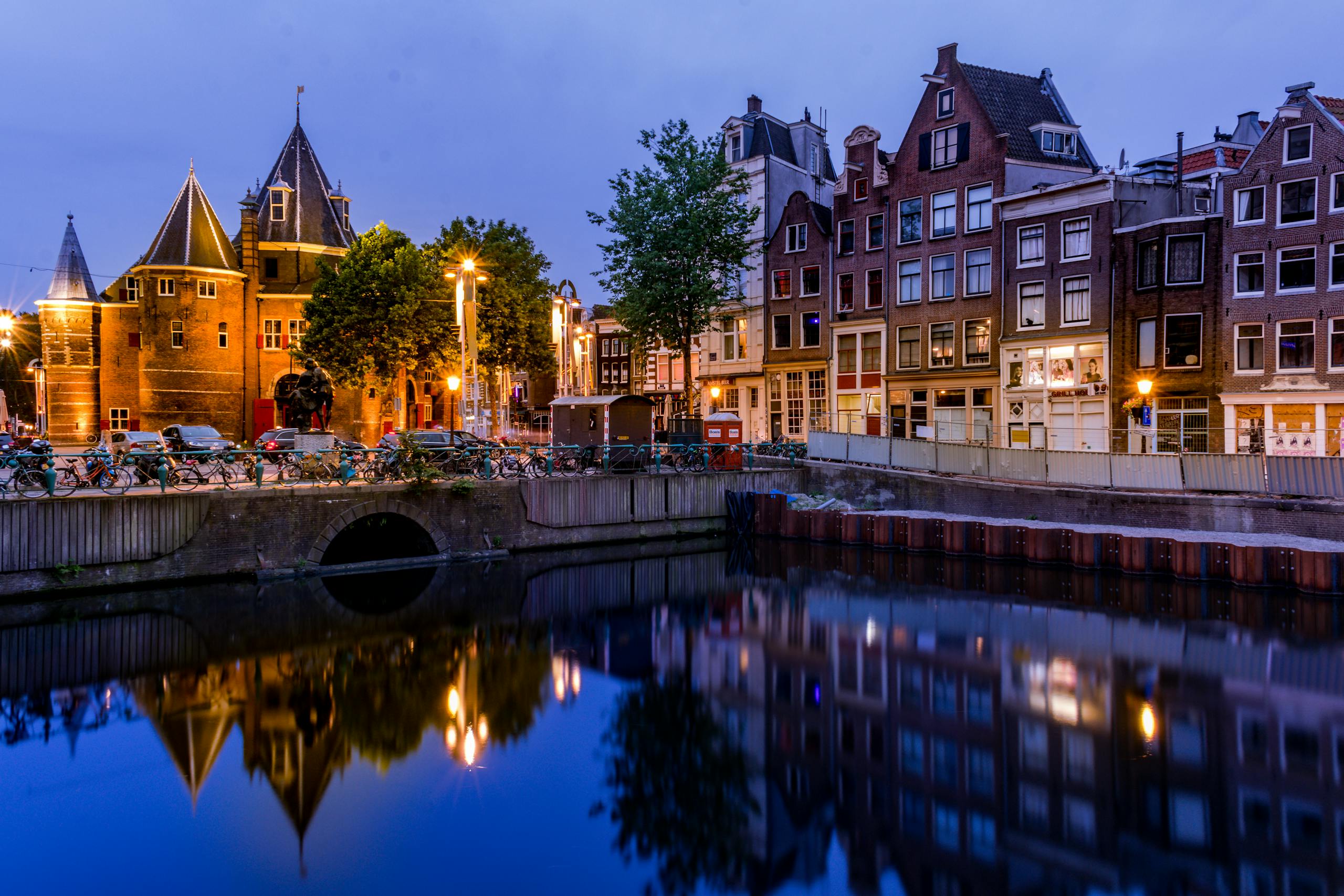
KLM Stopover From Airport to Amsterdam in Just Under 24 Hours
The KLM Amsterdam Stopover Is One of the Most Generous in the World — If You Know How to Book It
The KLM Amsterdam stopover operates through Flying Blue, the joint loyalty programme of KLM and Air France. On any award ticket booked with Flying Blue miles — whether on KLM, Air France, or any of 30+ partner airlines — you can add a free stopover in Amsterdam (or Paris) lasting anywhere from 24 hours to 12 months, at no additional miles cost. On a single carrier, you can string together multiple stopovers within one itinerary completed in under 365 days. The only catch: it must be booked by phone. No online self-serve. That 10-minute phone call is the price of admission to one of the most flexible stopover benefits in commercial aviation — and Amsterdam, with 16 minutes from Schiphol station to the city centre, earns its place as one of Europe’s most rewarding stopover cities.
Most guides describe KLM Amsterdam stopovers as if they are a standalone airline programme — something you book directly on klm.com the way you book a Turkish Airlines stopover or an Icelandair stopover. They are not. The KLM Amsterdam stopover is a benefit of the Flying Blue frequent flyer programme, and it applies to award tickets only — not standard paid fares. This is the single most important distinction to understand before you start planning, and it is what the old guides consistently skip over.
That said, once you understand the Flying Blue framework, the stopover benefit is genuinely extraordinary. It is one of the few programmes in the world that allows a stopover on a one-way award ticket — not just round trips. It works on partner-operated flights, not just KLM and Air France metal. There is no fixed maximum of 7 nights — you can stay in Amsterdam for a week, a month, or theoretically up to a year on a single award ticket. And on a single-carrier all-KLM itinerary, you can add multiple stopovers without paying more miles. The catch is that none of it is bookable online — every stopover award must be built by calling Flying Blue’s service centre. The process takes about 10 minutes once you have done the research.
For travellers without Flying Blue miles, there is a parallel path: KLM’s multi-city fare booking allows you to build a cash ticket with Amsterdam as a deliberate stop rather than a layover, at standard ticket pricing. It is not as powerful as the award stopover, but it works for those who prefer to pay with cash.
Two Ways to Book a KLM Amsterdam Stopover
Before anything else, identify which track applies to you. They work completely differently.
Free stopovers on Flying Blue miles redemptions — up to 12 months
Standard paid ticket with Amsterdam built in as a deliberate stop
The “free” KLM Amsterdam stopover — the one at no additional cost to your ticket — applies exclusively to award tickets booked with Flying Blue miles. It is not a benefit of buying a cash KLM ticket. On a cash ticket, adding an Amsterdam stop is simply a multi-city booking at whatever the fare difference is for that routing. The cash multi-city route is valid and often low-cost, but it is not technically the “Flying Blue Free Stopover” that most guides are describing. If you are planning around this benefit, you need Flying Blue miles.
Yes — the free Amsterdam stopover at no additional miles cost is a Flying Blue award programme benefit. It applies to award tickets booked with Flying Blue miles on KLM, Air France, or their 30+ partner airlines. If you are paying cash for your KLM ticket, there is no automatic free stopover — but you can still build Amsterdam into your routing using KLM’s multi-city booking tool at the regular fare price for that routing.
No — award stopovers cannot currently be booked through the Flying Blue website or the KLM/Air France online booking engines. You must call Flying Blue directly: +1-800-375-8723 (US). Before calling, research the specific flights you want — find award availability and note flight numbers and dates. The agent builds the itinerary on their end. One travel writer reported the process took 11 minutes and was “easy.”
Yes — since July 2023, the Flying Blue stopover benefit expanded from Air France/KLM flights only to all Flying Blue partner airlines, including Delta, Virgin Atlantic, Korean Air, WestJet, Kenya Airways, and 30+ others. However, when you mix carriers on a single itinerary, the segments are priced separately per carrier — the stopover is only completely free when the entire relevant portion is on a single airline (all KLM, or all Delta, etc.). Cross-carrier itineraries are priced as two separate awards.
Anywhere from 24 hours to 12 months — the stopover only requires that the entire itinerary be completed within 365 days. There is no enforced maximum stay the way KrisFlyer has a 30-day ceiling or Turkish Airlines has a 7-day limit. You could theoretically stop in Amsterdam for 6 months before continuing to your final destination, as long as you complete the full ticket within the year. Most stopover travellers use 2–7 nights.
How to Book the Flying Blue Award Stopover — Step by Step
The booking process requires preparation before you call. Agents can only work with availability they can see in the system — they cannot create it. The more homework you do before calling, the faster the process.
Search for each flight segment individually on flyingblue.com, klm.com, or airfrance.com. Look for “Saver” level award availability on all segments — your departure to Amsterdam, Amsterdam to your final destination, and return if applicable. Note the specific flight numbers, dates, and cabin class. Confirm the connecting segment (AMS → final destination) prices at the same or lower level than the full routing.
The stopover is only free if the intermediate segment (Amsterdam → final destination) prices at the same or lower number of miles than the full routing prices. For example: NYC → Amsterdam → Madrid should cost the same miles as NYC → Madrid direct. Search each segment individually to confirm the Amsterdam–Madrid leg prices at equal or fewer miles. If it prices higher, the stopover adds miles.
Confirm you have sufficient Flying Blue miles in your account before calling. If you need to transfer from Amex, Chase, Capital One, Citi, or Bilt, do it before calling — transfers are instant from Amex, Capital One, and Bilt; 24–48 hours for Chase and Citi. Never transfer before confirming availability, as transfers are irreversible. Flying Blue agents can place awards on hold briefly while you transfer if needed.
Call +1-800-375-8723 (US). Tell the agent you want to book an award ticket with a stopover in Amsterdam. Have your Flying Blue membership number, flight numbers, dates, and cabin class ready. The agent will search availability on their end, confirm the pricing, and build the itinerary. If availability has disappeared, you will need to find alternative flights before calling back. Process takes 10–20 minutes.
Once the agent confirms pricing and availability, authorise the miles redemption. You receive a single ticket covering your full itinerary including the Amsterdam stop. Book your Amsterdam hotel, museum tickets (Anne Frank and Van Gogh sell out weeks ahead), and plan your canal itinerary. The train from Schiphol to Amsterdam Centraal takes 16 minutes and runs every 10–15 minutes from 05:30 to midnight.
When searching for award availability on klm.com or flyingblue.com, look for the green “Lowest Fare” badge on individual segments. If you see it on both the full itinerary (NYC → Madrid) and the connecting segment (AMS → Madrid), there is a strong chance the stopover will price at zero additional miles. This is the fastest way to pre-qualify a stopover before calling. Frugal Flyer documents this as one of the most reliable signals that a Flying Blue stopover will be free on that routing.
The Flying Blue stopover pricing rule that trips most people up: if your entire stopover itinerary is on a single carrier (all-KLM flights, or all-Delta flights), multiple stopovers can often be built into the award for free, as long as each segment prices at or below the full routing. However, once you mix airlines — say KLM from New York to Amsterdam, then Lufthansa from Amsterdam to Berlin — the segments are priced as two separate awards and the stopover benefit effectively disappears (you are paying KLM award rates for the transatlantic leg and Lufthansa award rates for the intra-European leg, separately). For maximum value, keep the entire KLM portion on KLM metal.
Ready to book your Flying Blue Amsterdam stopover?
Research your specific flights on flyingblue.com first, then call +1-800-375-8723 to book. The process takes about 10 minutes with an agent.
Flying Blue Stopover Rules — The Full Picture
| Rule | What It Means | Vs. Other Programmes |
|---|---|---|
| Minimum stop duration | 24 hours — anything under 24 hours is a layover, not a stopover | Same as KrisFlyer (24hr min), Turkish Airlines (20hr min) |
| Maximum stop duration | 12 months — as long as the full itinerary completes within 365 days | Far more generous than KrisFlyer (30 days), Icelandair (7–21 nights), Turkish Airlines (7 days) |
| One-way awards | Yes — stopovers permitted on one-way awards | KrisFlyer Saver one-way: no stopover. Turkish Airlines: round-trip only. Icelandair: one-way allowed. |
| Number of free stopovers | Officially 1 free stopover per booking; unlimited on same-carrier itineraries within one year | KrisFlyer: 1 per round-trip (Saver) or 2 (Advantage return). Icelandair: unlimited on both legs. |
| Partner airline eligibility | Yes — Delta, Virgin Atlantic, Korean Air, WestJet, TAROM, Kenya Airways, and 30+ SkyTeam partners | KrisFlyer partner stopovers: available but complex. Turkish Airlines: no codeshares for hotel programme. |
| Mixed-carrier pricing | Each carrier’s segments are priced separately — mixing KLM + Delta = two award prices, not one | KrisFlyer: same rule (different carriers = separate pricing). Icelandair: no partners. |
| Online booking | Phone only — +1-800-375-8723 (US) | KrisFlyer: online for most stopovers (phone for edge cases). Icelandair: fully online. Turkish: Booker tool online. |
| Cash & Miles tickets | Stopovers permitted on Cash & Miles (partial miles + cash) tickets in addition to pure award tickets | Unique to Flying Blue — most programmes restrict stopovers to full award tickets only |
| Hotel included | No — all accommodation paid by passenger | Turkish Airlines: free hotel included. Qatar Airways: subsidised hotel. Icelandair: no hotel. |
How to Earn Flying Blue Miles for Your Amsterdam Stopover
Flying Blue is a transfer partner of every major flexible points programme in the US. All five major transferable currencies convert at a 1:1 ratio (with the exception of Marriott Bonvoy at 3:1). This makes Flying Blue miles among the easiest frequent flyer currencies to accumulate — you do not need to fly KLM or Air France regularly to build a significant balance.
Transfers process nearly instantly — often within minutes. Amex also runs regular 25–30% transfer bonus promotions to Flying Blue (sometimes offering 1.25 miles per point transferred). Best cards: Amex Platinum (80,000+ point bonuses common), Amex Gold, Amex Green. The fastest way to top up your Flying Blue balance when you find availability.
Transfers take 24–48 hours. Best cards: Chase Sapphire Reserve (60,000+ points), Chase Sapphire Preferred (75,000+ points). Important: confirm award availability before transferring Chase points — the delay means seats can disappear. Use Flying Blue’s hold option or use Amex/Capital One for same-day transfers instead.
Fast transfers (typically same-day). Best cards: Capital One Venture X (75,000+ bonus), Capital One Venture (75,000+ bonus). Good backup to Amex if you have hit transfer limits. Capital One has no Flying Blue transfer bonus history as frequently as Amex, but the 1:1 base rate is solid for topping up balances.
Premium Citi cards (Strata Premier, Strata Elite) transfer at 1:1 in increments of 1,000. No-annual-fee Citi cards transfer at 1,000:700 — meaningfully less valuable. Processing takes up to 48 hours. Best used for smaller top-offs when other currencies are exhausted.
Bilt transfers process nearly instantly. If you pay rent, Bilt earns points on rent payments (normally no credit card rewards apply to rent) making it a unique Flying Blue accumulation path. Minimum 2,000 Bilt points per transfer. Good for smaller top-ups alongside Amex primary earning.
Transfer 3,000 Marriott points to 1,000 Flying Blue miles. Every 60,000 Marriott points transferred yields a 5,000-mile bonus. The conversion is poor — only use Marriott Bonvoy as a last resort when other currencies are unavailable. Credit card transfers (Amex, Capital One, Chase) are universally better value paths to Flying Blue miles.
American Express has run multiple 25–30% transfer bonus promotions to Flying Blue since 2018, typically lasting 4–6 weeks. A 25% bonus means 1,000 Amex points become 1,250 Flying Blue miles — a meaningful uplift when transferring large balances for business class awards. Monitor for these bonuses at frequentmiler.com or the Amex Membership Rewards portal. If you see a bonus active when you are planning your Amsterdam stopover booking, time your Amex transfer to the bonus window before calling Flying Blue. Never transfer speculatively — only transfer when you have confirmed availability.
Amsterdam — What Makes It One of Europe’s Best Stopover Cities
Schiphol Airport has one of the most efficient city connections of any major European hub. The train platform is directly beneath the terminal — no bus, no shuttle, no separate airport train station building. Walk off your KLM flight, follow the signs, and within 3–4 minutes you are at a platform. 16 minutes later you are at Amsterdam Centraal station in the heart of the city. No other major European hub — not Heathrow, CDG, Frankfurt, or Zurich — offers that speed and simplicity of connection. For a 24-hour stopover, that matters enormously.
Amsterdam is a compact, walkable city. The entire historic canal ring — a UNESCO World Heritage Site — is navigable on foot in 20–30 minutes end to end. The Rijksmuseum, Van Gogh Museum, and Anne Frank House are all within a 1.5km radius of each other. The canal streets are flat, the city is safe at almost any hour, and the food scene — from Michelin-starred restaurants to stroopwafel street stands — is genuinely excellent. For a 1–3 night stopover, Amsterdam is one of the most time-efficient cities in Europe to experience properly.
The national museum of the Netherlands — 800 years of Dutch art and history across 80 galleries and 8,000 objects. The crown jewel is Rembrandt’s Night Watch (currently being studied in a glass research chamber visible to visitors — a once-in-decades event). Also Vermeer’s The Milkmaid, Jan Steen, Frans Hals, and an extraordinary collection of Delftware, ships’ models, and Golden Age objects. The Museumplein approach — across the open plaza with the “I Amsterdam” sign — is one of Amsterdam’s defining urban views. Book online; the museum can accommodate most visitors without long waits if you come early morning or after 15:00. Allow 2–3 hours minimum; serious art enthusiasts allow all day.
The world’s largest collection of Van Gogh’s work — 200 paintings and 500 drawings spanning his entire career, from the dark early Dutch period (The Potato Eaters) through Paris and Arles (The Bedroom, Sunflowers, Almond Blossom) to the final Saint-Rémy and Auvers period. Chronologically arranged, with correspondence and contemporary context alongside the paintings. More intimate than the Rijksmuseum. Tickets must be booked well in advance — the museum sells out weeks ahead in peak season. Do not arrive without a ticket. Note: The Starry Night is in New York’s MoMA, not here.
The canal house at Prinsengracht 263 where Anne Frank and her family hid for two years during the Nazi occupation of the Netherlands — the physical setting of her diary. The secret annexe where eight people lived in concealment is preserved; you walk through the actual rooms. One of the most moving experiences in European travel. Tickets must be booked 2–3 months ahead during peak season — they are released 2 months in advance and sell out within hours. The earliest morning slots (09:00) have the fewest visitors. A 90-minute visit. Brings most visitors to silence.
Amsterdam’s 17th-century canal ring (Grachtengordel) is a UNESCO World Heritage Site — four concentric semicircular canals dug to service the Golden Age spice trade, lined with 1,600 canal houses built on wooden piles driven into the marshy ground. A canal boat tour is the best way to see the city from the water: the narrow canal houses with their characteristic gabled facades, the houseboats, the 1,200 bridges, and the lean that many buildings display (deliberately leaning forward to allow goods to be hoisted up the outside). Small open boats with 12 passengers (Captain Jack’s is a popular operator) are better than large glass-covered tourist boats. Tours: 1–1.5 hours, ~€20–35. Also doable via pedalo or renting your own electric boat.
The Jordaan — Amsterdam’s most atmospheric neighbourhood — is a 17th-century working-class district west of the main canal ring, now home to independent boutiques, art galleries, brown cafés (bruine kroegen, Amsterdam’s traditional pubs), and the city’s best independent food scene. The Nine Streets (De Negen Straatjes) cross the Jordaan at right angles to the canals — nine short streets connecting the main canal ring, lined with specialty shops, vintage dealers, cheese shops, and cafés. The best area for wandering without a plan. The Anne Frank House is at the Jordaan’s northern edge.
A remarkably well-designed museum covering the Dutch experience of Nazi occupation (1940–1945) — presenting both the collaborative response and the resistance, and continually asking the visitor “what would you do?” The exhibition is less crowded than Anne Frank and gives more historical context. Combined, Anne Frank House and the Dutch Resistance Museum form one of the most complete WWII histories available anywhere in Europe. Particularly affecting for travellers with Dutch heritage. The museum is also home to a Junior section for children. Located near Artis Zoo, east of the city centre.
The world’s only floating flower market — stalls built on pontoons on the Singel canal, selling tulip bulbs, cut flowers, seeds, and botanical gifts. More tourist-facing than a working market (most repeat Amsterdam visitors skip it), but genuinely atmospheric as a 5-minute walk-through, particularly in spring when Dutch tulips are at their peak (March–May). The real Dutch flower experience is the Keukenhof Garden (30 min from Schiphol, open mid-March to mid-May) — 79 acres of tulip displays. For a stopover visit during tulip season, Keukenhof is the unmissable experience.
The Heineken brewery’s original De Pijp site has been converted into an interactive self-guided tour of the brand’s history and brewing process (~€21, 75 min). More interesting for design and marketing history than for beer nerds. The authentic Dutch drinking experience is the brown café (bruine kroeg) — dimly lit, wood-panelled pubs stained amber by a century of pipe smoke, serving jenever (Dutch gin) and draught Heineken or Amstel. Best brown cafés: Café ‘t Smalle (Jordaan, 1786), Café de Dokter (smallest bar in Amsterdam — 4 seats), Wynand Fockink (jenever tasting room near Dam Square, est. 1679).
Amsterdam has 400km of dedicated cycling infrastructure and more bicycles than residents. Renting a bike for a stopover visit is not a tourist gimmick — it is genuinely the best way to see the canal ring, the Jordaan, the Museumplein area, and Vondelpark in sequence. Most rental shops charge €12–18/day. Key rules: always lock your bike to a fixed structure (bikes are stolen at enormous rates), cycle in the direction of traffic in the bike lane, and do not walk in the bike lane. Multiple rental shops near Amsterdam Centraal and Leidseplein. Not recommended on arrival from a long-haul flight — familiarise yourself with the traffic patterns first.
Reguliersgracht — The Seven Bridges Shot
Reguliersgracht, a short canal running south from the Herengracht, offers Amsterdam’s most celebrated waterway photograph: from the right position on the canal’s banks, seven canal bridges are visible in a single straight line, each receding into the distance, all illuminated at night by white globe lights. The shot is best at dusk or after dark when the bridge lights reflect in the water. The viewing point is from the Thorbeckeplein intersection looking south down Reguliersgracht. Arrive 20 minutes before sunset to set up — by dusk, the reflections are strongest and the canal is at its most still. In spring, when canal boats are out and the street trees are in blossom, the frame includes moving boats and flowering branches. This is the single most reproduced canal photograph in Amsterdam and the standard is worth meeting on its own terms.
“Seven bridges, one canal, one city that figured out how to make water an architecture.” — #EpicLayover #AmsterdamStopover #Reguliersgracht
Brouwersgracht at Dawn — The Most Beautiful Street in Amsterdam
Brouwersgracht (Brewers’ Canal) runs east–west across the northern tip of the canal ring — a wider, quieter canal lined with former brewery warehouses converted to residential spaces, houseboats, and canal houses with stepped and neck gables. At dawn (06:00–07:30), before the city wakes, the canal is glassy still and entirely empty of boat traffic. The reflection of the canal houses doubles in the water. The characteristic Amsterdam leaning façades are most pronounced here — houses built on unstable peat soil tilt 1–3 degrees forward, a deliberate design to allow goods to be hoisted up the outside without hitting the wall. Walk the full length (500m) to the Korte Prinsengracht intersection. The early morning light comes from the east and illuminates the south-facing facades from the side. A tripod is useful for long exposures of the reflections but not essential.
“The best canal is not the famous one. It’s the one nobody else is on at 6am.” — #EpicLayover #Brouwersgracht #Amsterdam
Bloemenmarkt in March — The Floating Tulip Market
The Bloemenmarkt on the Singel canal is Amsterdam’s floating flower market — stalls built on barges, selling tulip bulbs, cut flowers, and botanical gifts. From late March to early May, the market is at its most vivid: the stalls carry full tulip bouquets in every combination of red, orange, yellow, purple, and white, plus the potted bulbs in early bloom. The best composition is from the bridge at the eastern end of the market looking west along the floating stalls with the canal and the Muntplein tower in the background. Arrive early (09:00 when the market opens) before the crowds and before direct sunlight creates harsh shadows. The market is on the south side of the Singel canal — the northern bank gives you the best vantage point to photograph the stalls. For the truly spectacular tulip photograph, the Keukenhof garden (30 minutes by shuttle from Schiphol) is one of the most photographed landscapes in Europe during peak bloom (mid-April).
“Amsterdam is always most itself in April.” — #EpicLayover #Bloemenmarkt #Amsterdam #KLMStopover
Amsterdam Stopover Itineraries — By Duration
Train to Amsterdam Centraal — 16 minutes, ~€5
Platform is directly under the terminal. Sprinter trains run every 10–15 minutes. Buy an OV-chipkaart or use contactless card. Check into hotel (ask for early check-in if arriving before 15:00 — many central hotels accommodate this for a fee).
Tip: The Amsterdam Travel Ticket (€18–30 for 1–3 days) covers the airport train and unlimited tram/metro/bus within Amsterdam. Efficient for a 24-hour visit.
Rijksmuseum — 2.5 hours
Open from 09:00. The Night Watch, Vermeer’s Milkmaid, and the print gallery are the priorities. Pre-book tickets. Arrive within 15 minutes of your timed slot. The museum café is a fine lunch spot — sit outside overlooking the Museumplein if weather allows.
Jordaan canal walk + Nine Streets
Walk from Museumplein north along the Prinsengracht canal to the Jordaan and Nine Streets. Stop at a Dutch cheese shop (Old Amsterdam and Gouda both available at cheesemongers on the Nine Streets). Visit Café ‘t Smalle for a Dutch jenever tasting (est. 1786).
Canal boat tour + Reguliersgracht at dusk
Small-boat canal tour (1.5 hours) departing from near Centraal or from Leidseplein. After the tour, walk to Reguliersgracht for the Seven Bridges shot at dusk. Dinner in the Jordaan or De Pijp areas.
Tip: De Pijp (the Albert Cuyp Market neighbourhood) has Amsterdam’s most diverse and affordable restaurant scene — Indonesian rijsttafel, Surinamese, Middle Eastern, and modern Dutch all within two blocks.
Train to Schiphol — allow 75 minutes total
16 minutes on the train + airport processing time. For KLM intercontinental flights, arrive 3 hours before departure. The Schiphol departure experience is efficient but the security and passport control queues can build at peak hours.
Anne Frank House (09:00 slot)
Book the first morning slot 2–3 months in advance. 90 minutes inside. Quiet and deeply affecting. Follow with the Westerkerk church (climb the tower for city views, €9) next door.
Jordaan lunch — stroopwafel + Indonesian lunch
Pick up a fresh stroopwafel from the Albert Cuyp Market stall near Leidseplein (the freshly made version is unrecognisable from the packaged supermarket versions). Indonesian lunch at Sama Sebo or De Silveren Spiegel.
Van Gogh Museum (14:00 slot)
Pre-booked timed entry. 1.5–2 hours. Do not visit on the same day as the Rijksmuseum — museum fatigue is real and both deserve proper attention.
Brouwersgracht at golden hour + brown café
Walk north to Brouwersgracht for the best canal light. Dinner at a Jordaan restaurant. Evening drinks at a brown café: Café de Gijs or Café Chris (Amsterdam’s oldest pub, est. 1624).
Zaanse Schans — windmills and cheese
30 minutes by train from Amsterdam Centraal to Zaandijk Zaanse Schans station. An 18th-century Dutch village with working windmills, wooden clog workshops, and a cheese farm. One of the best day-trip alternatives to the canal-heavy Amsterdam experience. Free entry to the village; individual workshops and windmills charge €3–5 each. Busy with tour groups midday — go at 09:00 when it opens.
Tip: The train from Centraal runs direct. The Sprinter to Zaandijk takes 25 minutes (not to be confused with Zaandam which is a larger town nearby).
Return to Amsterdam — Rijksmuseum (15:00 slot)
Later afternoon at the Rijksmuseum is quieter than morning. If the Night Watch is a priority, go directly there first and work backwards.
Dutch dinner + departure
Dinner in Amsterdam before airport departure. Allow 3 hours before your KLM flight. Train back to Schiphol: 16 minutes from Amsterdam Centraal.
Amsterdam city — Anne Frank + canals + Jordaan
Anne Frank House in the morning, canal walk and Jordaan in the afternoon, canal boat tour in the evening. The 24-hour itinerary above works well for Day 1 of a longer stay.
Rijksmuseum + Van Gogh Museum
Both on the same day is ambitious but possible with timed entries — Rijksmuseum 10:00–13:00, lunch on Museumplein, Van Gogh 14:00–16:30. Evening: Heineken Experience or Dutch Resistance Museum.
Day trip to Haarlem (20 min) or Delft (1hr 15min)
Haarlem is Amsterdam’s most accessible day trip — a smaller medieval city with the Frans Hals Museum, the Grote Kerk, and a genuine local market square less overrun by tourists. Delft is famous for Delftware ceramics, Vermeer (who was born and died there), and a perfectly preserved 17th-century canal centre. The Vermeer Centrum and the Royal Delft factory are both strong attractions.
Keukenhof (mid-March to mid-May) or bike ride
If visiting during tulip season: Keukenhof Garden (€20, shuttle from Schiphol or Leiden) is one of the world’s great seasonal experiences — 79 acres of bulb plantings at peak bloom. Book tickets online well ahead. Outside tulip season: rent a bike and cycle the Amstel River south from the city (flat, scenic, mostly bike-path, passing old windmills and farms).
What to Eat During Your Amsterdam Stopover
Bitterballen are deep-fried beef ragù croquettes — crisp exterior, molten ragù interior, served with Dutch mustard (not French mustard). Ubiquitous at every brown café and beer garden. A kroket (croquette) is the elongated version, often served in a white bread roll (broodje kroket). Both are mandatory at least once. Available at FEBO (Dutch fast-food vending wall, a genuine Amsterdam institution) and at virtually any brown café.
Dutch raw herring (nieuwe haring, available from late May) is cured in brine and eaten whole with chopped raw onion and pickles, held by the tail and lowered into the mouth. The taste is mild, fatty, and briny — nothing like the pickled herring familiar to non-Dutch. The traditional way: hold it by the tail, tilt your head back. Street stalls near Centraal and at the Albert Cuyp Market. Haringhandel Krul near Centraal station is considered the best in Amsterdam. €4–6 per portion.
Two thin waffle layers sandwiching a caramel syrup filling — the stroopwafel originated in Gouda in 1810. The supermarket version is nothing like the freshly made kind: still warm from the iron, with liquid caramel centre, cut to order at the Albert Cuyp Market or the Lanskroon bakery near the Spui. €2–3 each. The tradition: balance it on top of your hot coffee to warm the caramel before eating.
Indonesia was a Dutch colony until 1949 and the resulting food culture is Amsterdam’s most distinctive culinary inheritance. The rijsttafel (“rice table”) is a ceremonial spread of 12–30 small Indonesian dishes served simultaneously — curries, sambals, satays, rendang, gado-gado, tempeh. Sama Sebo (near Vondelpark) and Kantjil & de Tijger are the two most respected venues. A full rijsttafel for two runs €50–70 and is one of the best meals available in Amsterdam at any price.
Dutch cheese is among the world’s finest — aged Gouda (Oud Gouda, 12+ months) has a hard, crystalline texture and complex caramel-salt flavour quite different from the mild young version sold globally. Cheese shops on the Nine Streets (De Kaaskamer, Reypenaer) sell aged varieties with tasting. Reypenaer also has a structured cheese tasting room with wine pairing. Edam, Maasdam, and Leerdammer are the other Dutch varieties worth trying fresh from the source.
Jenever (Dutch gin, pronounced “yuh-NAY-ver”) is the ancestor of London dry gin — sweeter, maltier, and served straight in a tulip glass filled to the brim, traditionally drunk by bending to the glass without lifting it (the “neck shot”). Old-style jenever distilleries: Wynand Fockink (tasting room near Dam Square, est. 1679), De Ooievaar. Young (jonge) jenever is lighter; old (oude) jenever is more complex and oak-influenced. A must-try during any Amsterdam stopover, preferably in a brown café.
Day Trips From Amsterdam — For Longer Stopovers
Mid-March to mid-May only — 79 acres of tulip fields
The world’s most celebrated tulip garden — 7 million bulbs planted annually across 79 acres near Lisse, 30 minutes from Schiphol by direct shuttle bus. Peak bloom: mid-April. One of the most photographed landscapes in Europe during peak bloom. Open strictly mid-March to mid-May. Buy tickets well in advance (they include the shuttle from Schiphol). A KLM Amsterdam stopover timed for April is the most natural combination in travel planning.
20 minutes from Amsterdam Centraal — the real Dutch market town
20 minutes by direct train from Amsterdam Centraal, Haarlem is a smaller, quieter medieval Dutch city with the Frans Hals Museum (the finest collection of Dutch Golden Age portrait painting outside the Rijksmuseum), the Grote Kerk St. Bavo, and the Grote Markt square. Fewer tourists than Amsterdam and a more authentic Dutch market town atmosphere. Perfect half-day addition to a 48-hour Amsterdam stopover.
1 hr 15 min — Vermeer, Delftware, and the best-preserved old centre in the Netherlands
The best-preserved 17th-century Dutch city centre in the Netherlands — Delft was Vermeer’s birthplace and home until his death, and the Vermeer Centrum covers his life and work in the city. The Royal Delft factory (Koninklijke Delft) is where genuine Delftware ceramics have been made since 1653 and is open to visitors with guided tours of the painting process. The canal-lined Markt square is tourist-free in comparison to Amsterdam.
30 minutes from Centraal — working windmills and Dutch crafts
An 18th-century Dutch village preserved on the banks of the Zaan river north of Amsterdam — working windmills (a mustard mill, a paint mill, an oil mill), wooden clog workshops, a cheese farm, and traditional Dutch wooden houses. Free entry to the village; individual workshops charge small entry fees. Best visited early morning (09:00) before tour groups. 30 minutes from Amsterdam Centraal by Sprinter train to Zaandijk Zaanse Schans.
The itinerary called it a layover. The ticket said Amsterdam, then seven days later Bangkok. The Flying Blue agent had built both segments into a single award — 22 minutes on the phone, including the time it took to spell out the flight numbers. The miles cost was the same as Bangkok direct, which itself was the same as flying to Bangkok from anywhere else the long way around. Seven nights in Amsterdam: two museums, a canal boat at dusk, Indonesian rice table in De Pijp, a cycle to Haarlem for a morning, four evenings in Jordaan brown cafés with Dutch gin in tulip glasses. Then onwards. The Bangkok segment felt like the continuation it was. The Amsterdam segment felt like the whole reason.
Getting From Schiphol to Amsterdam City Centre
Schiphol is the best-connected major European hub for stopover passengers. The train platform is directly under the terminal — no buses, no shuttle, no separate building. 16 minutes to Amsterdam Centraal. The airport effectively stops being a separate concept the moment you are on the train.
Direct under the terminal. 16 min. Runs every 10–15 min.
Direct to Museumplein/Rijksmuseum. 30–40 min.
Door-to-door. 30–55 min depending on traffic.
Book Your Amsterdam Stopover Hotel
KLM and Flying Blue include no hotel, transfers, or tours in the stopover benefit. You book and pay for everything on the ground. Amsterdam hotels in central areas (Jordaan, Canal Ring, Museumplein) are in high demand year-round — book at least 4–6 weeks ahead in shoulder season and 2–3 months ahead for summer (June–August) and the tulip season (late March to mid-May).
Short Amsterdam Layover at Schiphol? Here Is What You Can Do.
A KLM connection under 24 hours is a layover — not a Flying Blue stopover. Our Amsterdam layover guide covers the Schiphol airport experience itself (one of the world’s best airport museums is airside at Schiphol), and what you can realistically see in 3, 6, or 8 hours in the city on a short connection.
More From EpicLayover
KLM vs Icelandair vs Singapore Airlines vs Turkish Airlines Stopover
KLM’s Flying Blue stopover is the most flexible (12 months, one-way allowed, partner airlines). Icelandair gives the most time in destination for a cash fare. Full comparison across all five major programmes.
Read the Comparison →Singapore Airlines Stopover — KrisFlyer Award Stopovers
Like KLM, Singapore Airlines’ stopover programme operates through the KrisFlyer miles system. A different programme, different cities (Frankfurt, Tokyo, Milan, Barcelona), same underlying logic of award-based stopover value.
Singapore Airlines Guide →Stopover Time Budget Calculator
How many usable hours does your Amsterdam stopover give you? Account for Schiphol transit time, hotel check-in, museum queues, and departure buffer with our time calculator.
Calculate Now →Frequently Asked Questions — KLM Amsterdam Stopover
No — the free stopover benefit applies only to award tickets booked with Flying Blue miles. On a cash KLM ticket, adding an Amsterdam stop requires booking via KLM’s multi-city tool and paying the fare for that routing. Cash multi-city tickets can still be excellent value — sometimes priced very close to direct fares — but they are not the “Flying Blue free stopover” that most guides describe. To get the benefit at no additional miles cost, you need a Flying Blue miles balance and an award booking made by phone with a Flying Blue agent.
Flying Blue has not yet built stopover booking into its online award search tool. The programme’s terms allow it, but the booking infrastructure requires a phone agent to build the multi-segment itinerary with the stopover correctly priced. Flying Blue has said online stopover booking is planned but has not provided a timeline. The phone process is straightforward once you have researched your flights — agents confirm availability, check that the segment pricing qualifies the stopover as free, and build the ticket in 10–20 minutes. Call +1-800-375-8723 (US) during business hours.
Yes — since July 2023, the Flying Blue stopover expanded to all partner airlines, including Delta, Virgin Atlantic, Korean Air, WestJet, and 30+ SkyTeam partners. However, the free stopover pricing rule applies differently for partner versus KLM/Air France itineraries. When the entire connecting portion is on a single partner (all-Delta, for example), the stopover can be free at the same miles as the full routing. When you mix airlines (KLM transatlantic + Delta domestic), segments are priced separately per carrier — effectively two awards. For maximum value, keep all segments on KLM or all segments on a single partner airline.
Before calling, search for both the full routing (e.g. New York → Madrid) and the individual connecting segment (Amsterdam → Madrid) on the Flying Blue award search at flyingblue.com or klm.com. If the Amsterdam → Madrid segment shows the same or fewer miles than the full New York → Madrid routing, the stopover will likely price as free. Look for the green “Lowest Fare” indicator on segment searches — if present, it is a strong signal that the pricing qualifies. If the connecting segment prices higher than the full routing, the stopover will add miles. The phone agent will confirm the final pricing before you commit.
Yes — Paris Charles de Gaulle (CDG) is Air France’s hub, and the same Flying Blue stopover rules apply to Paris as to Amsterdam. You can add a Paris stopover on Air France-operated award segments, or an Amsterdam stopover on KLM-operated segments, for the same zero additional miles cost (subject to segment pricing rules). Some travellers specifically book Air France transatlantic business class awards to use the Paris stopover before continuing elsewhere in Europe. The article you are reading focuses on Amsterdam/KLM; the same logic applies to Paris/Air France with CDG as the hub airport.
The minimum is 24 hours (anything shorter is a layover, not a stopover). The maximum is effectively 12 months — the only requirement is that the complete itinerary from origin to final destination must be completed within 365 days. This makes Flying Blue one of the most generous programmes in terms of stopover length — compared to KrisFlyer (30-day maximum), Turkish Airlines (7-day maximum), or Icelandair (7–21 nights). In practice, most award stopover travellers use 2–7 nights in Amsterdam, but the programme technically permits up to a year.
The Netherlands is a Schengen Area member. US, Canadian, UK, Australian, and most other major passport holders do not need a visa for stays of up to 90 days. EU/EEA citizens have freedom of movement. Travellers from countries that require a Schengen visa should apply before travel — the same Schengen visa covering your European final destination also covers your Amsterdam stopover. ETIAS (European Travel Information and Authorisation System) may apply for some nationalities from 2025 onwards — check the current ETIAS requirements for your passport at ec.europa.eu before travel.
Flying Blue releases monthly “Promo Rewards” — heavily discounted award fares (typically 25% off standard award rates) on selected routes. These are published around the 15th of each month for travel the following month. If your Amsterdam stopover routing is included in a Promo Rewards deal, you can potentially book the transatlantic portion at 25% fewer miles. However, Promo Rewards awards often have restrictions — check whether stopovers are permitted on the discounted fare before planning around them. Monitor flyingblue.com or travel deal sites like View from the Wing and One Mile at a Time for Promo Rewards release announcements each month.
