
The Evolution of Ridesharing in 2025: How Smart Mobility Is Rewriting the Layover
For a generation of travelers, ridesharing began as a convenience. A tap on a phone replaced the uncertain wave at the curb. Fifteen years later, it has become something larger—a symbol of how technology rearranges daily movement.
Now, as autonomous vehicles roll onto city streets and luggage can be locked away by code instead of a concierge, the entire rhythm of travel is changing again.
For anyone caught between flights or navigating an unfamiliar city for a few spare hours, these changes mean freedom. You can step out of the terminal, leave your bags behind, and experience a place rather than wait for time to pass.
A Short History of How We Got Here
The modern rideshare era began in 2009 when Uber launched in San Francisco. Lyft followed in 2012, wrapping the idea in community and color. Smartphones, GPS, and instant payment turned an old habit—sharing a ride—into a digital reflex.
Through the 2010s, the concept spread everywhere. Cars multiplied, regulations followed, and new words—surge pricing, driver rating, shared pool—entered the language of travel.
By the early 2020s, the model began to strain. Cities grew crowded, drivers protested falling pay, and environmental concerns pressed companies toward electric fleets. The next leap would remove the human driver altogether.
The Autonomous Turn
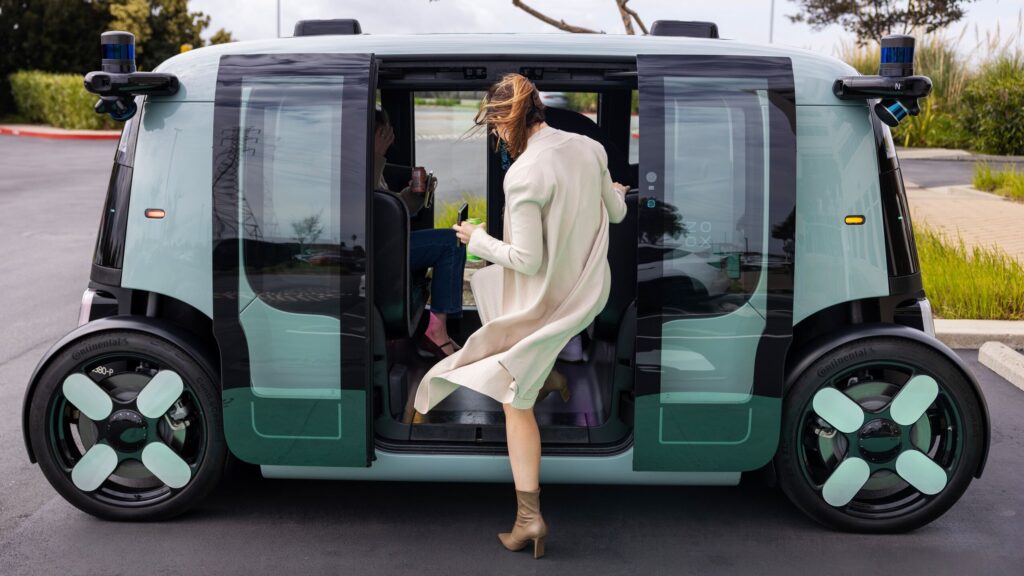
In Las Vegas, Amazon’s Zoox program is already giving visitors a glimpse of that future. The vehicles look like rounded pods with glass walls and no steering wheel. They glide quietly along pre-mapped routes on the Strip, run by software that senses every motion around it.
The service is free while in testing. Pickups connect major stops such as Resorts World, AREA15, and the Convention Center. Boarding one feels strangely calm: four seats facing inward, soft light, and the steady confidence of a system that never blinks.
To try it, travelers download the Zoox app, register, and select a pickup zone. For now, the company operates within a small corridor of Las Vegas, but plans to expand to San Francisco and Seattle once city regulators approve.
Lyft, meanwhile, is preparing a different approach—electric self-driving shuttles that can carry groups of eight or ten. The company calls them a bridge between public transit and private rides, with pilot service scheduled to begin in 2026.
Together, these efforts hint at what transportation could become: silent, electric, shared, and entirely automated. For travelers rushing between gates or venturing out during a stopover, that evolution may finally make short-term exploration practical again.
The Luggage Question
Every traveler knows that the weight defining a layover is not only time but also baggage. What do you do with it if you want to explore?
Airports have slowly removed storage lockers for security reasons, leaving travelers to roll bags through crowded streets or pay for expensive hotel holds. Amazon, almost by accident, found an answer.
Its yellow Amazon Lockers, placed in gas stations, hotel lobbies, and airports, allow customers to store or retrieve packages with a digital code. For layover travelers, they double as short-term luggage storage—secure, accessible, and inexpensive.
Finding one is simple: visit the Amazon Locker Locator, select a site near your terminal or hotel, and use the emailed access code to open the compartment. Items can remain up to seventy-two hours. For most, that covers an overnight or full-day connection.
It is a slight change with significant consequences. A traveler can now leave a bag near McCarran Airport, take a Zoox into the city, have lunch at the Arts District, and return hours later without having carried a thing.
For guidance on what to pack or leave behind, Epic Layover offers a series of checklists that match the pace of modern transit:
- Carry-On Only Checklist for 12–48 Hour Layovers
- International Travel Checklist
- Travel Safety During Layovers Checklist
For questions on what the Transportation Security Administration allows inside a bag, see the official TSA guide.
The New Travel Ecosystem
Ridesharing, storage, and navigation are beginning to merge into what analysts call Mobility as a Service—a network of tools that plan an entire journey from phone to gate.
Amazon’s presence across delivery, data, and transportation gives a glimpse of how seamless this could become. A future traveler might schedule a Zoox pickup, unlock a locker, and order travel essentials en route, all within one account.
The same logic is spreading to airlines and booking apps. Instead of seeing layovers as wasted hours, companies are starting to design them as miniature itineraries—curated transit experiences rather than inconveniences.
Epic Layover’s own Layover Calculator was built for that purpose. It measures customs time, transit windows, and local transfer routes so a traveler can decide whether an excursion fits safely between flights.
Imagine landing in Las Vegas at noon with a connection at ten. The calculator confirms six free hours. You drop your bag at a locker near Terminal 3, book a Zoox to AREA15, explore the immersive art complex, and return in time for boarding. What was once a blur of airport lights becomes an afternoon memory.
Using the System Wisely
Autonomous Mobility may simplify logistics, but reasonable travel still depends on awareness. Before leaving the airport, check visa requirements, re-entry security times, and weather conditions that could delay return flights.
Pack only what you can manage easily. The Carry-On Checklist and Top Essentials for Layover Travel help trim gear to what fits in an overhead bin.
Stay connected safely through a private network such as the Best VPN for International Travel. Public airport Wi-Fi remains a common target for phishing and data theft.
Insurance is another layer of confidence. Some policies now include coverage for rideshare accidents or missed connections. Epic Layover’s Best Travel Insurance for 2025 compares the major providers.
The Human Thread
Technology may remove the driver, but travel remains a profoundly human act.
In Las Vegas, riders often photograph themselves in the Zoox cabin, half smiling, half disoriented by the silence. Strangers talk again because there is no one up front to fill the air. The absence of a driver becomes an invitation to conversation.
At the lockers, you can see the same quiet choreography—people meeting, storing, exchanging. Behind every algorithm is still a traveler with a heartbeat and a story to tell.
Ridesharing began as an idea about efficiency, but has evolved into a social mirror. How we move reveals how we relate: trust in shared systems, courtesy in confined spaces, patience at the merge. The future Mobility will depend not only on code but on cooperation—the same principle that made the first carpools work.
What Lies Ahead
Analysts at Terawatt Infrastructure estimate that global ridesharing could exceed one trillion dollars by 2028. The growth will come from autonomous fleets, electric power, and real-time artificial intelligence capable of predicting demand before a traveler opens the app.
For the individual passenger, the transformation will feel more personal, with fewer delays. Quieter streets. A trip that links seamlessly from terminal to hotel, from arrival to exploration.
As these systems mature, the layover itself—once a symbol of waiting—becomes an opportunity. It is a pause filled with choice: a meal, a museum, a short conversation, a moment outside the airport glass.
Conclusion
Ridesharing’s evolution tells a larger story about travel itself. Each technological advance—from phone dispatchers to GPS, from apps to autonomy—has drawn the world a little closer.
For the modern traveler, especially one living between terminals, that closeness matters. It means a few more hours lived rather than lost, a walk through sunlight instead of another seat by the gate.
As machines take the wheel, the task left to us is simple: to stay curious, kind, and ready to move. The journey may be automated, but the wonder is still ours.
Frequently Asked Questions
Can autonomous rides pick up directly from airports?
Zoox currently operates along the Las Vegas Strip but is expected to expand to McCarran Airport once regulatory tests are complete. Lyft’s autonomous shuttles are planned for major U.S. airports beginning in 2026.
Are driverless rides safe?
The vehicles use layers of LiDAR, radar, and 360-degree cameras. Every ride is tracked from a remote control center. Early data show lower accident rates than human-driven fleets.
Where can I leave luggage during a long connection?
Amazon Lockers accept small and medium bags for up to seventy-two hours. Many airports also list certified storage services on their websites.
How can I estimate if a side trip fits inside my layover?
Use the Layover Calculator to balance customs, transfer, and boarding times. Always plan to return at least two hours before departure.
Do I need extra insurance for rideshare trips abroad?
Policies vary. Review options through the Best Travel Insurance for 2025. Some providers include rideshare protection automatically.
Resources and References
Epic Layover Tools
Layover Calculator
Travel Safety During Layovers Checklist
Carry-On Only Checklist
International Travel Checklist
Top Essentials for Layover Travel
Best VPN for International Travel
Best Travel Insurance for 2025
External Sources
TSA: What Can I Bring
Zoox Official Site
Lyft Blog: Future of Rideshare
Amazon Locker Guide
Terawatt Infrastructure Report
