
What Is Medical Tourism? Benefits, Costs & How to Choose the Right Country
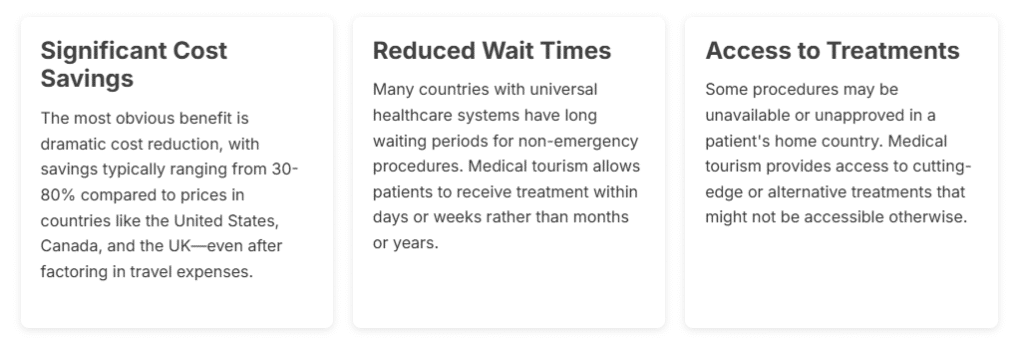
Medical tourism has transformed from a niche practice to a global phenomenon, with millions seeking affordable, high-quality care beyond their borders. From dental implants in Mexico at 70% less than U.S. prices to life-changing fertility treatments in Spain at a third of the cost, medical tourists find that crossing borders can mean accessing world-class healthcare without the world-class price tag. This comprehensive guide explores everything you need to know about this growing industry that’s expected to reach $207 billion by 2027.

Why Consider Medical Tourism?
Medical tourism isn’t just about saving money, though that’s undoubtedly a significant draw. People travel internationally for healthcare for numerous compelling reasons that extend beyond cost considerations.

Cost Comparison: Home vs. Abroad
| Procedure | United States | Mexico | Thailand | India | Turkey | Savings |
| Hip Replacement | $40,000-$65,000 | $12,000-$18,000 | $13,000-$16,000 | $7,000-$12,000 | $13,000-$19,000 | 65-85% |
| Dental Implant (single) | $3,000-$4,500 | $750-$1,200 | $900-$1,800 | $700-$1,300 | $600-$1,100 | 60-80% |
| IVF Treatment (1 cycle) | $12,000-$15,000 | $5,000-$8,000 | $4,500-$7,000 | $3,000-$5,000 | $3,500-$5,500 | 45-75% |
| Heart Bypass Surgery | $70,000-$200,000 | $25,000-$30,000 | $22,000-$33,000 | $7,000-$15,000 | $13,500-$22,000 | 70-95% |
Top Medical Tourism Destinations & Popular Procedures
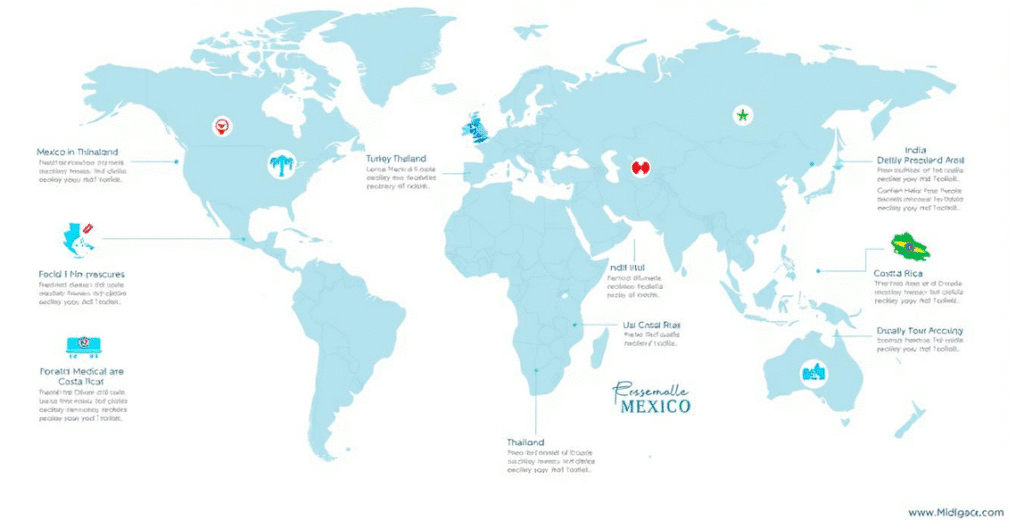
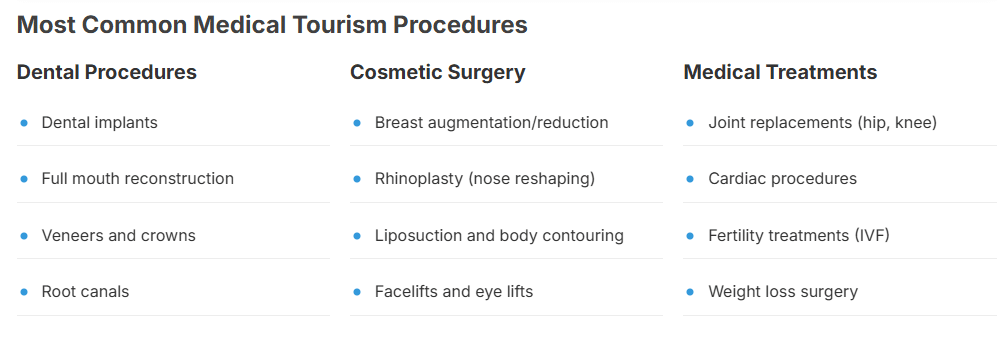
Different countries have developed specialties in various medical fields, offering unique advantages to international patients. Here’s a look at the leading destinations and their most sought-after procedures.
Mexico: Dental & Bariatric Leader
Mexico has become the go-to destination for Americans seeking affordable dental care and weight loss procedures. Border towns like Tijuana and Los Algodones (nicknamed “Molar City”) host hundreds of dental clinics specifically catering to international patients.
- Popular procedures: Dental implants, all-on-4 dental restoration, gastric sleeve, gastric bypass
- Average savings: 50-75% compared to U.S. prices
- Key advantages: Proximity to U.S., English-speaking staff, same-day return possible for minor procedures

Thailand: Cosmetic Surgery & Gender-Affirming Care
Thailand combines world-class medical facilities with luxurious recovery accommodations, making it an ideal destination for procedures requiring more extended recovery periods. Bangkok and Phuket are home to internationally accredited hospitals that feel more like five-star hotels.
- Popular procedures: Breast augmentation, rhinoplasty, gender confirmation surgery, facelift
- Average savings: 60-70% compared to Western prices
- Key advantages: JCI-accredited hospitals, surgeon specialization, recovery-focused packages
Turkey: Hair Transplants & Dental Excellence
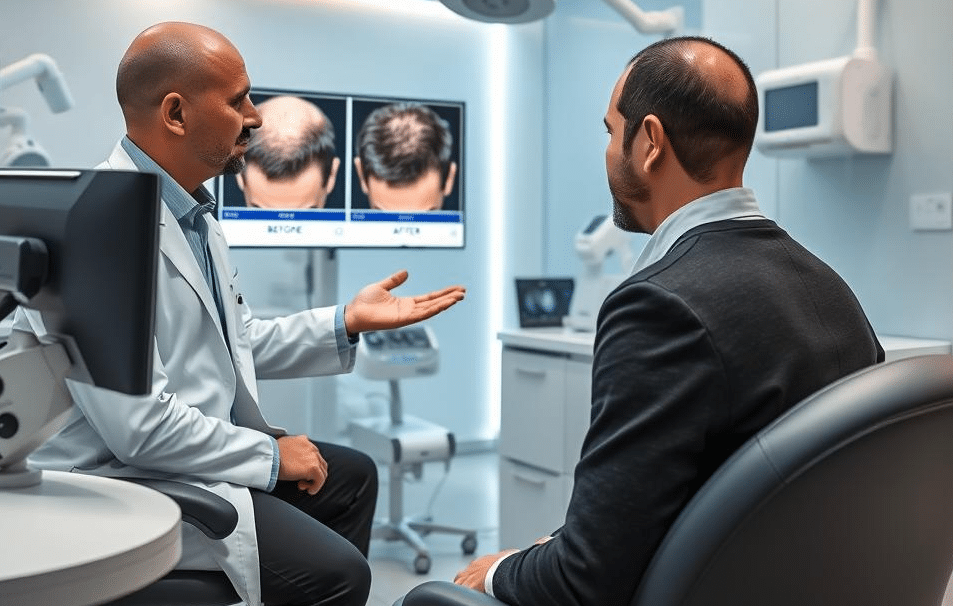
Istanbul has emerged as the global capital for hair restoration procedures, with hundreds of specialized clinics offering comprehensive packages. Turkey’s strategic location, situated between Europe, Asia, and the Middle East, makes it accessible to a wide range of patients.
- Popular procedures: FUE hair transplants, dental veneers, rhinoplasty
- Average savings: 70-80% compared to EU and U.S. prices
- Key advantages: All-inclusive packages with accommodation, specialized clinics, and a high volume of procedures
Is Medical Tourism Safe? Understanding Risks and Safety Measures
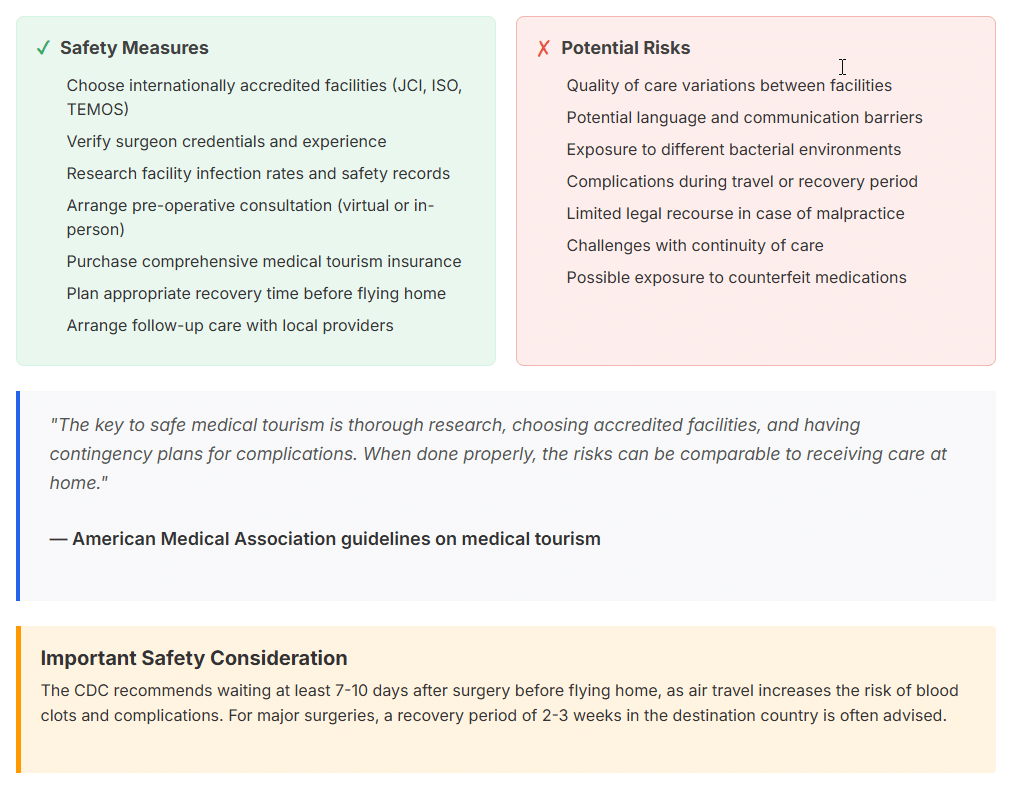
While millions of people travel successfully each year for medical care abroad, it’s essential to acknowledge that medical tourism, like any form of healthcare, carries certain risks. These can range from differences in medical standards and regulations to language barriers and potential complications after returning home. However, most risks can be minimized through thorough research, careful planning, and the selection of reputable providers. Accredited international hospitals often meet or exceed the standards found in the U.S. or Europe, and many doctors are internationally trained. By understanding the risks and taking key safety measures, you can maximize the benefits of medical tourism while protecting yourself.

Common Risks vs. Key Safety Measures in Medical Tourism
| Potential Risk | How to Minimize / Safety Measures |
|---|---|
| Unaccredited or poorly regulated facilities | Choose hospitals/clinics with international accreditations (JCI, ISO) |
| Language barriers or miscommunication | Select providers with English-speaking staff or patient coordinators |
| Incomplete pre-travel medical evaluation | Arrange virtual consults and submit full medical records in advance |
| Lack of legal protection or different malpractice laws | Arrange virtual consults and submit complete medical records in advance |
| Post-procedure complications after returning home | Ensure you have a plan for aftercare, and request detailed records |
| Inadequate travel insurance or no complication cover | Purchase specialized medical travel insurance covering procedures |
| Outdated technology or non-standard protocols | Vet providers for modern equipment and adherence to global best practices |
| Travel-related risks (infection, blood clots, etc.) | Follow all travel and post-surgery health recommendations |
Recap for Staying Safe:
- Always check for international accreditation (like JCI, ISQua, or national health ministry approval).
- Read independent patient reviews and testimonials—not just those provided by the clinic.
- Ask about the doctor’s credentials, training, and experience with your specific procedure.
- Arrange for communication before and after the procedure, including telemedicine follow-ups if possible.
- Get precise, written cost estimates, treatment plans, and policies on complications or cancellations.
✅ Medical Tourism Safety Checklist: Your Essential Pre-Trip Guide
Before you book that flight, make sure you’ve covered all the safety essentials:
- 📋 Verified Clinic Credentials
- 💉 Procedure-Specific Risks
- 🚨 Emergency & Backup Plans
- 📞 International Contact Access
- 💳 Insurance Coverage Confirmation
- 🧳 Post-Op Travel & Recovery Planning
- 📁 Legal & Medical Documentation in Order
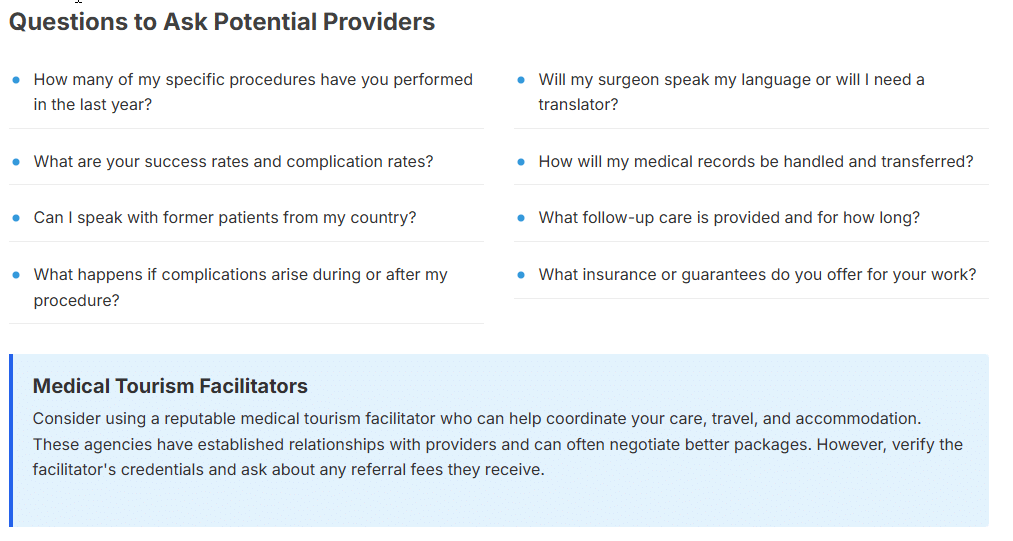
How to Choose a Medical Tourism Provider
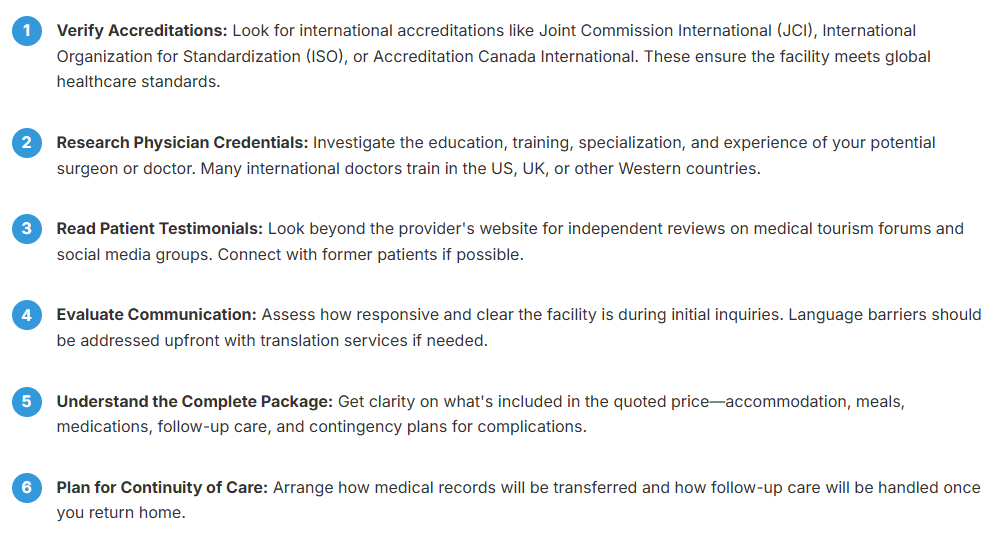
Selecting the right healthcare provider is one of the most critical decisions in your medical tourism journey. Follow these steps to ensure you’re making an informed choice.

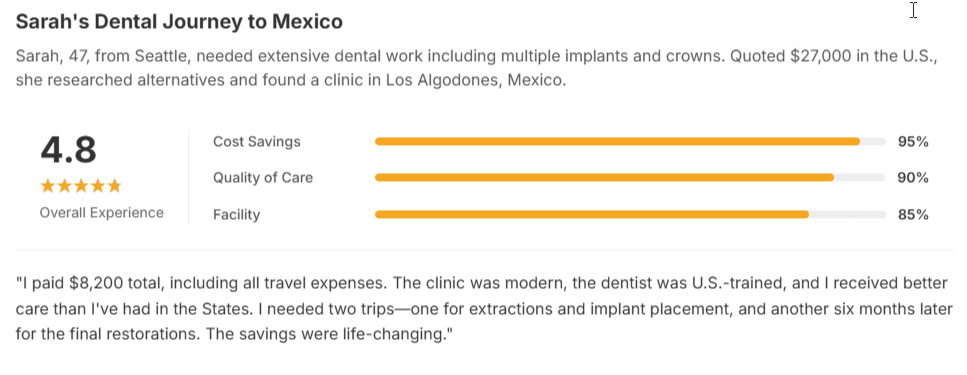
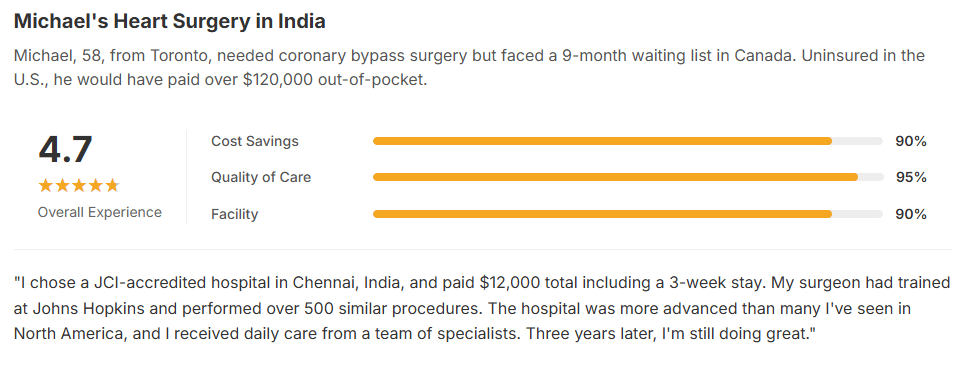
Real-World Medical Tourism Success Stories
These case studies illustrate how actual patients have successfully navigated the medical tourism process, highlighting both the benefits and challenges they encountered along the way.



“After three failed IVF cycles in the UK costing £15,000 each, we tried a clinic in Spain. Not only was it half the price, but they offered treatments unavailable at home. Today, our twins are the result of that decision. Medical tourism gave us our family.”
— Emma and James, fertility patients from London
✈️ Ready to Plan Your Medical Journey?
Here’s a sneak peek at the essential steps savvy travelers take before heading abroad for treatment.
From choosing the right clinic to organizing post-op recovery, this mini-preview gives you a taste of what’s inside the complete checklist.

Before Booking
- Research the destination country’s healthcare system
- Verify hospital accreditations and certifications
- Check the surgeon’s credentials and experience
- Read patient reviews and testimonials
- Consult with your local doctor about your plans
- Get cost estimates in writing with all inclusions
- Arrange a virtual consultation with an overseas doctor
Travel Preparations
- Purchase medical tourism insurance
- Check passport validity (6+ months recommended)
- Research visa requirements for medical stays
- Arrange accommodations near the medical facility
- Plan for a companion to travel with you
- Learn basic phrases in the local language
- Prepare for currency exchange and payment methods
Medical Preparations
- Gather and translate all relevant medical records
- Get necessary pre-procedure tests locally
- Create a list of all medications you take
- Arrange for post-procedure care at the destination
- Plan for follow-up care upon return home
- Pack appropriate clothing for recovery
- Prepare a medical communication card
SEE OTHER GUIDES AND REPORTS

Frequently Asked Questions About Medical Tourism
Is medical tourism safe?
Medical tourism can be safe when you choose accredited facilities and experienced providers. The key is thorough research and planning. Look for international accreditations, such as JCI, verify physician credentials, and arrange for proper follow-up care. While all medical procedures carry risks, regardless of location, choosing reputable providers helps minimize these risks.
How much can I save with medical tourism?
Savings typically range from 30% to 80% compared to prices in countries like the United States, even after including travel expenses. Dental procedures and cosmetic surgeries often offer the highest percentage savings. In contrast, complex procedures, such as cardiac surgery or joint replacements, can represent the most enormous absolute dollar savings, often in the tens of thousands.
Will my insurance cover medical tourism?
Most standard insurance plans don’t cover elective procedures abroad, but this is changing. Some insurers now offer medical tourism options or incentives for specific guidelines. Self-insured employers are increasingly adding medical tourism benefits. Always check with your insurance provider before planning your trip. Additionally, specialized medical tourism insurance is available to cover complications that might arise after returning home.
What happens if something goes wrong?
This is why proper planning is essential. Reputable facilities will have protocols for complications and should offer some form of guarantee for their work. Medical tourism insurance can cover additional treatment costs for complications that may arise. Before traveling, establish what follow-up care is included, what guarantees are provided, and have a contingency plan for emergencies, including funds for extended stays if necessary.
Is Medical Tourism Right for You?
Medical tourism offers significant benefits, but it isn’t suitable for everyone. It works best for those who are relatively healthy aside from their specific treatment needs, are comfortable with travel, can spend time recovering abroad, and are willing to conduct thorough research. The potential savings and quality of care can be life-changing for many, but the decision should be made carefully with full consideration of both benefits and risks.

Whether you’re considering dental work in Mexico, cosmetic surgery in Thailand, or cardiac care in India, the key to booming medical tourism lies in thorough research, careful planning, and setting realistic expectations. With the right approach, you can join the millions who have successfully received quality care abroad while saving significantly on healthcare costs.
Disclaimer:
EpicLayover.com is an independent travel and research-based website. I am not a licensed medical professional. All information provided on this site — including articles, guides, checklists, and reviews — is for educational and informational purposes only and should not be considered medical advice.
Always consult with a qualified healthcare provider before making any medical decisions, undergoing procedures, or choosing treatment providers abroad.
Some of the content on this site includes affiliate links. This means I may earn a commission if you choose to book a service, purchase insurance, or engage with a provider through the links on this site — at no additional cost to you. I only recommend products and services I personally research and believe offer real value.
Use this site at your own discretion and risk. Your health is your responsibility.