
Solo Women Layover Travel Safety Guide (2025): Survive, Thrive & Outsmart Danger in Any Airport

Traveling alone as a woman can be empowering—but it also comes with real challenges, especially during long layovers in unfamiliar cities or countries. Whether you’re stuck overnight at a foreign airport or navigating a short stopover in a high-risk area, your safety depends on the decisions you make in those in-between hours.
This Solo Women Layover Travel Safety Guide is designed to help you prepare, protect yourself, and turn what could be a stressful transit into a safe and even enjoyable part of your journey. From airport scams to cultural awareness, from rideshare tactics to avoiding kidnapping risks, this guide provides you with the critical tools you need to travel confidently—solo, innovatively, and securely.
Key Takeaways
- Plan by Layover Length: Stay inside the airport for short waits; book safe tours or lodging for longer stopovers to avoid unnecessary risk.
- Prioritize Transport Safety: Use only licensed taxis, verified ride apps, or women-only transport options to minimize exposure to scams and predatory behavior.
- Equip for Safety: Carry essentials like a doorstop alarm, RFID wallet, and VPN-enabled phone; download emergency and navigation apps before your trip.
- Respect Local Norms: Cultural behavior patterns and dress codes impact how women are treated—especially in conservative or high-risk countries.
- Stay Alert to Threats: Be aware of scams, trafficking risks, and red flags, such as overly helpful strangers, unmarked vehicles, or aggressive questioning.
Layovers vs. Stopovers
A layover is less than 24 hours, typically inside the airport’s transit area. A stopover is 24 hours or more, or more often,n, requiring entry into the destination country.
This distinction changes how you plan—Layovers center on finding safe places to rest inside the airport. Stopovers involve obtaining visas, arranging city transportation, securing safe lodging, and developing cultural awareness.
Example: A traveler with a “layover” in Istanbul faced a 14-hour delay. She had to leave the airport, arrange visas, find lodging, and secure transport while exhausted. With preparation, this stress can be avoided.
Airport Safety Essentials
Airports can feel overwhelming, especially when crowded or during overnight hours. Having a plan for where to rest, how to secure belongings, and how to use WiFi safely makes a significant difference.
Lounges and Women-Only Areas
Lounges reduce exposure to crowds and provide staff, WiFi, food, and showers. Access is available via Priority Pass, LoungeBuddy, or certain credit cards. These areas are monitored, making them safer than general seating.
Some airports, such as Dubai and Singapore Changi, offer women-only rest areas, providing extra comfort and security for solo women.
Sleep Pods and Rest Options
Pods such as GoSleep (Helsinki) and Minute Suites (U.S.) provide privacy, locks, and monitored spaces. Amsterdam Schiphol has private cabins; Singapore Changi offers free recliners in quiet zones. These reduce the risk of theft and allow travelers to rest without constant vigilance.
Digital Safety and WiFi
Airport WiFi is often insecure. Using a VPN reduces the risks of identity theft or hacked accounts. Avoiding banking and sensitive logins protects personal data. Solo travelers are prime targets for cyber theft, so digital awareness is as important as physical safety.
Luggage Storage
Dragging bags around creates fatigue and makes travelers more susceptible to fatigue. Official airport counters or verified services like Bounce and Stasher keep belongings safe, insured, and out of sight, making exploration or rest easier.
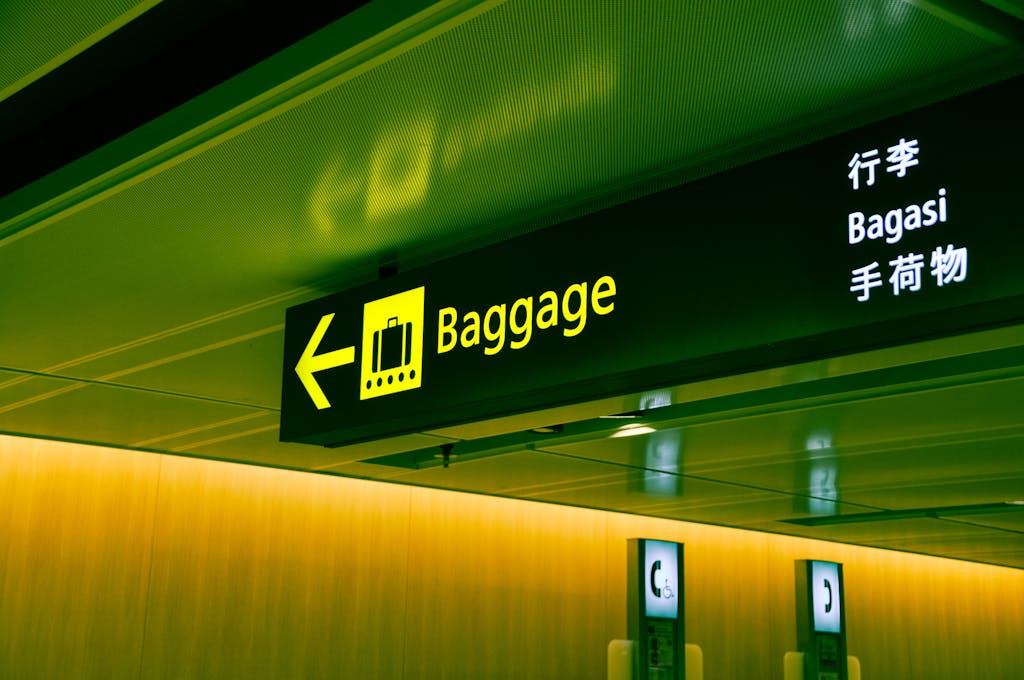
Transportation Safety
Transportation during layovers is one of the most important safety considerations for solo women. The way you get from the airport to a hotel, a tourist area, or even just between terminals can determine whether your experience feels safe or risky. Airports worldwide are common targets for unlicensed drivers or scams, which is why making transportation choices in advance is critical.
Licensed Services
Use airport shuttles, regulated taxis, or ride apps. Drivers soliciting inside terminals are red flags. Licensed services wait in designated areas. For example, at London Heathrow, only licensed black cabs are permitted to pick up passengers at taxi ranks; in Bangkok, prepaid taxi counters located inside the airport ensure safer rides.
Ride-Hailing Apps
Apps such as Uber, Grab, or Didi provide GPS tracking, ratings, and digital records. They are instrumental in cities where taxis may overcharge foreigners. Always verify that the license plate number matches the one listed in the app. In Mexico City, Uber is often safer than hailing a street cab.
Women-Only Options
- Dubai: Pink taxis for women, driven by female drivers.
- Mexico City: Women-only subway cars during rush hours.
- Tokyo: Women-only train cars in peak times.
These services add peace of mind, especially in crowded or late-night settings.
Red Flags
- No license or meter.
- Driver pressures quick decisions.
- The vehicle is poorly maintained.
- Excessive personal questions.
Leaving the situation immediately is the safest course of action.
Planning by Layover Length
Planning your activities around layover length is crucial. Time determines whether you should stay inside the airport, make a quick excursion, or book a night’s rest outside. Having a clear plan helps avoid rushing, missing connections, or exposing yourself to unnecessary risks.
4–6 Hours
Stay inside the airport. Lounges, showers, and pods are the safest choices. Many airports have attractions: Singapore Changi features gardens and cinemas, while Seoul Incheon offers cultural exhibits. Using this time for rest prevents travel fatigue.
6–10 Hours
Explore nearby if direct and safe transport is available. Schiphol’s 15-minute train ride to Amsterdam makes it possible to enjoy canals and return with time to spare. Some airports, like Doha Hamad and Istanbul, offer guided layover tours. These organized options are safer than venturing out alone.
10+ Hours
Book lodging in advance. Airport hotels, such as YotelAir (London Heathrow) or Transit Hotels (Singapore Changi), offer overnight rest without requiring a departure from the secure zones. For city stays, stick to well-reviewed hotels in safe neighborhoods. Group tours provide added safety for exploration.
Safety Gear and Apps
To stay prepared during layovers and international travel, solo women should carry essential safety tools that are lightweight and TSA-friendly. A doorstop alarm adds a layer of hotel room security, while an RFID-blocking wallet protects your cards and passport from digital theft. A portable charger ensures your phone never dies when you need it most, and a personal alarm offers a loud deterrent in emergencies. Pair these with smart apps like Life360 for location sharing, VPNs for secure browsing, and offline maps and translators to navigate unfamiliar cities without relying on public WiFi or asking strangers for help. These products create a protective digital and physical safety net, no matter where your journey takes you.
Gear
- Doorstop alarm: Adds security to hotel rooms and hostels.
- RFID wallet: Blocks electronic theft of cards and passports.
- Portable charger: Prevents a dead phone during emergencies.
- Personal alarm: Provides a loud deterrent in the event of a threat.
Apps
- Google Maps offline or Maps.me: Navigate without data.
- Google Translate: Translate signs and menus with offline packs.
- XE Currency: Quick conversion prevents scams.
- Life360/bSafe: Share live locations with family.
- VPN apps: Protect online activity.
Services
- eSIMs: Airalo or Holafly for instant mobile data.
- Insurance: Consider SafetyWing or World Nomads for coverage against delays and medical expenses.
- Lounge passes: Priority Pass or LoungeBuddy for affordable comfort.

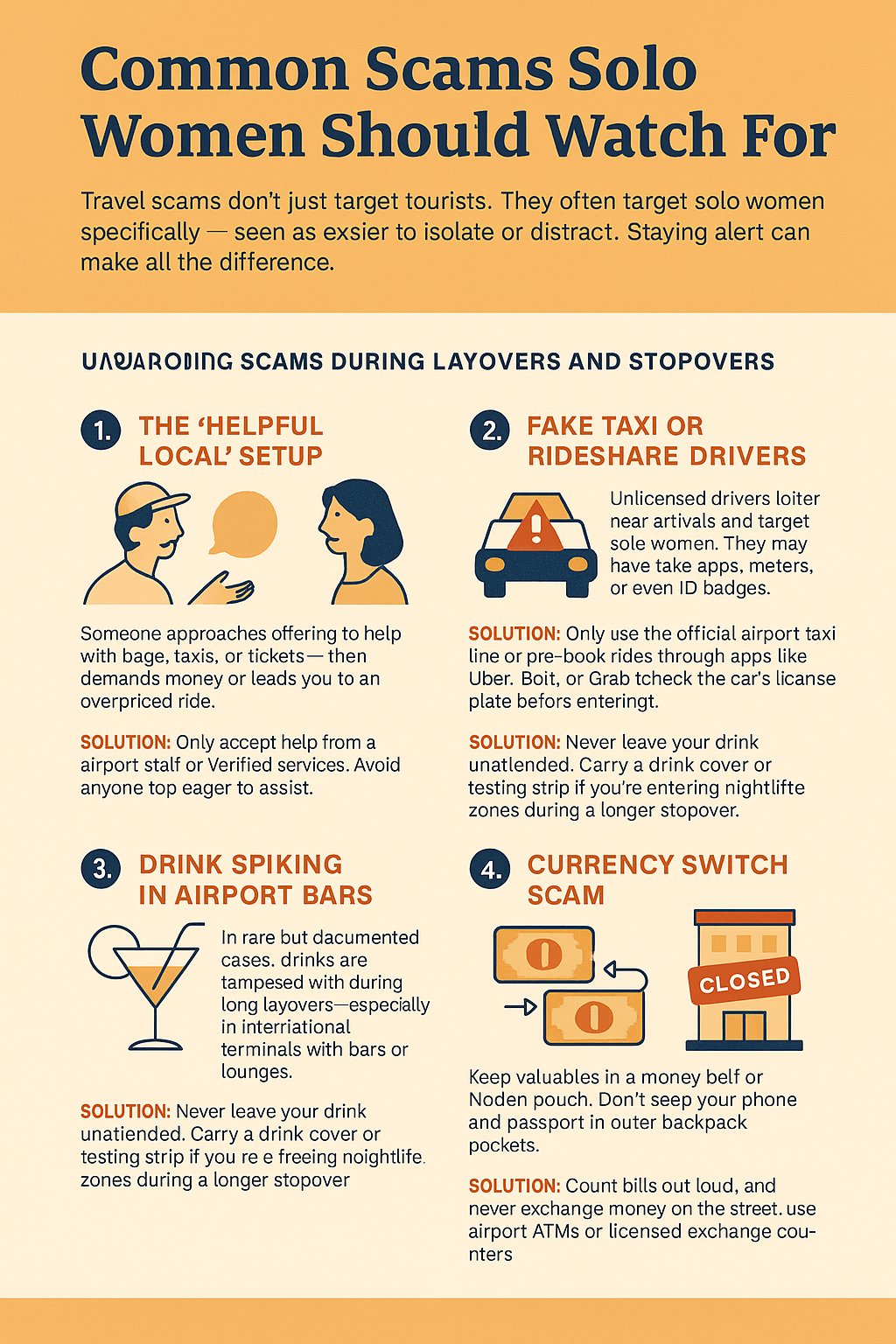
Common Scams Solo Women Should Watch For
Travel scams don’t just target tourists. They often target solo women specifically — seen as easier to isolate or distract. Staying alert can make all the difference.
🎯 Common Scams During Layovers and Stopovers
1. The “Helpful Local” Setup
Someone approaches, offering to help with bags, taxis, or tickets — then demands money or leads you to an overpriced ride.
Solution: Only accept help from airport staff or verified services. Avoid anyone who is too eager to assist.
2. Fake Taxi or Rideshare Drivers
Unlicensed drivers loiter near arrivals and target solo women. They may have fake apps, meters, or even ID badges.
Solution: Use only the official airport taxi line or pre-book rides through apps like Uber, Bolt, or Grab (check the car’s license plate number before entering).
3. Drink Spiking in Airport Bars
In rare but documented cases, drinks are tampered with during long layovers — especially in international terminals with bars or lounges.
Solution: Never leave your drink unattended. Carry a drink cover or testing strip if you’re entering nightlife zones during a more extended stopover.
4. “Friendly Stranger” Pickpocket Duo
One person distracts with a story or request while another swipes your phone, wallet, or passport.
Solution: Keep valuables in a money belt or hidden pouch. Don’t keep your phone and passport in outer backpack pockets.
5. Currency Switch Scam
When changing cash or paying in local currency, some vendors quickly swap large bills for smaller ones and claim you underpaid.
Solution: Count bills out loud, and never exchange money on the street. Use airport ATMs or licensed exchange counters.
6. The “Closed Hotel” or “Overbooked Ride” Lie
A driver or “guide” claims your hotel or tour is closed and redirects you to another — often at a higher price, where they get a cut.
Solution: Call your hotel directly. Don’t take a stranger’s word at face value.

Unwanted Attention and Harassment While Traveling Solo
Solo women travelers often attract more attention than groups or couples — sometimes this curiosity is harmless, but in other cases, it crosses boundaries and becomes harassment. Recognizing early signs and knowing how to respond firmly and safely is crucial to maintaining control.
🔍 Common Situations:
- Overfriendly strangers asking too many personal questions (“Are you traveling alone? Where are you staying?”)
- Men following or watching for extended periods in airports, train stations, or public squares.
- Unwanted compliments or catcalling that escalate into persistent interactions.
- “Helpful” locals insisting on guiding you without being asked — then demanding money or personal contact in return.
- Touching or standing too close, especially in lines or on public transport.
🚫 How to Respond:
- Stay in public and well-lit areas. Don’t hesitate to enter a store, restaurant, or group setting to maintain a safe distance.
- Use assertive language. Short, clear responses, such as “I’m not interested” or “Please step back,” are more effective than trying to be overly polite.
- Don’t disclose you’re alone. Say you’re meeting someone or that your group is nearby.
- Move with confidence. Appearing unsure or lost can invite unwanted help — even if you’re confused, walk with purpose.
- Please report it. In airports, train stations, and hotels, security or staff are trained to handle harassment.
💡 Example Scenarios:
- “In Istanbul, I pretended to be on a call when a man kept circling me at the terminal. He left once he thought I was speaking with someone.”
- “At a hostel in Lima, a staff member made repeated inappropriate comments. I switched hostels immediately and wrote a detailed review to warn others.”
🔐 Pro Tip:
Download safety check-in apps like bSafe or Noonlight — you can set emergency alerts or fake calls to quickly escape uncomfortable situations.
Nightmares and Hidden Threats: What Women Face That Men Often Overlook
While male travelers often worry about lost luggage or delays, solo women must account for darker realities. Threats like trafficking, sexual harassment, or even kidnapping are real in parts of the world.
- Sex Trafficking Hotspots: Transit hubs are common staging areas. Be cautious around overly friendly strangers or unsolicited “help.”
- Kidnapping & Ransom: In certain regions, solo travelers are targeted for opportunistic abductions. Avoid isolated areas, especially at night.
- Common scams, such as fake emergencies, staged distractions, or romantic grooming, are often used to gain trust before exploiting it.
Quick Stats:
- According to UN Women, 58% of women report harassment in public transit globally.
- A U.S. State Department study found that 35% of American female travelers have experienced some form of unwanted attention or coercion while abroad.
- In Latin America, express kidnapping (short-term abduction for ATM withdrawals) has increased among solo tourists.
How to Protect Yourself:
- Keep your phone charged and accessible.
- Never share your complete itinerary with strangers or the public.
- Use emergency code words with trusted contacts.
- Book tours and lodging through verified sources only.
- If you feel you’re being followed, enter a public or staff-monitored area immediately.
Knowing the darker possibilities doesn’t mean avoiding travel—only traveling smarter. Fear shouldn’t stop adventure. Awareness protects it.
Building Confidence
Solo travel builds resilience and confidence. Each layover presents an opportunity to test independence and learn how to remain calm in high-pressure situations. For many women, what begins as nervousness turns into excitement once they realize they can manage challenges independently.
- Trust instincts: Gut feelings are valuable. Listening to them prevents most unsafe situations.
- Blend in: A Modest dress and moving with purpose help avoid attention.
- Set boundaries: Clear phrases in local languages make refusals easier.
Beyond safety, building confidence also means seeing layovers as mini-adventures. Exploring an airport’s cultural exhibits, taking a short city tour, or even trying new foods can turn waiting time into memorable experiences. Each positive outcome reinforces the mindset that solo travel is not only possible but enjoyable.
When you treat a layover as an opportunity rather than an inconvenience, confidence grows naturally. The sense of accomplishment that comes with navigating a long night alone or mastering a new city’s transportation system is what makes solo travel empowering and fun.
Women’s Rights and Cultural Views
Cultural expectations influence safety and comfort. Western nations typically support solo female travel. In conservative regions, modest dress and stricter behavior rules apply. Being aware of laws and cultural norms avoids conflict and reduces risk.
Understanding Cultural Norms & Women’s Rights
| Region / Country | Safety Level | Notes |
|---|---|---|
| Singapore | High | Ongoing reform; gender segregation in many public spaces. |
| Japan | High | Low crime, polite society, women-only train cars, but reserved cultural interactions. |
| UAE (Dubai, Abu Dhabi) | Moderate-High | Conservative norms; women-only taxis available; avoid PDA. |
| Qatar | Moderate-High | Secure airports; modest dress outside; strong rule of law. |
| Saudi Arabia | Moderate | Modern cities are generally safer than rural areas, although occasional harassment can occur in tourist spots. |
| Turkey | Moderate | Urban caution needed; women-only transport options help mitigate the risk. |
| Mexico | Moderate | Limited public freedom for women; conservative behavior is expected. |
| India | Caution | High rate of harassment reports; stick to vetted hotels and transport. |
| Pakistan | Caution | Moderate areas in rural areas occur in cities. |
| Petty theft is more likely than harassment in an open-minded culture. | High | Petty theft is more likely than harassment in an open-minded culture. |
| North America | High | Infrastructure is strong; urban vigilance is still necessary, especially at night. |
Cultural and Practical Extras
Adjusting behavior to cultural expectations shows respect and improves safety.
- Dress codes: cover shoulders and knees in conservative regions.
- Seating strategy: rest near families or other women.
- Bathrooms: Use the main, busy facilities instead of isolated ones.
- Communication: keep family updated via apps.
Insurance Tip: Choose coverage that includes medical emergencies, trip interruptions, and emergency assistance. A traveler in Bangkok avoided large medical bills during a layover thanks to insurance support.
Additional Resources for Women Travelers
- U.S. Department of State – Women Travelers: Guidance for U.S. citizens traveling abroad, with region-specific advice. (https://travel.state.gov/content/travel/en/international-travel/before-you-go/travelers-with-special-considerations/women-travelers.html)
- UN Women – Global Safety Initiatives: Information on programs supporting women’s safety and empowerment worldwide. (https://www.unwomen.org)
- Solo Traveler World – Women’s Travel Safety: Community-driven tips and advice for solo female travelers. (https://solotravelerworld.com/womens-travel-safety/)
- International Association for Women in Travel & Tourism (IAWTT): Network supporting women in travel and offering resources for safe, inclusive journeys. (https://www.iawtt.org)
- Hotline and Embassy Support: Keep a list of local emergency numbers and your embassy’s contact information before you fly. These are essential for rapid help during emergencies.
Conclusion: Layovers as Safe Adventures
Layovers don’t need to be wasted hours. With preparation, they become safe opportunities for rest or short exploration. For solo women, the keys are awareness, trusted services, and planning. Millions of people travel alone each year, and each successful journey builds their confidence.
Here are eight detailed FAQs tailored for the Solo Women Layover Travel Safety Guide article. They are structured for SEO and Answer Engine Optimization (AEO), using long-tail keyword phrasing and natural-sounding questions that real users would search:
Frequently Asked Questions (FAQ)
1. What’s the safest way for a solo woman to spend a long airport layover?
The safest option is to stay inside the airport and use secure, monitored areas such as airport lounges, sleep pods, or women-only rest zones (available in airports like Dubai or Singapore). Avoid sleeping in isolated seating or dark corners. Booking lounge access in advance via Priority Pass or LoungeBuddy adds both comfort and safety.
2. Can I leave the airport alone during a layover as a solo female traveler?
Yes, but only if the layover is long enough (usually 6 hours or more), the city is safe, and the transport is direct. Research in advance, book transportation with reputable services (Such as Uber, or airport taxis), and avoid venturing too far. Some airports offer layover tours — these are safer than exploring on your own.
3. How can I protect myself from travel scams during layovers?
Stay alert to common scams such as fake taxi drivers, friendly strangers offering help then asking for money, or false officials demanding bribes. Only use verified transport, ignore unsolicited help, and never give out personal info. Booking through official apps and platforms, such as Booking.com, Grab, or Expedia, adds an extra layer of protection.
4. What safety gear is allowed for international travel in carry-ons?
Pepper spray, knives, and stun devices are prohibited in carry-on luggage on most international flights. Instead, pack legal alternatives, such as personal alarms, doorstop alarms, and RFID-blocking wallets. If you need stronger gear, pack it in checked luggage only if permitted by the destination country.
5. Are there ride services designed specifically for women travelers?
Yes. Some cities offer women-only taxis and train cars:
- Dubai: Pink taxis with female drivers
- Tokyo: Women-only train cars during rush hours
- Mexico City: Women-only metro cars
When these options are unavailable, consider using apps like Uber or Bolt, which offer GPS tracking and driver ratings.
6. What are some red flags to watch for during a layover?
Red flags include:
- Unlicensed drivers approaching inside terminals
- “Broken” taxi meters or drivers refusing to use one
- Strangers asking if you’re alone or offering unsolicited help
- Anyone who pressures you to make quick decisions
Trust your instincts. If something feels wrong, leave the situation.
7. What kind of travel insurance is best for solo female travelers?
Look for plans that include:
- Medical emergencies and hospitalization
- Trip interruption/delay protection
- Theft or loss of belongings
- Emergency evacuation
Providers like SafetyWing and World Nomads are popular with solo travelers. Always read the policy fine print and check coverage for your destination.
8. What if I experience harassment or feel unsafe during a layover?
Stay calm, move to a public area, and seek airport or airline staff. Many airports have police or help desks. Use safety apps (such as bSafe or Life360) to share your location or instantly alert someone. Don’t be afraid to report inappropriate behavior — documentation helps prevent repeat incidents.
Action Steps:
- Download the Solo Women Travel Safety Checklist
- Compare Travel Insurance Plans
- Book Lounge Passes
- Buy an eSIM for Instant Connectivity
Safe travels—the world is open to you.

