
Introduction: Understanding the Medical Tourism Landscape
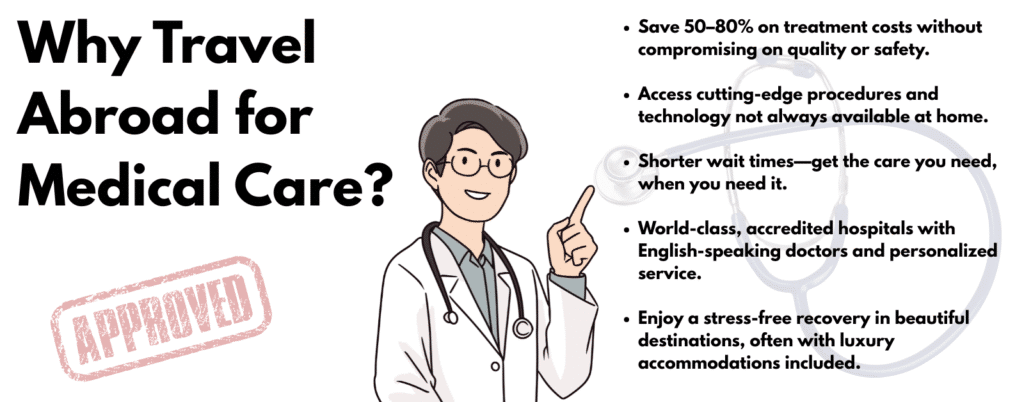
Medical tourism, the practice of traveling internationally for medical care, has experienced significant growth, driven by substantial cost savings, high-quality medical facilities, skilled professionals, and shorter waiting times. Valued at USD 41.75 billion in 2024, the industry is projected to reach up to USD 186.99 billion by the early 2030s, serving millions globally.
What is Medical Tourism?
Medical tourism refers to traveling from one’s home country to another for the purpose of receiving medical care, treatments, or surgeries. The concept includes elective procedures such as cosmetic surgeries and dental treatments, as well as more essential procedures like organ transplants and cardiac surgery.
People engage in medical tourism for various reasons, including cost savings, access to higher-quality care, or the ability to receive treatments unavailable in their home country. Understanding medical tourism is essential for patients considering international travel for medical purposes. The term “what is medical tourism” encompasses the full range of healthcare services patients seek abroad, highlighting both the medical and tourism aspects of this practice.

Notable Statistics:
- South Korea performs the highest number of plastic surgeries per capita globally, with nearly 1 million procedures annually.
- The United States leads in absolute numbers of cosmetic procedures, but costs drive many to seek similar quality at lower prices abroad.
Top 20 Medical Procedures and Best Destinations
| Procedure | Brazil, Turkey, Thailand, South Korea |
|---|---|
| Hair Transplant | Turkey, India, Thailand |
| Dental Implants | India, Turkey, Mexico, Costa Rica |
| Rhinoplasty (Nose Job) | Brazil, Turkey, Thailand, S. Korea |
| Breast Augmentation/Reduction | Brazil, Thailand, Mexico |
| Coronary Artery Bypass | India, Thailand, Malaysia |
| Knee Replacement | India, Turkey, Thailand, Malaysia |
| Hip Replacement | India, Thailand, Turkey |
| Weight Loss Surgery (Bariatric) | Mexico, Costa Rica, India |
| In Vitro Fertilization (IVF) | Brazil, Thailand, South Korea |
| Liposuction | Brazil, Thailand, Mexico |
| Face and Neck Lifts | Brazil, Thailand, S. Korea |
| LASIK/Vision Correction | India, Turkey, Malaysia |
| Spine Surgery | Thailand, Singapore, India |
| Stem Cell Therapy | Tijuana (Mexico), Thailand, S. Korea |
| Heart Valve Replacement | India, Thailand, Turkey |
| Dental Veneers & Cosmetic Dentistry | Mexico, Costa Rica, Thailand |
| Health Screenings | Thailand, Singapore, Malaysia |
| Dermatological Treatments | S. Korea, Thailand, Singapore |
| Prescription Medications | Mexico, India, Thailand |
| Organ Transplants | India, Turkey, Singapore |
✈️ Don’t Know Your JCI from Your BMI?
Your Medical Tourism Cheat Sheet Awaits!
🧳 Whether you’re getting a quick procedure in Korea or a new smile in Mexico, knowing the lingo can save your wallet and your health.
🩺 We’ve decoded all the jargon — from “medical visas” to “recovery retreats” — in one easy, searchable glossary.👉 Explore the Medical Tourism Glossary Now
No passport required.
Top 7 Medical Procedures in Leading Countries
1. Dental Implants (Mexico)
Dental implants involve surgically placing artificial tooth roots into the jawbone to hold replacement teeth.
- Cost: $525 – $1,500 (vs. $3,000 – $7,000 in the US)
| Pros | Cons |
|---|---|
| High success rate | Possible complications if poorly done |
| Durable and long-lasting | Requires healthy jawbone structure |
Recommended Clinics:
2. Rhinoplasty (South Korea)
Rhinoplasty, or nose reshaping surgery, enhances facial harmony and nasal proportions.
- Cost: $2,160 – $9,000 (vs. $7,000 – $20,000 in the US)
| Pros | Cons |
| Highly skilled surgeons | Risk of dissatisfaction with results |
| Advanced techniques | Longer recovery period |
Recommended Clinics:
3. Coronary Artery Bypass (India)
Coronary artery bypass grafting (CABG) surgery improves blood flow to the heart.
- Cost: $5,500 – $11,000 (vs. $100,000 – $210,000+ in the US)
| Pros | Cons |
| Exceptional cardiac specialists | Risks of complications and infections |
| Highly affordable | Requires significant recovery time |
Recommended Clinics:
4. Knee Replacement (Thailand)
Knee replacement involves replacing damaged knee joints with artificial implants.
- Cost: $9,000 – $15,000 (vs. $35,000 – $40,000 in the US)
| Pros | Cons |
| High-quality orthopedic surgeons | Risks of blood clots and infection |
| Luxurious recovery facilities | Extended rehabilitation period |
Recommended Clinics:
5. Hair Transplant (Turkey)
Hair transplantation moves hair follicles from dense areas to bald or thinning areas.
- Cost: $2,000 – $4,000 (vs. $10,000+ in the US)
| Pros | Cons |
| Highly specialized clinics | Variable aesthetic outcomes |
| Quick procedure and recovery | Requires multiple sessions |
Recommended Clinics:
6. Stem Cell Therapy (Mexico)
Stem cell therapy uses regenerative cells to treat chronic conditions and injuries.
- Cost: $3,000 – $10,000 (vs. $20,000 – $100,000 in the US)
| Pros | Cons |
| Potential for significant healing | Variable outcomes |
| Minimally invasive | Ongoing clinical research |
Recommended Clinics:
7. LASIK Eye Surgery (Malaysia)
LASIK corrects vision by reshaping the cornea using precise laser technology.
- Cost: $1,500 – $3,000 (vs. $4,000 – $6,000 in the US)
| Pros | Cons |
| Quick recovery | Risk of dry eyes or visual disturbances |
| Permanent vision correction | Not suitable for all patients |
Recommended Clinics:
Health Checks
Routine health checks abroad are significantly less expensive, making preventive care more accessible. Comprehensive check-ups in Thailand or Singapore cost around $200 – $500, compared to $1,000 – $3,000 in the US. Additional benefits include:
- Early detection of medical issues
- Comprehensive health reports and consultations
- Personalized wellness plans
- Minimal waiting times
The high costs associated with medical procedures in the US often drive patients abroad. For example, procedures such as coronary artery bypass surgery or knee replacement can exceed $100,000 domestically. Such exorbitant costs underline the compelling financial rationale behind medical tourism.
Qualifications, Standards, and Concerns by Country
Medical tourism destinations typically feature highly qualified doctors, often trained or certified in Western countries. However, standards and regulations can vary:
Comparison: US Doctors vs. International Doctors
- United States: Requires extensive education (minimum 11-15 years post-secondary), board certification, and strict licensing requirements.
- Thailand, India, Turkey, Mexico: Similar rigorous training often complemented by international certifications (JCI accreditation); however, oversight and regulation can vary by region.
Concerns and Standards by Country
- Thailand & Singapore: Robust accreditation (JCI), excellent facilities, highly trained professionals.
- India and Turkey: High-quality care is available at major hospitals; however, variations exist in smaller facilities, and careful vetting is required.
- Mexico: High-quality care is provided near major cities; caution is advised in border towns.
- South Korea: Exceptional standards in cosmetic surgery and dermatology; reliable government regulation.
Recovery Facilities and Aftercare
- Thailand: Luxurious recovery resorts offering wellness programs.
- Mexico: Dedicated recovery houses, particularly near popular medical hubs.
- India: Comprehensive international patient services at major hospitals, including accommodation and post-operative care.
- Turkey: Integrated recovery packages in tourist-friendly environments.
Insurance Coverage and Medical Tourism
US health insurance typically does not cover elective procedures overseas but might reimburse emergency treatments under certain policies. Specialized medical tourism insurance is recommended to cover potential complications or follow-up care.
Notable Medical Tourism Insurance Providers:
FAQs
- What visa requirements exist for medical tourism? Most countries offer specialized medical visas; requirements are verified through destination embassies.
- How do I book procedures overseas? Typically, I do so via direct hospital communication, online agencies, or dedicated medical tourism facilitators.
- What happens in an emergency abroad? Always have comprehensive medical and travel insurance and know local emergency numbers and healthcare facility contacts.
- What are typical recovery durations? Recovery durations vary by procedure, typically ranging from one week for minor procedures to several weeks for major surgeries.
Expert Insights
- Incorporate expert interviews with internationally recognized medical tourism professionals to add credibility and in-depth knowledge.
Patient Journey Timeline
- Visual representation from initial research and consultation, traveling, procedure, recovery abroad, and follow-up care at home.
Cultural Considerations
- Provide cultural etiquette, language basics, and tips on local customs to ensure a comfortable experience abroad.
Post-Procedure Lifestyle Recommendations
- Tailored nutrition, exercise, and lifestyle management advice to optimize procedure outcomes.
Glossary of Terms
- Clarify medical, procedural, accreditation, and insurance terminology for easy reference.
Conclusion
Medical tourism offers substantial opportunities for affordable, high-quality medical care and travel experiences. Ensuring a successful journey involves careful research, understanding the risks, and preparing thoroughly for post-procedure care.
Resources and References
- Joint Commission International (JCI)
- Medical Tourism Association
- Centers for Disease Control (CDC)
- Medical Travel Quality Alliance (MTQUA)
This article is for informational purposes only. Consult qualified healthcare professionals for medical advice.